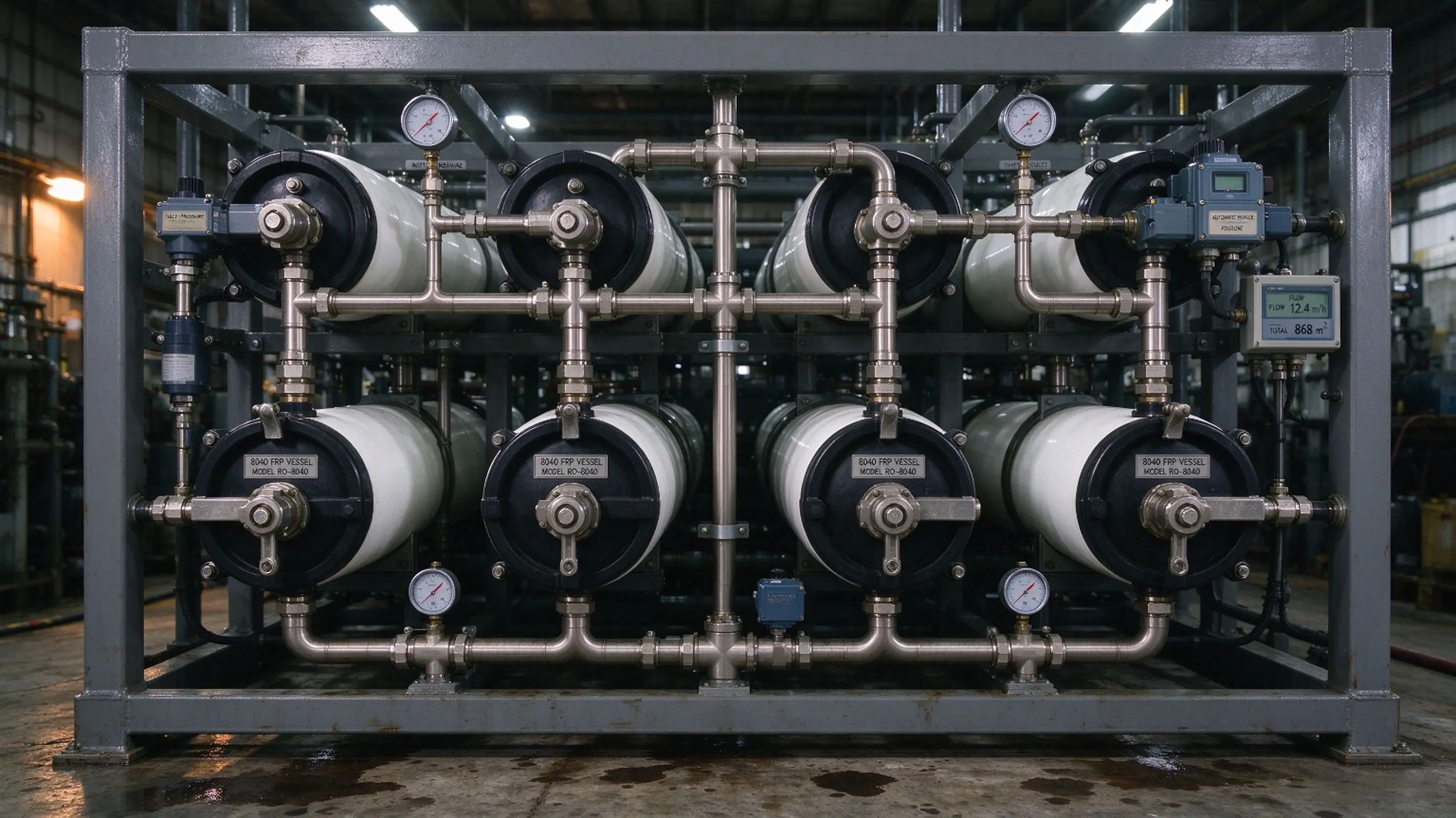
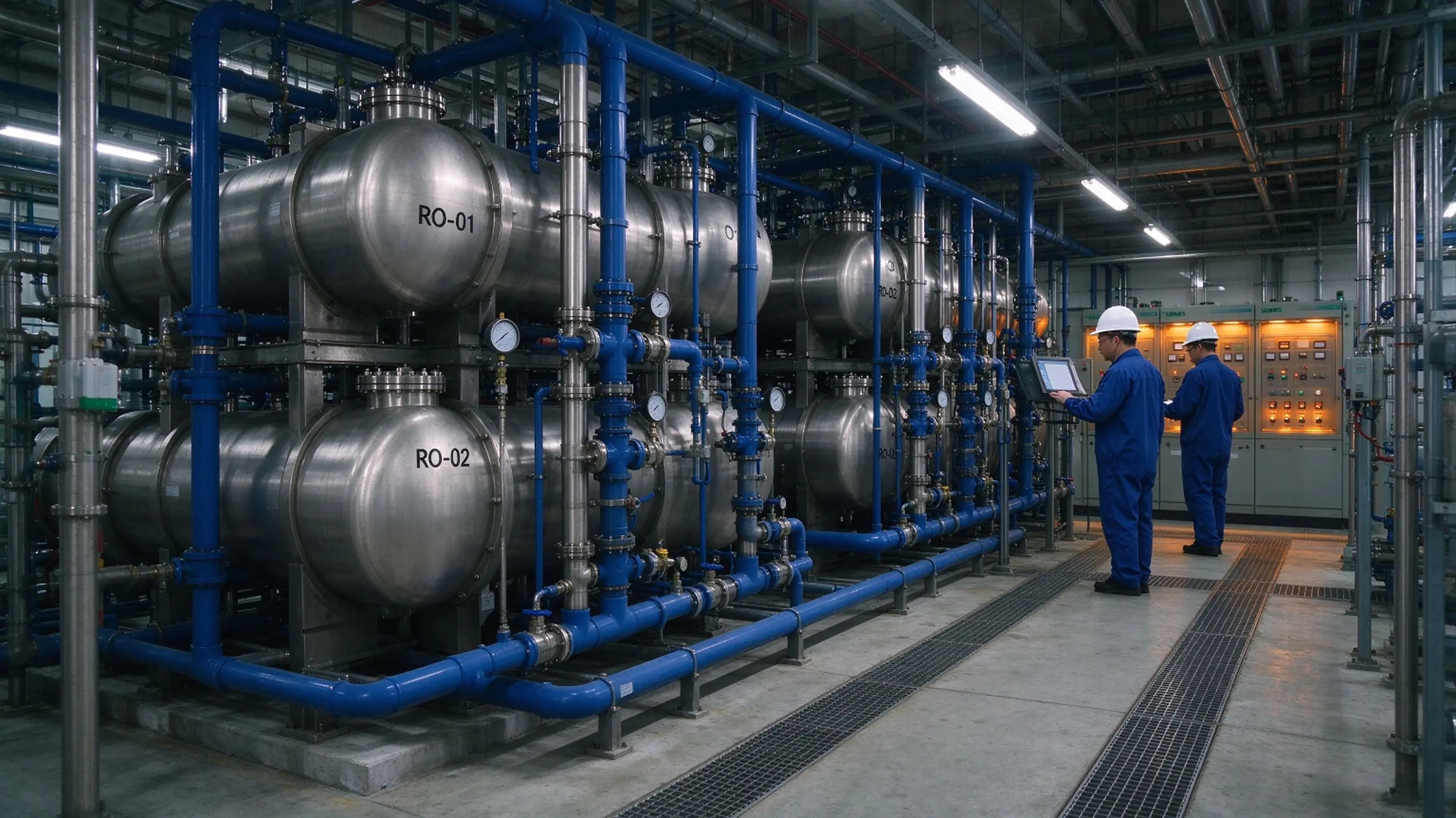
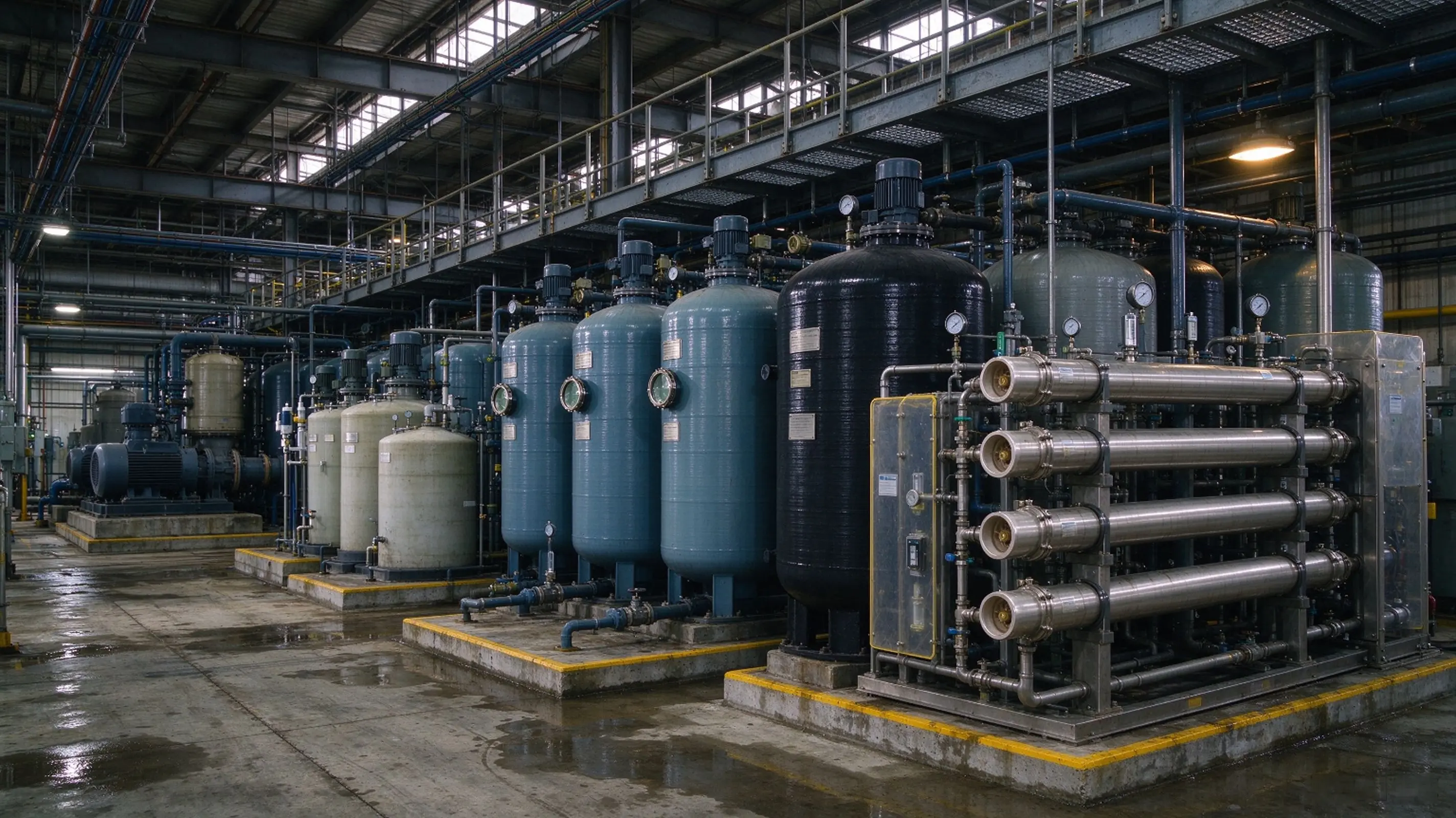
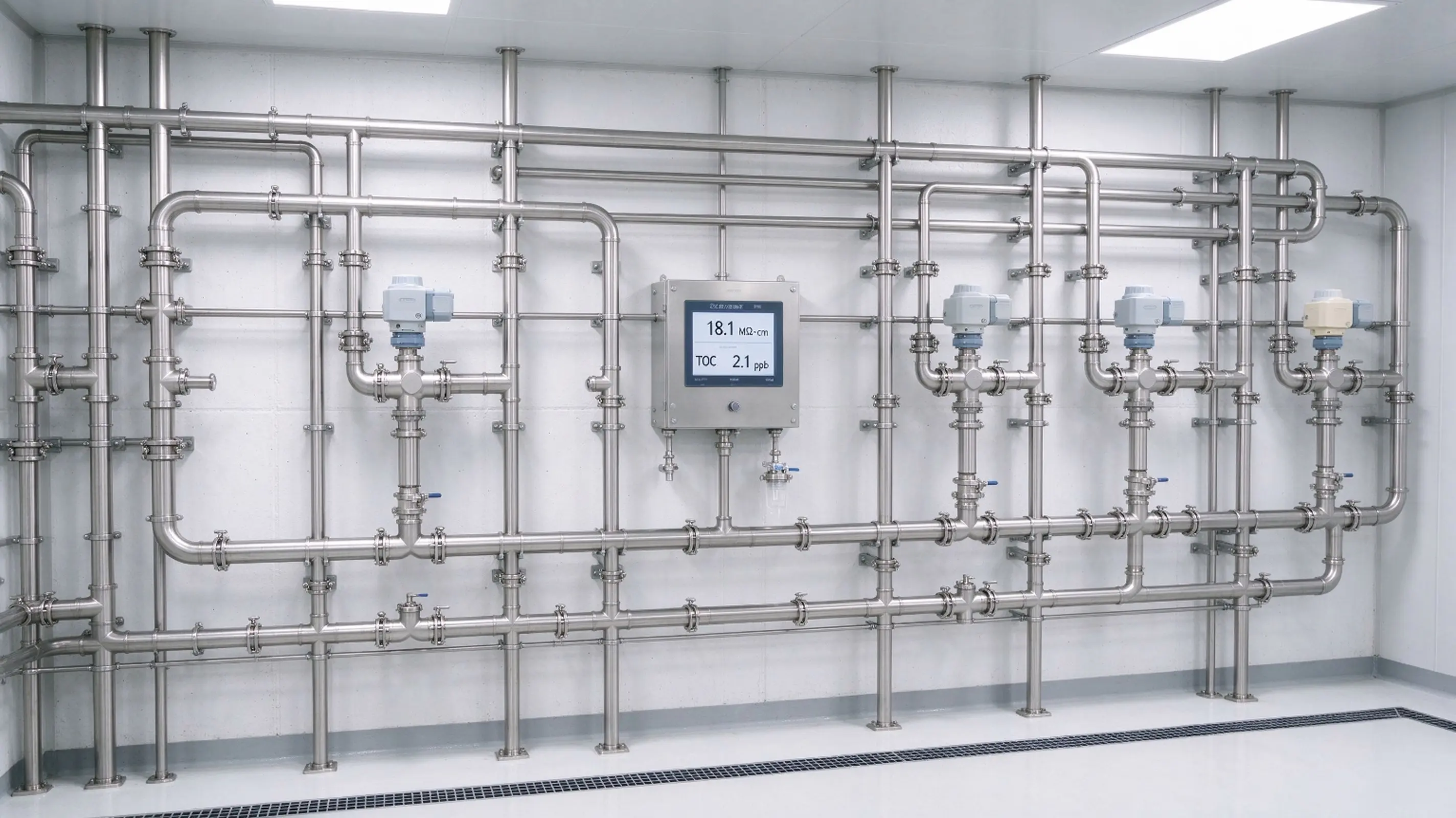
Raw water pretreatment is an essential part of a purified water system. Its purpose is to condition the feed water so that it meets the requirements of downstream purification processes such as reverse osmosis (RO), electrodeionization (EDI), and ion exchange.
The main targets of raw water pretreatment include suspended solids, microorganisms, colloids, organic matter, hardness, iron, manganese and residual chlorine.
The appropriate pretreatment process should be selected according to the raw water quality and the requirements of the downstream purification equipment.
1. Suspended Solids and Turbidity Removal
When the concentration of suspended solids in raw water is relatively low, coagulation and filtration can be used to reduce turbidity and suspended particles.
A coagulant can be added to the raw water before the water enters the filtration system. In many industrial water treatment applications, multimedia filters are commonly used for removing suspended solids and reducing turbidity.
A typical process is:
Raw Water → Coagulant Dosing → Multimedia Filter → Downstream Treatment
Multimedia filtration can improve feed water quality and reduce the particulate load on downstream equipment, particularly RO membranes.
2. Hardness Reduction
When raw water contains high levels of carbonate hardness, pretreatment may be required to reduce hardness and prevent scaling in downstream equipment.
Common hardness-control methods include:
- Lime softening
- Cation exchange softening
- Antiscalant dosing
For many modern RO systems, water softeners and antiscalant dosing systems are widely used to control scaling.
Reducing hardness helps protect RO membranes and maintain stable system performance.
3. Organic Matter Removal
When the raw water contains a high concentration of organic matter, several pretreatment methods may be considered depending on the type and concentration of the contaminants.
Common methods include:
- Chlorination
- Coagulation
- Clarification
- Filtration
- Activated carbon filtration
Activated carbon filters are particularly useful for reducing organic compounds, residual chlorine and certain odor- and taste-causing substances.
If the organic load remains too high after conventional pretreatment, additional treatment stages may be required before the water enters the RO or EDI system.
4. Residual Chlorine Removal
Residual chlorine must be carefully controlled when the downstream purification process uses reverse osmosis membranes or EDI systems, as excessive chlorine can damage or degrade certain membrane materials.
Common methods for residual chlorine removal include:
- Activated carbon filtration
- Sodium metabisulfite or sodium sulfite dosing
Activated carbon is widely used because it can simultaneously reduce residual chlorine and certain organic contaminants.
The chlorine concentration should be monitored before the RO system to ensure that it remains within the membrane manufacturer's specified feed-water limits.
5. Fine Filtration Before RO and EDI
When the downstream process uses RO, EDI or other sensitive purification equipment, a cartridge filter or precision filtration unit is normally installed after the main pretreatment stages.
A typical configuration is:
Pretreatment → Cartridge Filter → RO System
The cartridge filter provides final particulate protection before the water enters the RO system. It helps prevent suspended particles and fine contaminants from entering the membrane system and reduces the risk of premature fouling or damage.
Common cartridge filter ratings include 1–5 μm, depending on the system design and feed-water quality.
6. Silica Reduction
Silica can be a concern in high-purity water systems because dissolved silica may pass through conventional pretreatment and can contribute to scaling or affect the performance of downstream RO and EDI systems.
When silica removal is required, treatment may include lime softening or other specialized silica-removal processes. In some applications, magnesium-based treatment can be used together with lime softening to improve silica removal.
The appropriate method depends on the form and concentration of silica in the raw water as well as the required product water quality.
7. Iron and Manganese Removal
High concentrations of iron and manganese can cause fouling, discoloration and operational problems in downstream filtration and membrane systems.
When iron or manganese levels are elevated, aeration followed by filtration can be used to oxidize dissolved iron and manganese into insoluble forms that can then be removed by filtration.
A typical process is:
Raw Water → Aeration/Oxidation → Filtration → Downstream Purification
Additional oxidation or specialized media may be required depending on the concentration, oxidation state and characteristics of the iron and manganese.
Typical Raw Water Pretreatment Process
A complete pretreatment system may combine several treatment stages according to the raw water analysis.
A typical configuration for an RO-based purified water system is:
Raw Water → Raw Water Tank → Booster Pump → Coagulation/Multimedia Filtration → Activated Carbon Filter → Water Softener or Antiscalant Dosing → Cartridge Filter → RO System
For applications requiring higher-purity water, the RO system can then be followed by EDI, mixed-bed ion exchange or other polishing processes.
How to Select the Right Pretreatment Process
There is no single pretreatment configuration suitable for every raw water source. The system should be designed based on a detailed raw water analysis and the requirements of the final water quality.
Key parameters include:
- Turbidity
- Suspended solids
- Total hardness
- Iron and manganese
- Total organic carbon (TOC)
- Residual chlorine
- Silica
- Total dissolved solids (TDS)
- Microbiological characteristics
- pH and alkalinity
Proper pretreatment is critical to the long-term performance of RO, EDI and other high-purity water purification equipment. A well-designed pretreatment system can reduce membrane fouling, control scaling, extend equipment service life and improve overall system reliability.