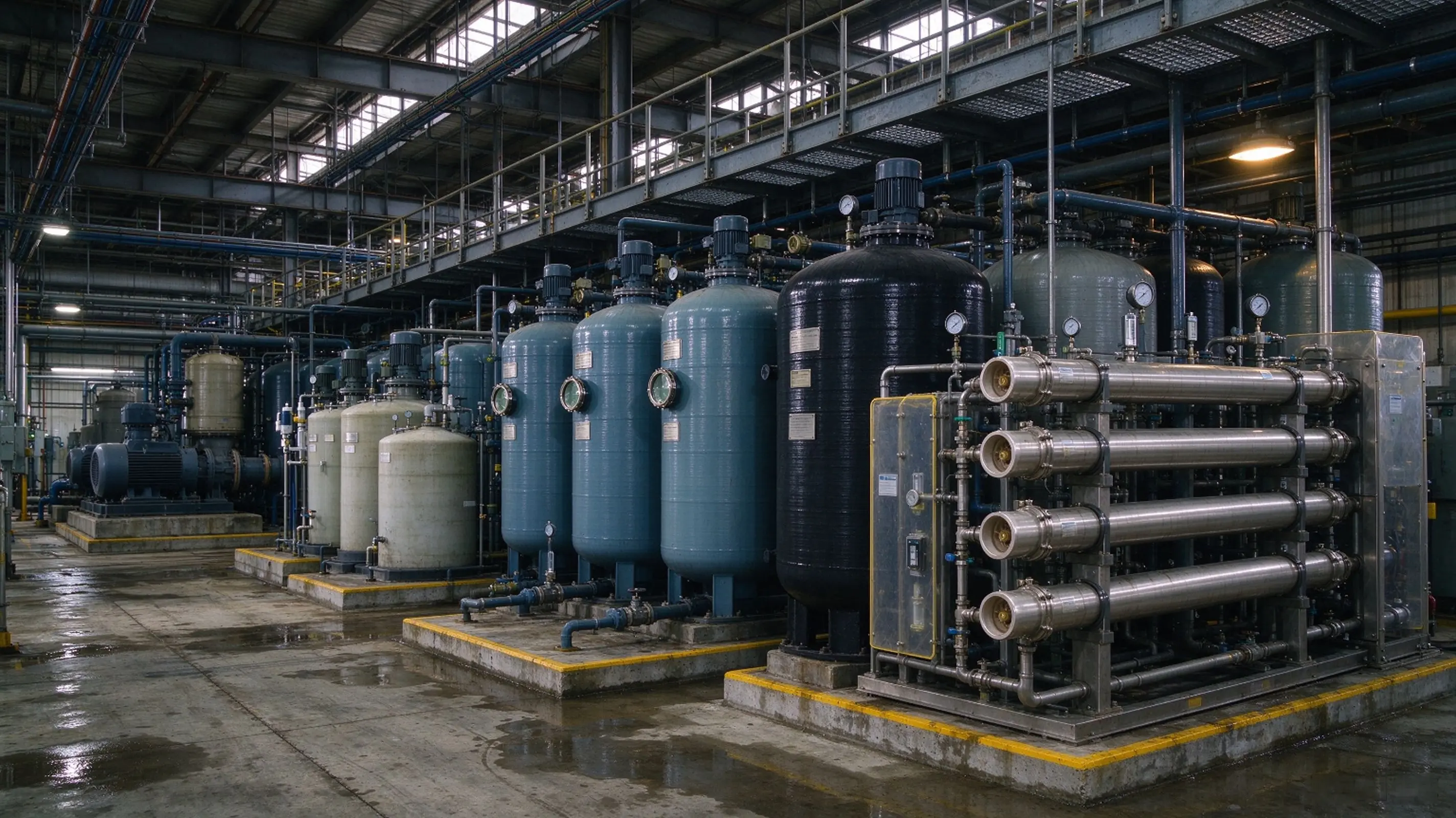
Purified water systems can be designed with different treatment processes according to raw water quality, required water quality, capacity and application requirements. Common purification methods include pretreatment + reverse osmosis (RO), ion exchange, two-pass reverse osmosis, and RO + EDI.
1. Pretreatment + Reverse Osmosis System
Process Flow
Raw Water → Raw Water Tank → Raw Water Booster Pump → Quartz Sand Filter → Activated Carbon Filter → Antiscalant Dosing System → Cartridge Filter → First-Stage High-Pressure Pump → First-Stage RO System → Second-Stage High-Pressure Pump → Second-Stage RO System → Purified Water Tank → Purified Water Supply Pump → UV Sterilizer → Final Filter → Points of Use
Pretreatment
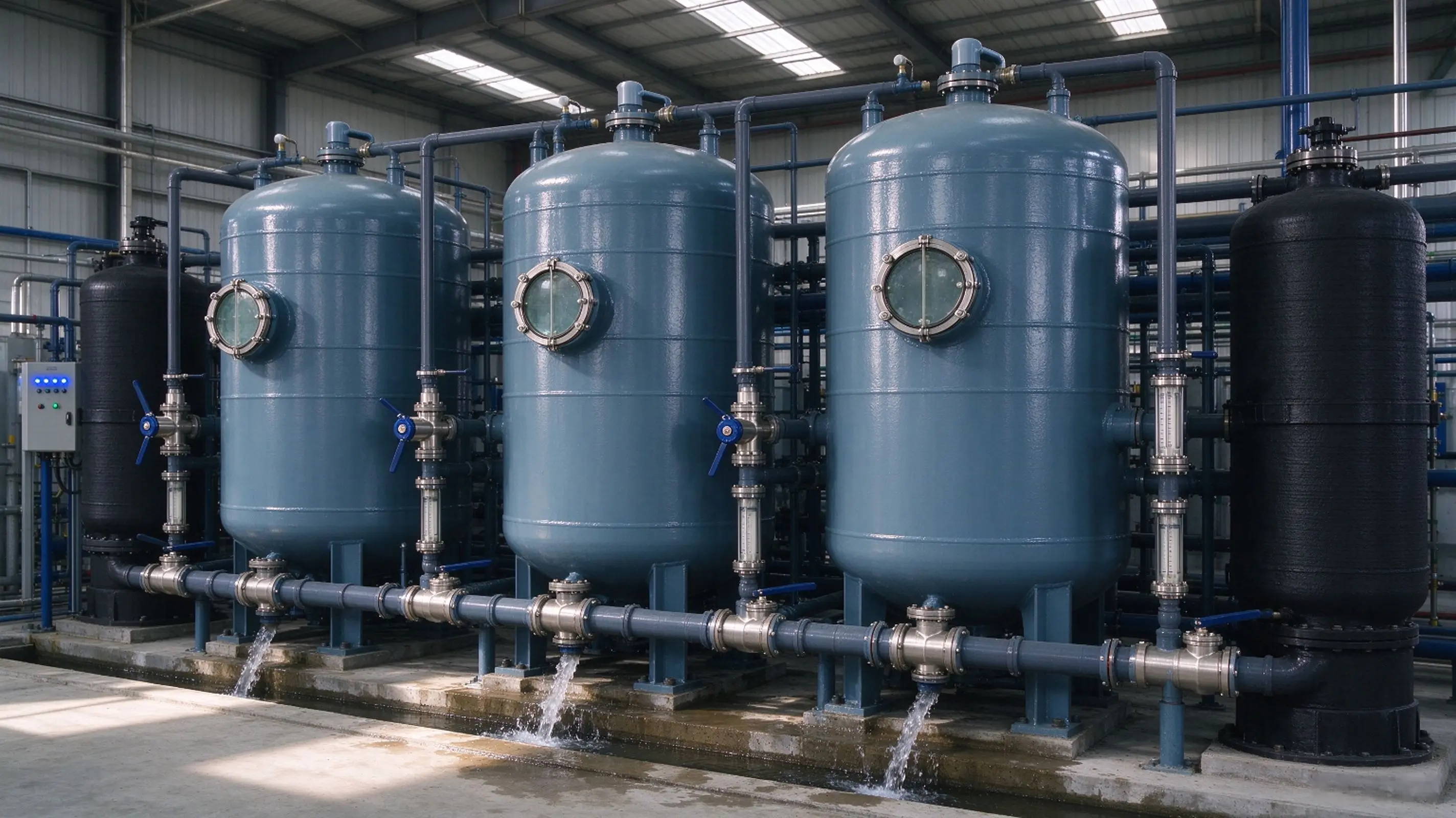
Pretreatment is used to improve raw water quality and ensure that the feed water meets the requirements of the reverse osmosis system. Proper pretreatment reduces membrane fouling, improves RO performance and extends membrane service life.
A typical pretreatment system may include:
- Quartz sand or multimedia filter
- Activated carbon filter
- Water softener
- Antiscalant dosing system
- Cartridge filter
Reverse Osmosis System
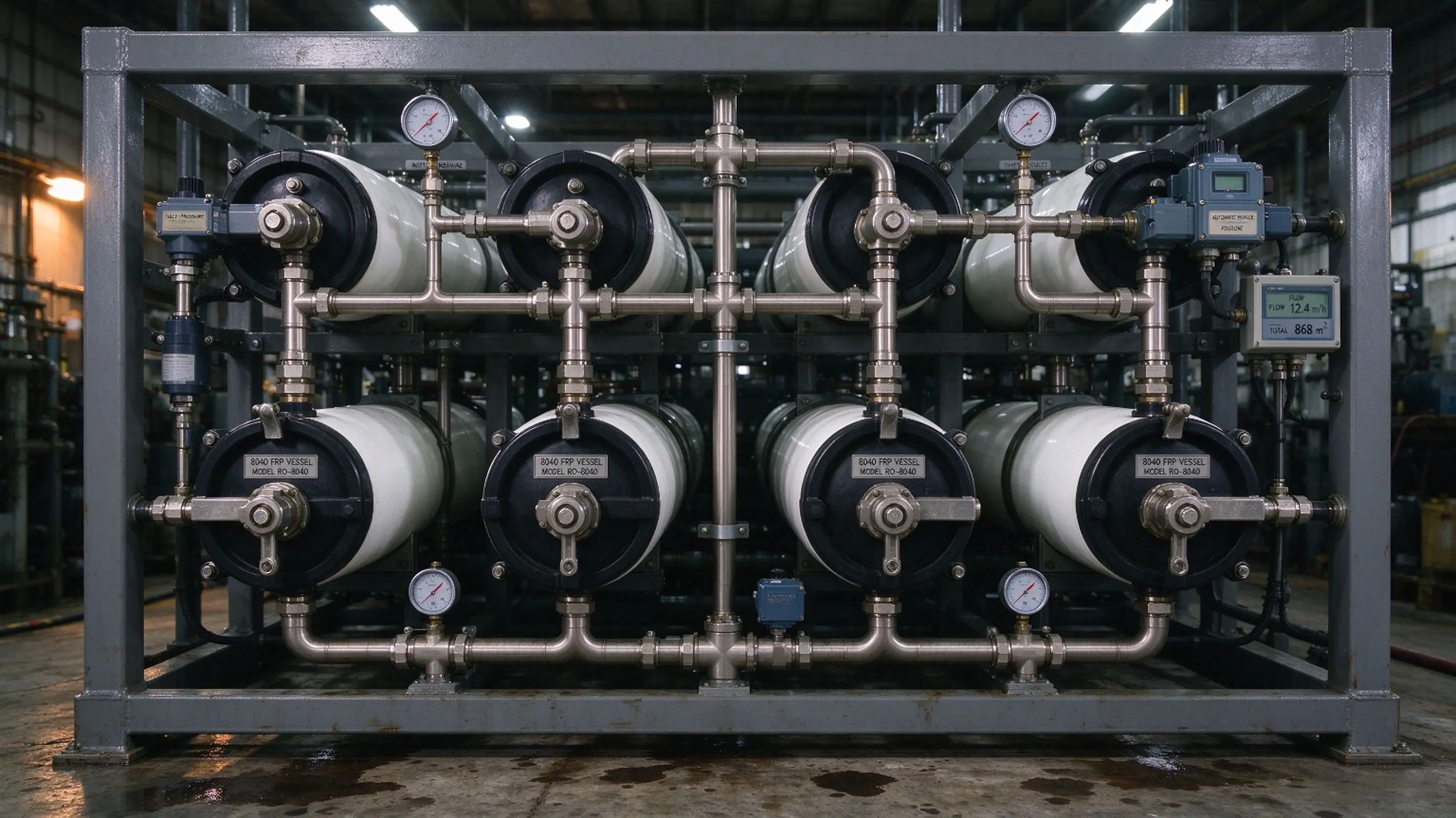
The reverse osmosis system uses semi-permeable RO membranes to separate dissolved salts and other contaminants from pretreated water.
RO treatment can effectively reduce:
- Dissolved salts and inorganic contaminants
- Colloids and suspended solids
- Organic contaminants
- Microorganisms and bacteria
- Algae and fungi
- Pyrogens and other impurities
After passing through the RO membrane system, purified water is produced and transferred to the purified water tank. A typical RO system can achieve a salt rejection rate of up to 98%, depending on the membrane type, feed water quality and operating conditions.
Depending on the required water quality, the system can be configured as single-pass RO or two-pass RO.
2. Purified Water System Using Ion Exchange
Process Flow
Raw Water → Raw Water Booster Pump → Multimedia Filter → Activated Carbon Filter → Water Softener → Cartridge Filter → Cation Exchange Bed → Anion Exchange Bed → Mixed-Bed Ion Exchange Unit → Microporous Filter → Points of Use
Ion Exchange Process
The ion exchange process removes dissolved ions from water through cation and anion exchange resins.
The system typically consists of:
- Multimedia filter
- Activated carbon filter
- Water softener
- Cartridge filter
- Cation exchange unit
- Anion exchange unit
- Mixed-bed ion exchange unit
- Microporous filter
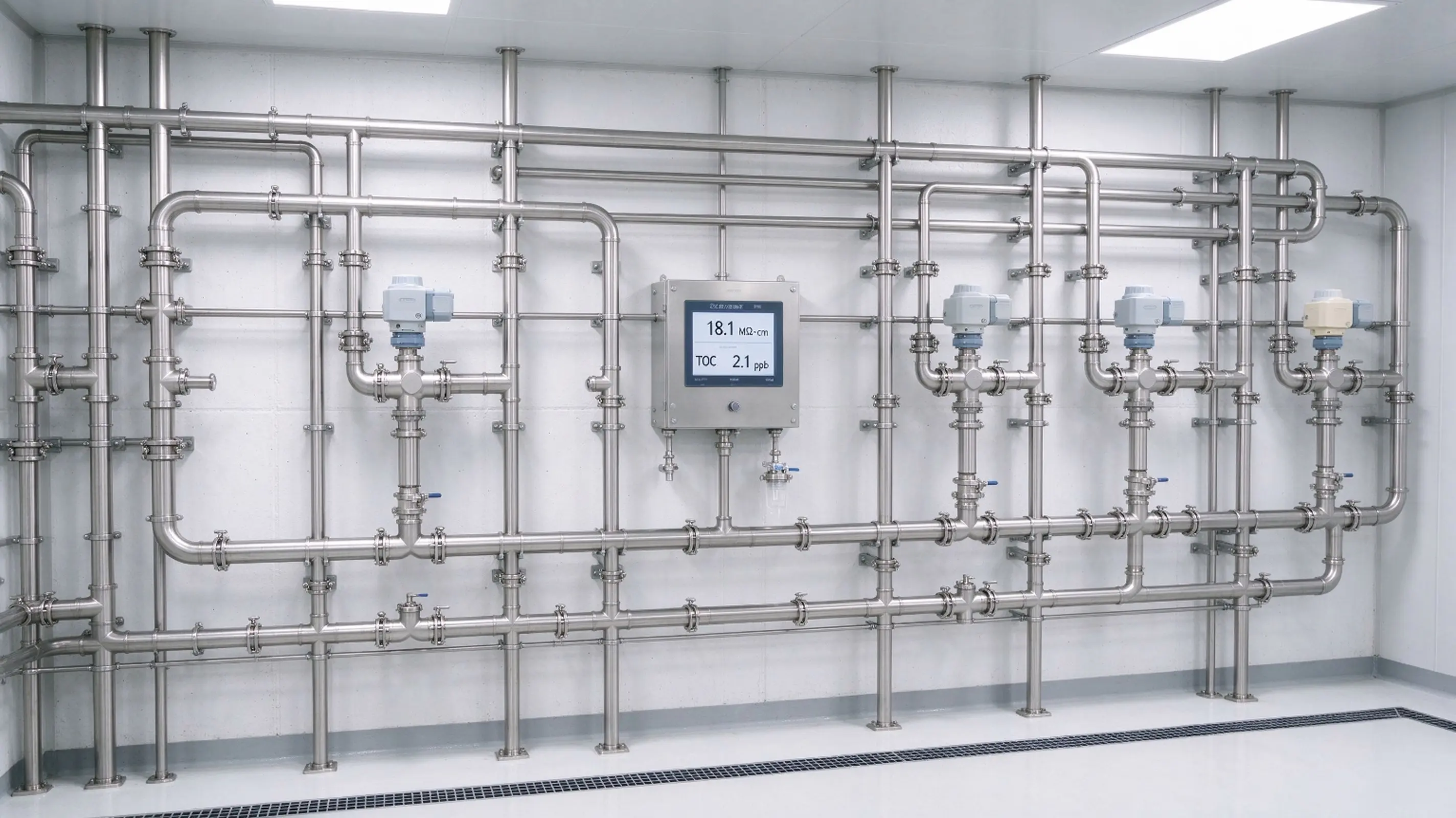
The mixed-bed unit provides final deionization and can produce high-purity water for applications requiring low ionic content.
3. Purified Water System Using Two-Pass RO
Process Flow
Raw Water → Raw Water Booster Pump → Multimedia Filter → Activated Carbon Filter → Water Softener → Cartridge Filter → First-Pass RO System → pH Adjustment → Intermediate Water Tank → Second-Pass RO System → Purified Water Tank → Purified Water Pump → Microporous Filter → Points of Use
Two-Pass Reverse Osmosis
A two-pass RO system uses two consecutive reverse osmosis stages to achieve a higher level of desalination than a single-pass RO system.
The first-pass RO system removes most dissolved salts and contaminants from the pretreated water. The permeate then enters an intermediate water tank before being further treated by the second-pass RO system.
A pH adjustment stage can be incorporated between the two RO stages when required by the feed water characteristics and target water quality.
The final permeate is stored in a purified water tank and delivered to the points of use through a purified water pump and final microporous filtration system.
4. Purified Water System Using RO + EDI
Process Flow
Raw Water → Raw Water Booster Pump → Multimedia Filter → Activated Carbon Filter → Water Softener → Cartridge Filter → First-Pass RO System → Intermediate Water Tank → Intermediate Water Pump → EDI System → Microporous Filter → Points of Use
RO + EDI Process
The RO + EDI process combines reverse osmosis with Electrodeionization (EDI) to produce high-purity water continuously.
The first-stage RO system removes the majority of dissolved salts, organic matter and other contaminants. The RO permeate is then transferred to the EDI system for further removal of ionized impurities.
Unlike conventional ion exchange systems, EDI uses electricity, ion-exchange membranes and ion-exchange resins to continuously remove ions without the need for chemical regeneration.
A final microporous filter can be installed downstream of the EDI system to provide additional particle control before the purified water reaches the points of use.
Typical Process Selection
| Purification Method | Typical Configuration | Main Advantage |
|---|---|---|
| Single-/Two-Pass RO | Pretreatment + RO | Efficient desalination and broad contaminant removal |
| Ion Exchange | Cation + Anion + Mixed Bed | High deionization performance |
| Two-Pass RO | First-Pass RO + Second-Pass RO | Higher desalination and lower conductivity |
| RO + EDI | RO + EDI | Continuous high-purity water production without chemical regeneration |
The appropriate purification process should be selected according to raw water quality, required water quality, flow rate, operating conditions and end-use requirements.