


Electronics & Semiconductor Ultrapure Water Solutions
RO + EDI ultrapure water systems and supporting equipment for PCB, semiconductor, solar and precision electronics manufacturing. Configured around your water analysis, required resistivity and hourly demand, with pretreatment, membrane separation, UV sterilization and point-of-use precision filtration integrated into one complete solution.
Electronics & PCB
Solar & Battery
Pretreatment & Filtration
RO + EDI · Softening · UF · Precision filtration · UV · Components
The Challenge
Why Electronics Manufacturing Needs Ultrapure Water
Electronics and semiconductor manufacturing processes are highly sensitive to water impurities. Even trace amounts of ions, particles, bacteria or organic contaminants can cause yield loss, surface defects and reliability failures. Wafer cleaning, PCB rinsing, solar cell processing and precision component cleaning each have specific water quality targets that must be held consistently.
Ionic Contamination
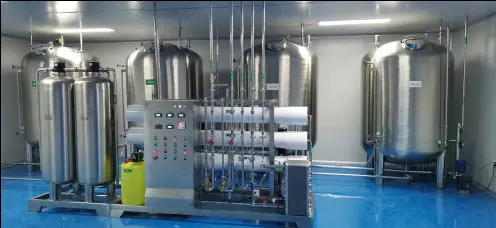
Dissolved ions in water can contaminate wafers, PCBs and electronic components, affecting product performance and yield. RO + EDI ultrapure water systems reduce ionic contamination to a controlled resistivity level before water reaches the critical rinse step.
Particle Defects
Particles in rinse water can cause circuit defects and micro-short circuits on fine-line PCBs and wafer surfaces. Ultrafiltration and precision filtration remove particles and protect critical manufacturing surfaces.
Why Ultrapure Water
From Tap Water to Electronics-Grade Water
Ultrapure water is produced by removing dissolved salts, organic compounds, particles and bacteria through a combination of pretreatment, reverse osmosis, EDI, UV sterilization and final filtration. The exact train depends on the application step, from PCB intermediate rinse to wafer final clean.
Raw Water
Untreated feedwater
- Contains dissolved minerals and salts
- May contain particles and colloids
- May contain chlorine and organics
- Not suitable for electronics and semiconductor processes
Treatment
Pretreatment + RO + EDI + UV
- Multimedia, carbon and softening pretreatment
- Single-stage or two-pass reverse osmosis
- EDI for continuous ion removal without chemical regeneration
- UV sterilization and precision filtration
Ultrapure Water
On-site ultrapure water supply
- Reduced dissolved ions and salts
- Reduced particles and organics
- Stable water quality for critical rinse stages
- Suitable for electronics, PCB, solar and battery applications
Core Systems
RO + EDI Ultrapure Water Systems
Core ultrapure water production systems based on RO reverse osmosis, EDI and two-pass RO configurations, for PCB, semiconductor, solar and battery manufacturing. Custom capacity and layout available for larger plants.
01
Core System
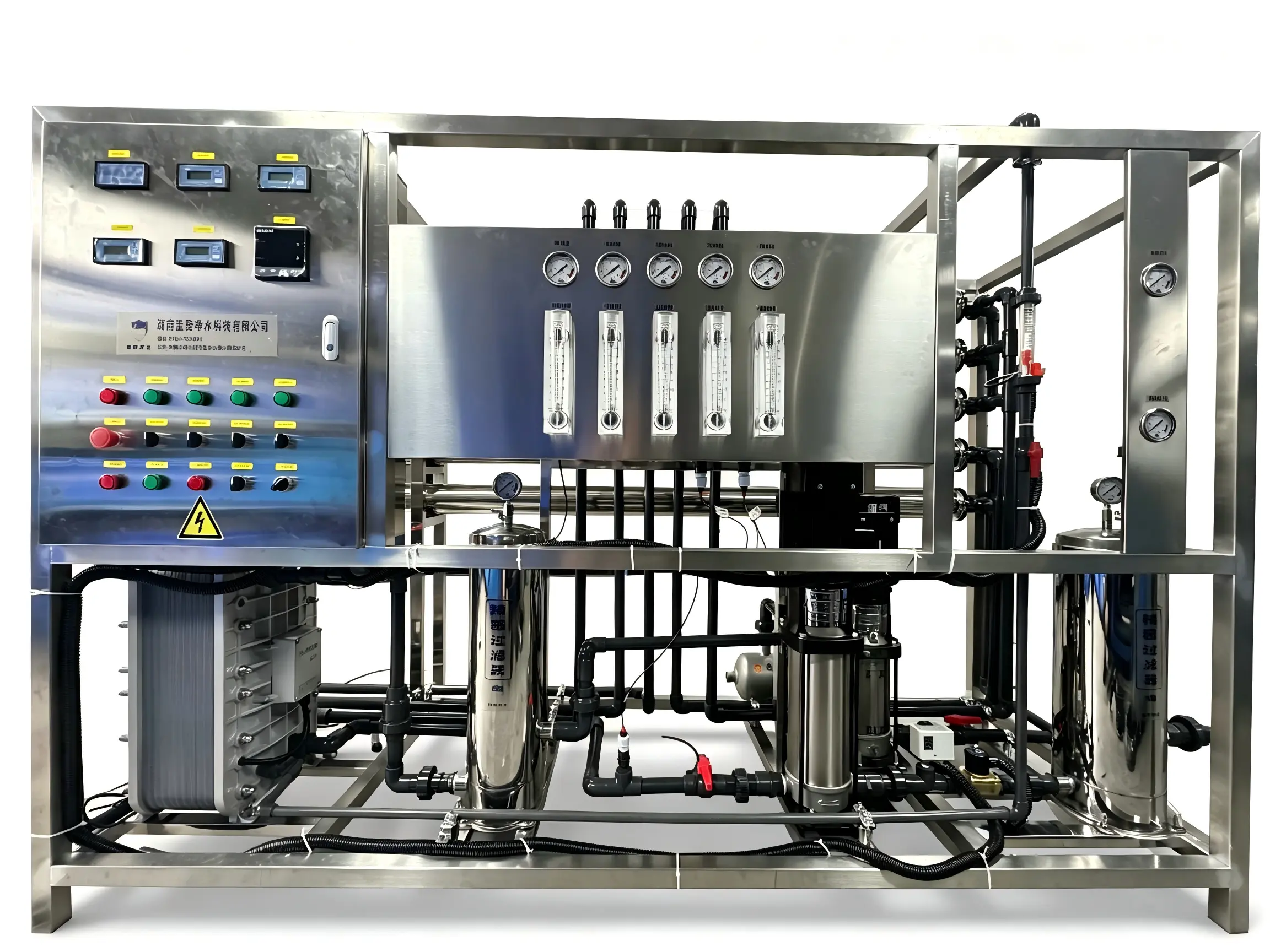
Two-Pass RO + EDI Ultrapure Water System
Engineered for electronics-grade ultrapure water. Two-pass reverse osmosis followed by electrodeionization (EDI) continuously removes dissolved ions without chemical regeneration, achieving stable low conductivity for wafer cleaning, PCB rinse and precision component cleaning. Available in 1 T/H configuration, customizable by capacity, feedwater analysis and required resistivity.
Process
Two-pass RO + EDI polishing
Reference Capacity
1 T/H (1 m³/h), customizable
Application
Wafer cleaning, PCB final rinse, solar cell processing, precision component cleaning
Configuration Options
RO + EDI, two-stage RO + EDI, RO two-pass
02
High Capacity
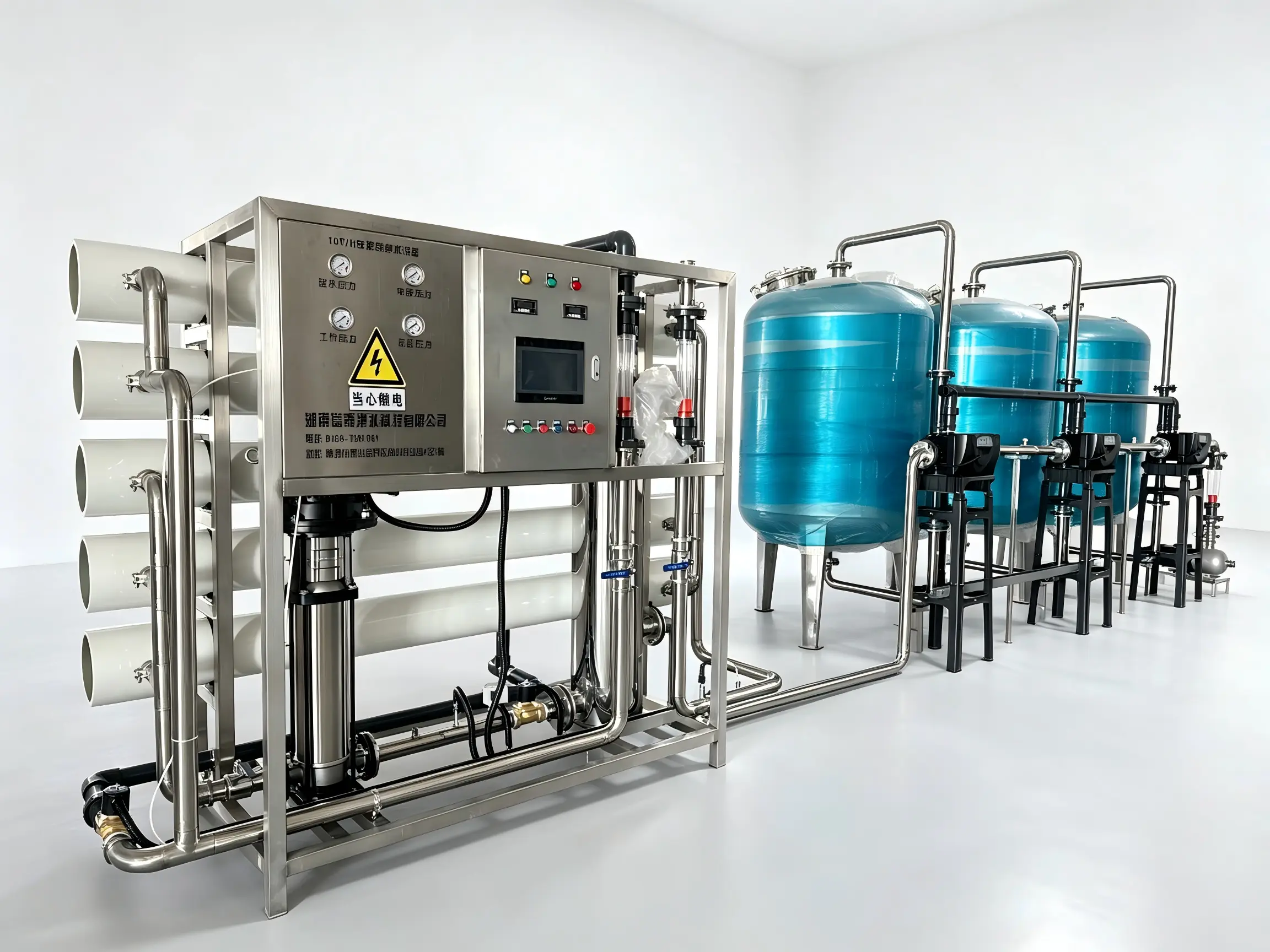
Custom Industrial Pure Water System
For PCB plants and electronics assembly lines with multiple rinse stages running in parallel. Available in 1 T/H, 3 T/H, 10 T/H and 60 T/H reference configurations, with skid layout, pretreatment selection and controls adapted to your plant layout and rinse water demand. Frequently used as the main RO stage feeding a downstream EDI polish loop.
Capacity Options
1 T/H · 3 T/H · 10 T/H · 60 T/H, customizable
Process
Pretreatment + RO, with optional two-pass RO and EDI integration
Application
Multi-line PCB rinse supply, electronics assembly process water, large Fab utility water
03
Pure Water
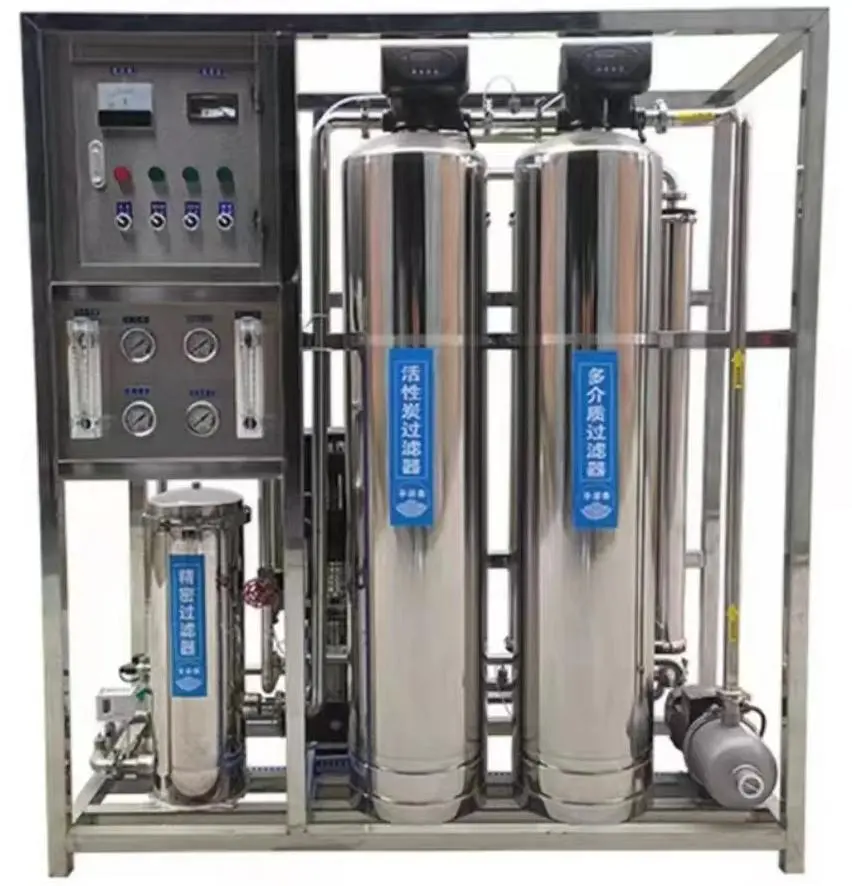
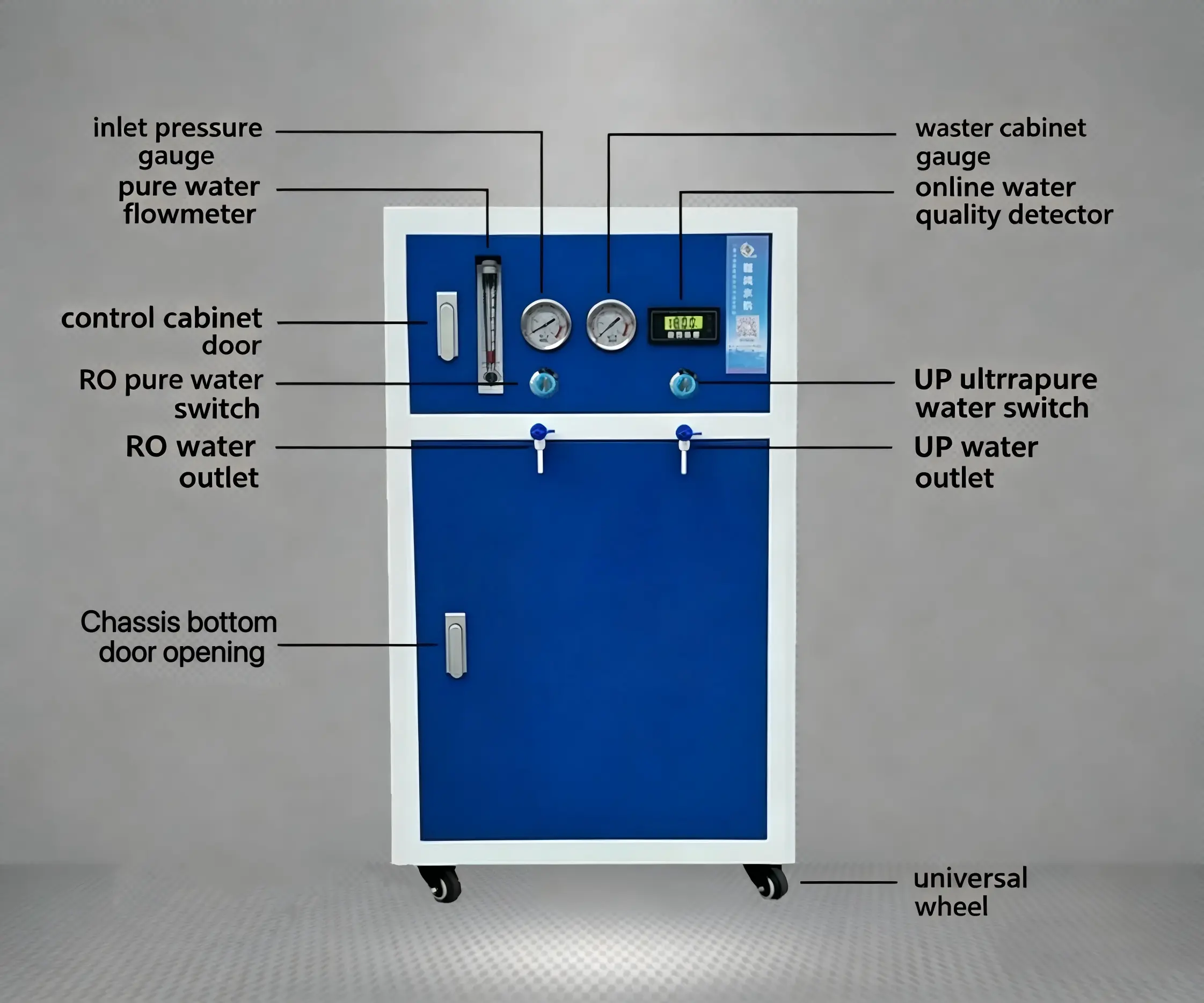
Reverse Osmosis Pure Water Equipment
RO pure water equipment removes suspended solids, colloids, heavy metals, inorganic salts, bacteria and organics. Available in stainless steel/FRP high-pressure version (1000L/H, 2000L/H) and stainless steel fully enclosed cabinet model (250L/H, 500L/H). Suitable for intermediate rinse stages or as the first-pass RO within a two-pass ultrapure water train.
Models
1000L/H · 2000L/H (industrial) · 250L/H · 500L/H (cabinet)
Construction
Stainless steel / FRP high-pressure; 304 stainless steel cabinet option
Application
Intermediate PCB rinse, first-pass RO, pre-treatment for RO + EDI
Supporting Equipment
Pretreatment, Filtration, Disinfection and Laboratory Water
Supporting equipment and accessories for electronics and semiconductor ultrapure water systems: softening pretreatment, ultrafiltration, precision filtration, UV sterilization and laboratory ultrapure water for QC and R&D.
04
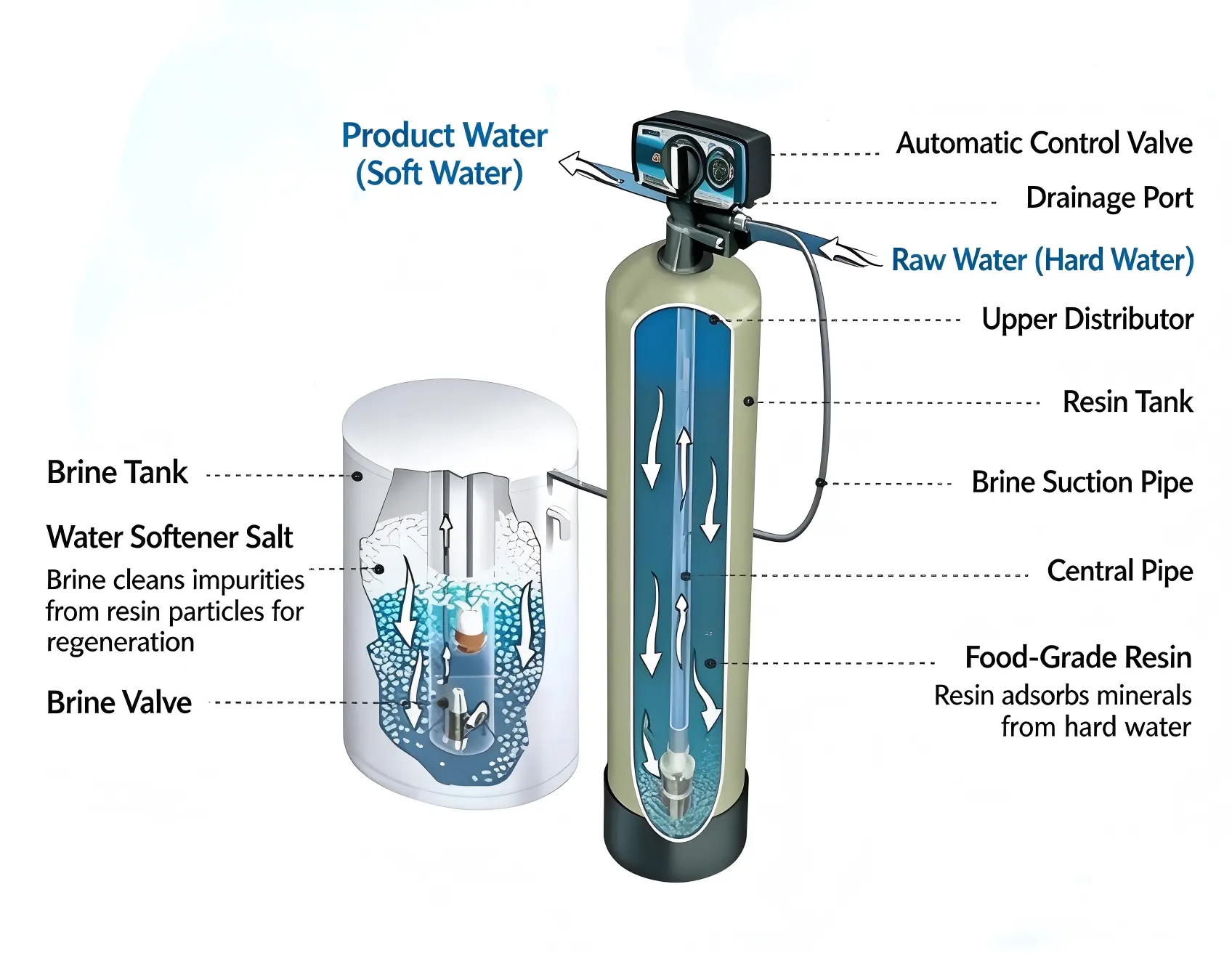
Pre-Treatment
Industrial Softening Water Treatment System
Removes calcium and magnesium hardness before RO to prevent membrane scaling. Designed for 24/7 continuous operation with automatic regeneration. Reference capacities from 1 m³/h to 30 m³/h, with simplex, duplex or triplex configurations for plants that need continuous softened water supply.
Capacity Range
1–30 m³/h, customizable
Configuration
Simplex / duplex / triplex; automatic regeneration
Application
RO pre-treatment, boiler feedwater, utility water, HVAC
05
Filtration
Ultrafiltration Filter (UF Membrane)
0.01 μm PVDF hollow fiber ultrafiltration for removal of bacteria, colloids, suspended solids and turbidity. Used as RO pre-treatment to protect membranes and reduce cleaning frequency, especially where feedwater comes from surface sources or has variable turbidity. Models YT110-90 (3000L/H) and YT140-110 (5000L/H).
Models
YT110-90 (3000L/H) · YT140-110 (5000L/H)
Precision
0.01 μm (10 nanometers)
Application
RO pre-treatment, colloid and bacteria removal, surface water feed
06
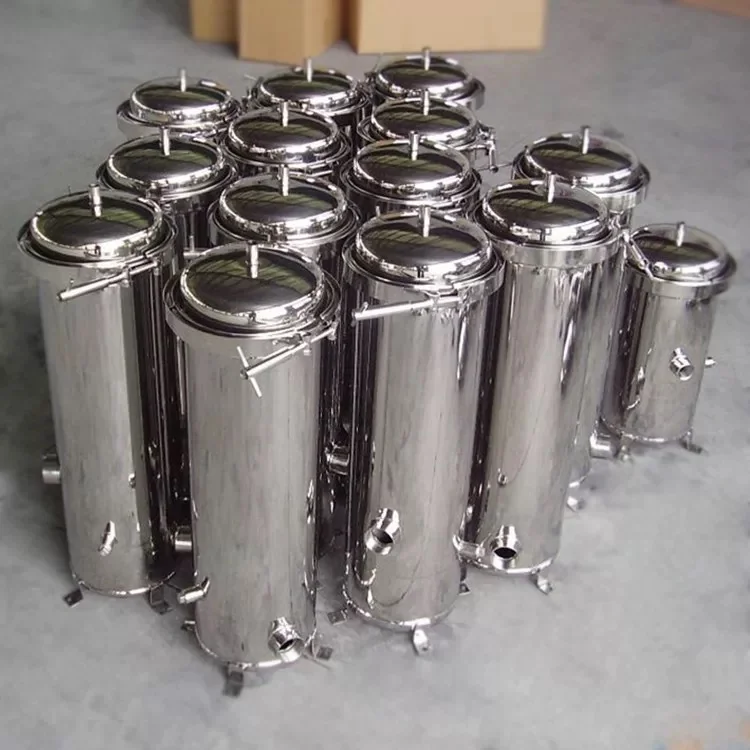
Precision Filtration
Precision Filter / Security Filter
Stainless steel housing with pleated or PP melt-blown cartridges for 5 μm / 1 μm / 0.2 μm protection. Serves as the cartridge filtration step before RO membranes and as a point-of-use final filter for wafer and PCB rinse water where particle count matters. High sealing integrity and stable differential pressure performance.
Housing
Stainless steel
Cartridge Options
Pleated · PP melt-blown · 0.2–20 μm
Application
RO security filtration, point-of-use final rinse filter, wafer and PCB processes
07
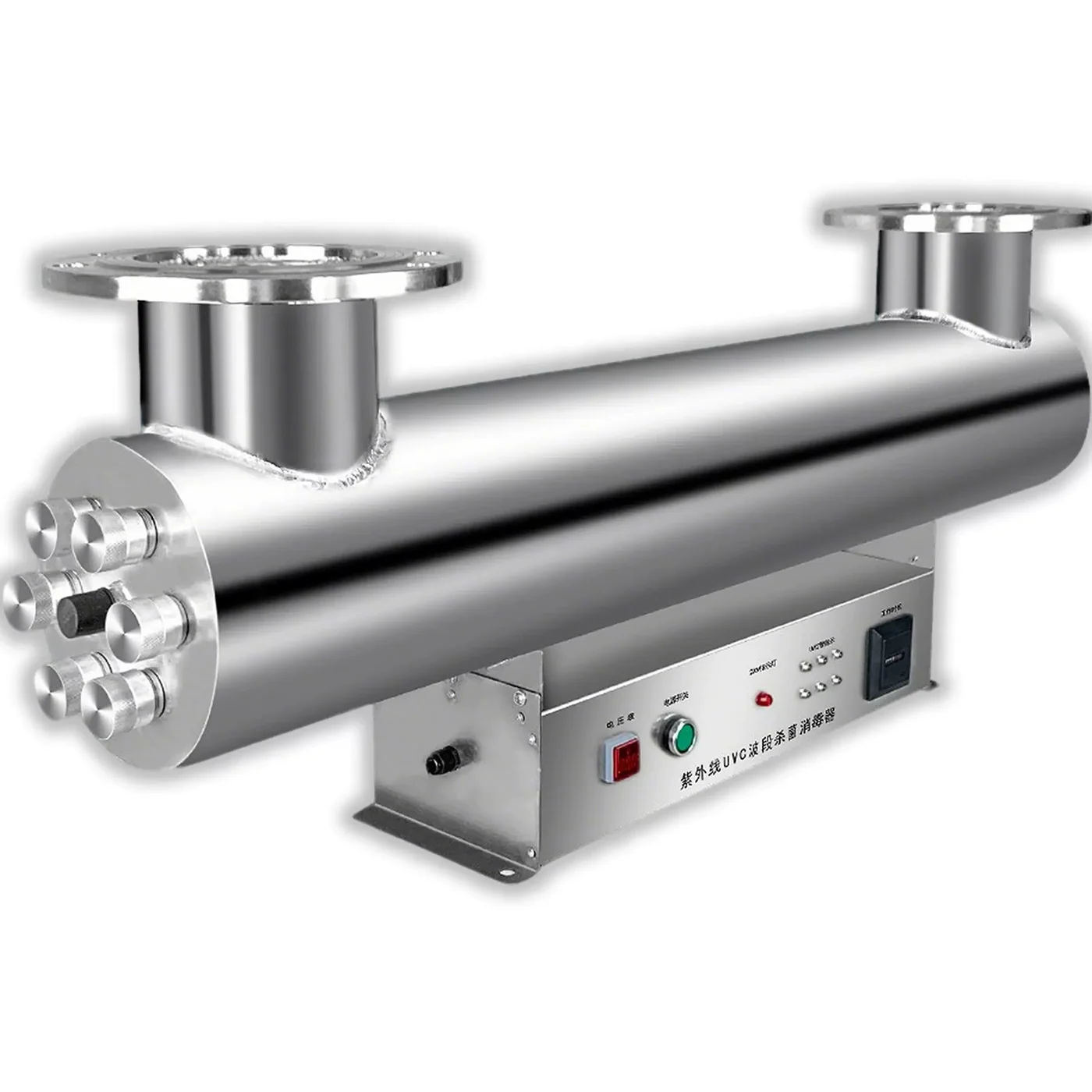
Disinfection
UV Sterilizer
Pure physical disinfection with no chemical residue or odor. 254 nm UV inactivates microorganisms in the ultrapure water loop without altering water chemistry, making it suitable where residual chemicals are not acceptable. Instant on/off operation with straightforward lamp maintenance.
Method
Physical UV disinfection (254 nm)
Residue
No chemical residue, no odor
Application
Ultrapure water loop, pure water, industrial water
08
Laboratory / QC
Laboratory Ultrapure Water Generator
For electronics QC laboratories, materials analysis and R&D. Produces Grade I ultrapure water with resistivity up to 18.2 MΩ·cm (25°C) and TOC ≤5 ppb. Multi-stage purification including RO, EDI, UV and ultrafiltration. Suitable for ICP-MS trace metal analysis, ion chromatography, HPLC and failure analysis sample preparation.
Resistivity
Up to 18.2 MΩ·cm (25°C)
TOC
≤5 ppb
Application
Electronics QC, ICP-MS, ion chromatography, HPLC, failure analysis
Core Components
Membrane Housings, RO Membranes and Filter Cartridges
In addition to complete systems, we supply core components and replacement consumables for electronics and semiconductor ultrapure water projects, with the pressure ratings and material options required for cleanroom environments.
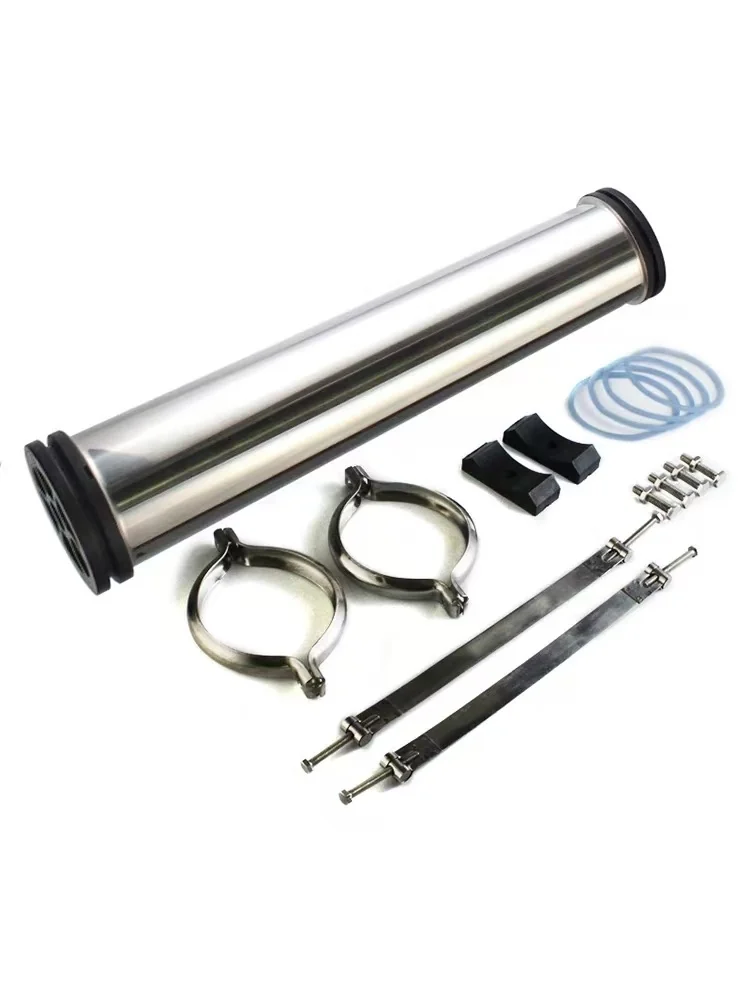
Stainless Steel Membrane Housing
304/316L stainless steel housing for electronics ultrapure water systems. Hygienic design, higher pressure resistance and stronger corrosion resistance. Compatible with 4040 and 8040 RO membranes, available in side-entry and end-entry configurations. View membrane housing range.
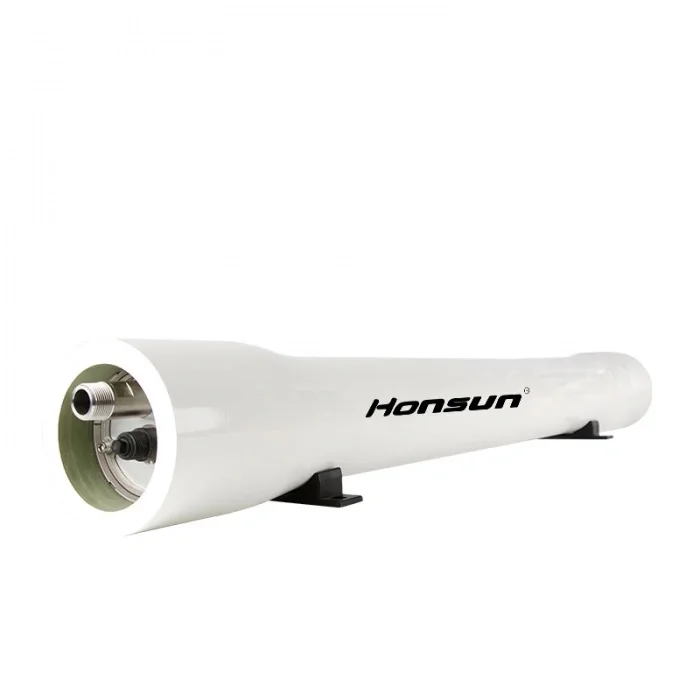
FRP Membrane Housing
High-strength FRP housing for electronics water treatment systems where hygienic requirements allow. Lightweight, corrosion resistant and cost-effective. Compatible with 4040 and 8040 membranes, rated 300/450/800 PSI. Compare housing materials.
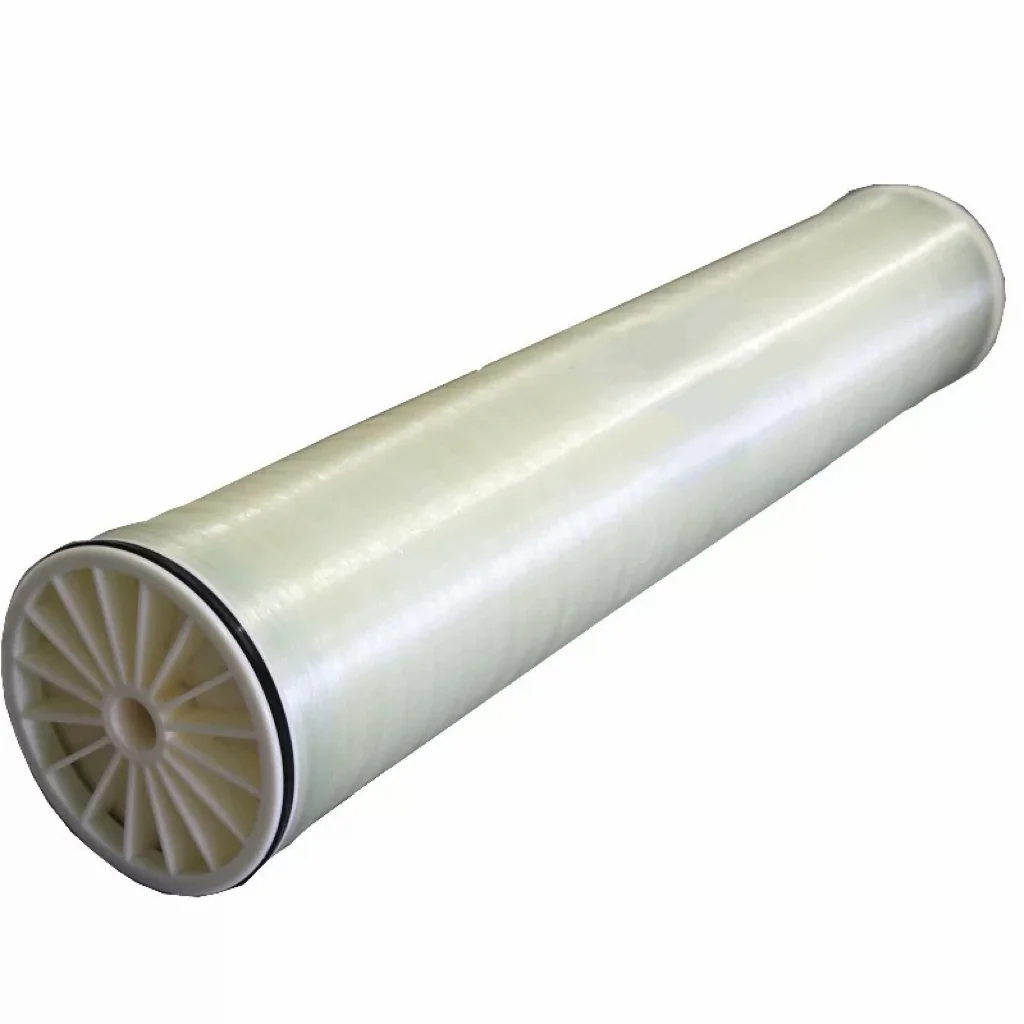
RO Membrane 4040 & 8040
Industrial RO membranes for electronics pure water and ultrapure water production. 4040 (0.5–5 T/H) for small-to-medium systems, 8040 (10–50+ T/H) for large-scale plants. Removes heavy metals, bacteria, viruses, salts and impurities, reducing conductivity, TDS and hardness. View RO membrane details.
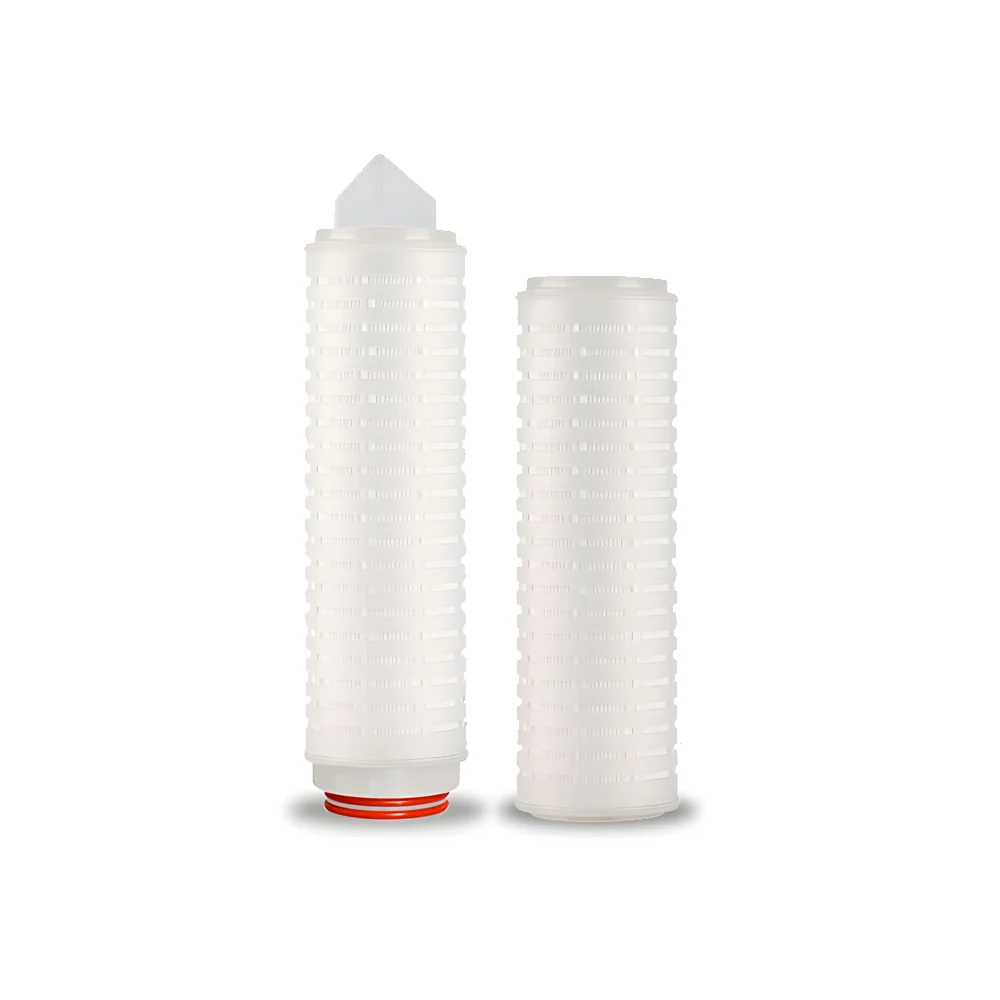
Filter Cartridge Family
PP melt-blown, wound, pleated and filter bag cartridges for electronics water treatment. Pleated cartridges are commonly used for RO security filtration and point-of-use 0.2 μm final filtration before wafer or PCB rinse. Available in 10", 20", 30" and 40" sizes. View all filter cartridges.
Process
RO + EDI Ultrapure Water Process
A complete ultrapure water train combines pretreatment, reverse osmosis, EDI, UV sterilization and final filtration into one continuous, controlled flow. The exact configuration depends on the application step, from PCB intermediate rinse to wafer final clean.
01
Pre-treatment
Multimedia, carbon and softening remove turbidity, chlorine and hardness. Ultrafiltration is added for surface water feed.
02
RO
Single-stage or two-pass reverse osmosis removes the bulk of dissolved salts, organics and microorganisms.
03
EDI
Electrodeionization (EDI) continuously removes residual ions without chemical regeneration, delivering stable low conductivity.
04
UV Sterilization
UV sterilization inactivates microorganisms and supports TOC control in the ultrapure water loop without leaving chemical residue.
05
Final Filtration
Precision filtration at point-of-use retains particles and protects critical wafer, PCB and component cleaning steps.
System configuration depends on the specific process step, feedwater analysis and required water quality. Not every project uses an identical train. Share your water analysis and purity target so the process can be selected according to actual operating conditions.
What water treatment equipment does a PCB plant need?
A typical PCB plant uses pretreatment (multimedia, carbon and softening), RO pure water equipment for intermediate rinse, an RO + EDI ultrapure water system for the final rinse stage, plus precision filtration and UV sterilization. Large plants often use a custom industrial pure water system to supply multiple rinse lines in parallel.
Why is RO + EDI preferred over single-stage RO for electronics manufacturing?
Single-stage RO removes the bulk of dissolved solids but does not consistently reach the low ionic level required for wafer cleaning or final PCB rinse. Two-pass RO + EDI adds a second RO stage and continuous electrodeionization, removing residual ions without chemical regeneration and stabilizing resistivity. This combination is widely used in electronics, semiconductor and solar cell manufacturing where water quality directly affects yield.
Can the system be expanded as production capacity grows?
Yes. Modular design allows adding parallel RO membrane elements, additional EDI modules or a second RO + EDI train as demand increases. When planning for expansion, oversize pretreatment and distribution piping by a reasonable margin during initial installation. We recommend discussing future expansion plans during the initial design stage so the skid layout and controls can accommodate later additions.
How do I maintain ultrapure water quality over time?
Critical maintenance includes periodic RO membrane performance trending (normalized flow, salt rejection, differential pressure), cartridge filter replacement based on differential pressure, UV lamp replacement at end of effective life, and continuous online resistivity and TOC monitoring. The distribution loop should be sanitized and recirculated to prevent biofilm formation. All parameters should be trended and reviewed against your process specification.
Do you provide replacement components for electronics water treatment systems?
Yes. We supply stainless steel and FRP membrane housings, 4040 and 8040 RO membranes, filter cartridges in 10", 20", 30" and 40" lengths, UV sterilizers and ultrafiltration membranes for electronics and semiconductor water treatment projects. Component pressure ratings and material options can be selected according to the specific system design.
Have an Electronics Water Project?
Tell us your application (PCB, semiconductor, solar or battery), required water quality and hourly demand. Our engineering team will recommend an RO + EDI configuration and provide a detailed proposal within 24–48 hours.