


Boiler & HVAC Water Softening Solutions
Industrial water softeners for boilers, central air conditioning and heating systems. Ion exchange softening removes calcium and magnesium to prevent scale, protect heat exchangers and reduce fuel consumption. Available from 1 m³/h to 30 m³/h and beyond, with 24/7 dual-tank configurations and automatic regeneration.
Industrial Boilers
Central HVAC
RO Pre-treatment
1–30 m³/h · 24/7 operation · Auto regeneration · Custom configuration
The Challenge
Why Boilers and HVAC Systems Need Softened Water
Hard water contains dissolved calcium (Ca²⁺) and magnesium (Mg²⁺) ions that form scale deposits when heated. In boilers, central air conditioning systems and heat exchangers, scale buildup reduces heat transfer efficiency, causes localized overheating and shortens equipment life. Softening the feedwater before it reaches the boiler or cooling loop is the most direct way to control this problem.
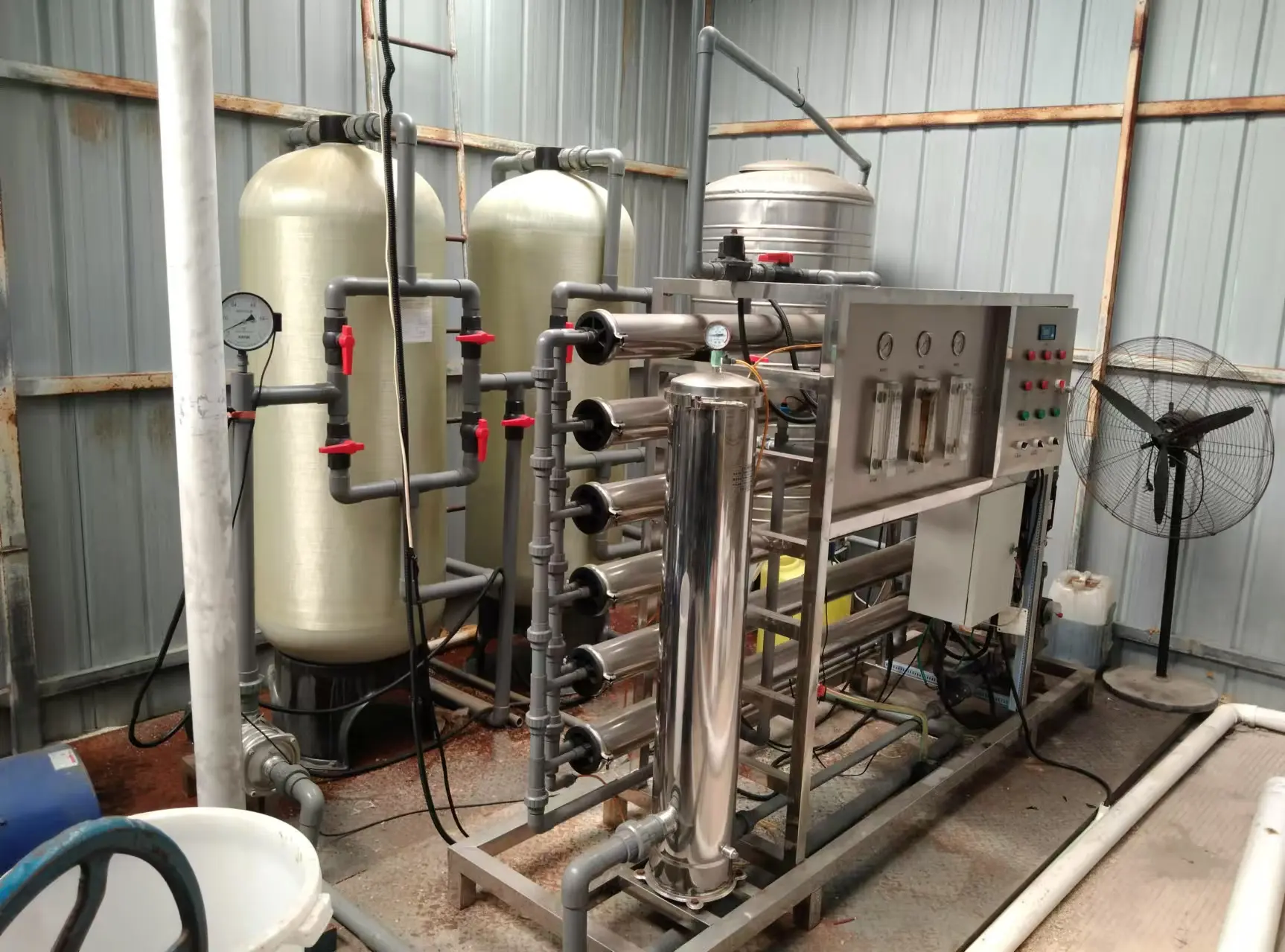
Efficiency Loss from Boiler Scale
Scale acts as an insulator and reduces heat transfer efficiency, increasing fuel consumption and operating costs. A scaled boiler must work harder to produce the same steam output. Industrial water softeners remove the hardness that forms scale before it reaches the boiler.
Equipment Damage
Scale causes localized overheating, which can lead to tube failures, cracked heat exchangers and premature equipment replacement. These repairs are costly and disruptive. Softened feedwater protects boiler tubes and HVAC heat exchangers from hardness-driven fouling.
System Downtime
Removing scale requires shutdowns, cleaning and lost production time. An unplanned boiler shutdown can disrupt industrial operations and delay project delivery. A 24/7 dual-tank softener keeps softened water available even during resin regeneration.
Why Softening
From Hard Water to Reliable Soft Water
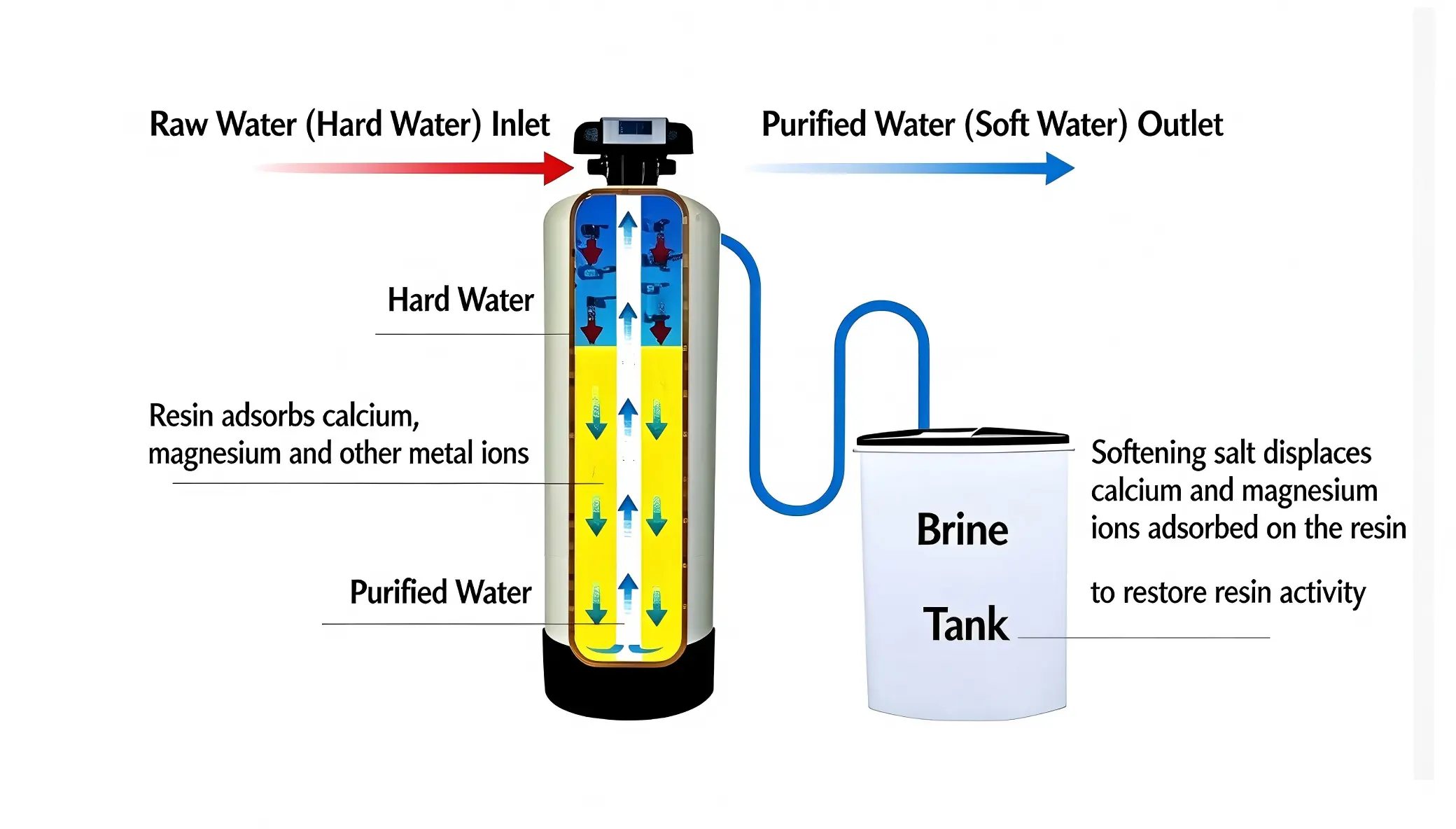
Hard water contains dissolved calcium and magnesium that form scale when heated. Ion exchange softening removes these ions and turns an unstable water source into a dependable supply for boilers, HVAC systems and process equipment. The process uses cation exchange resin and a softener control valve to automate service, brine regeneration and rinse cycles.
Hard Water
Untreated feedwater
- Contains dissolved calcium and magnesium
- Forms scale on heating surfaces
- Reduces heat transfer efficiency
- Shortens equipment service life
Treatment
Ion exchange softening
- Cation exchange resin removes calcium and magnesium
- Automatic softener control valve
- Dual-tank continuous operation available
- Automatic brine regeneration and rinse
Soft Water
On-site softened water supply
- Reduced water hardness
- Helps prevent scale on boiler tubes and heat exchangers
- Maintains heat transfer efficiency
- Extends equipment service life
Solution Equipment
Industrial Water Softeners for Boilers and HVAC
From 1 m³/h compact softeners for small boiler rooms to 30 m³/h industrial softening systems for large plants. Each model can be configured with simplex, duplex or triplex tanks, timer or meter regeneration, and FRP or stainless steel construction.
01
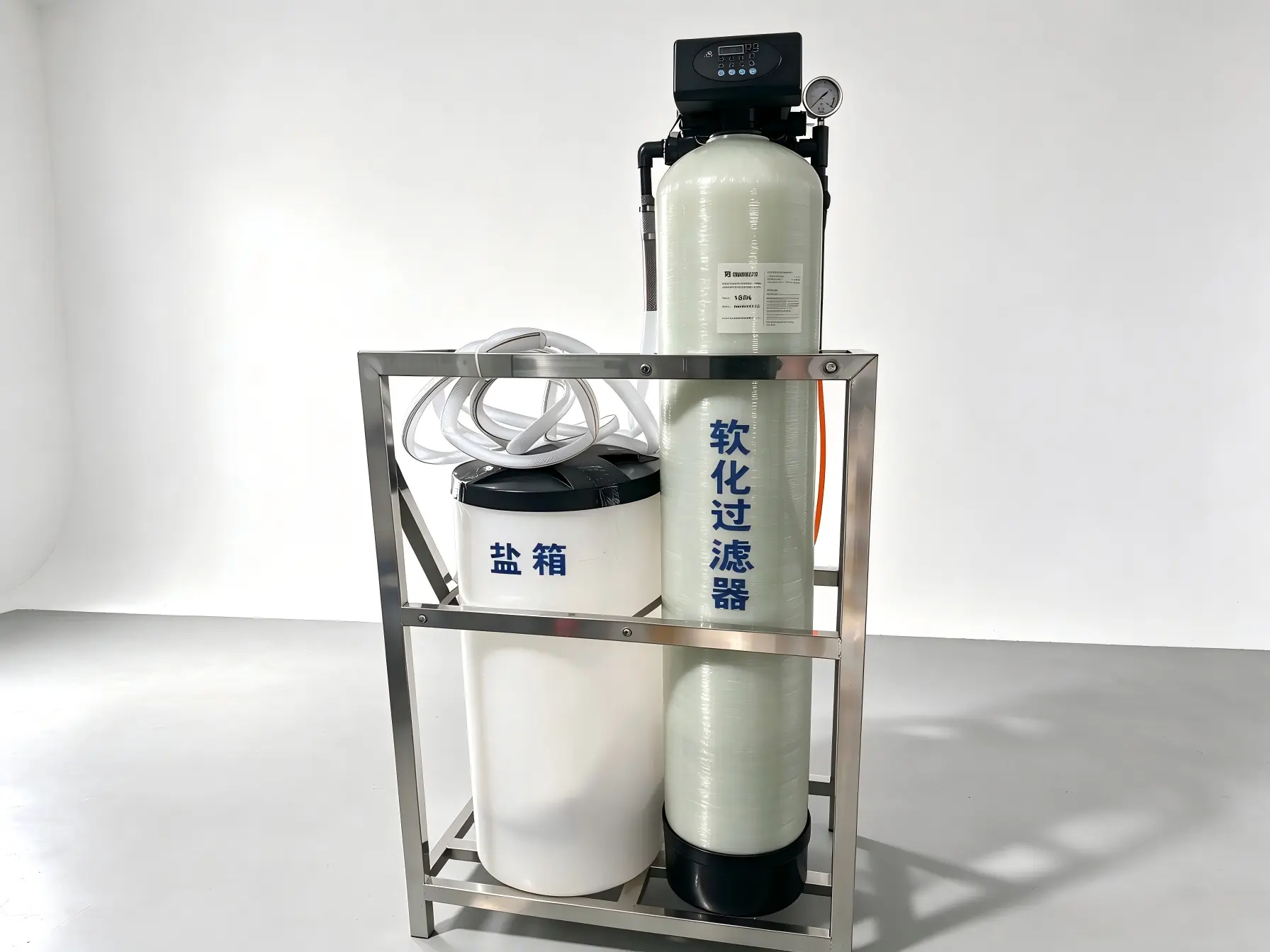
1 m³/h
1m³/h Water Softener Filter Equipment
Compact ion exchange softener for small boilers, apartment heating systems and light commercial HVAC. Single-tank configuration with automatic control valve and brine tank. Suitable where hardness is moderate and water demand is intermittent.
Capacity
1 m³/h (1 T/H)
Technology
Ion exchange resin
Application
Small boilers, residential complexes, small HVAC systems
02
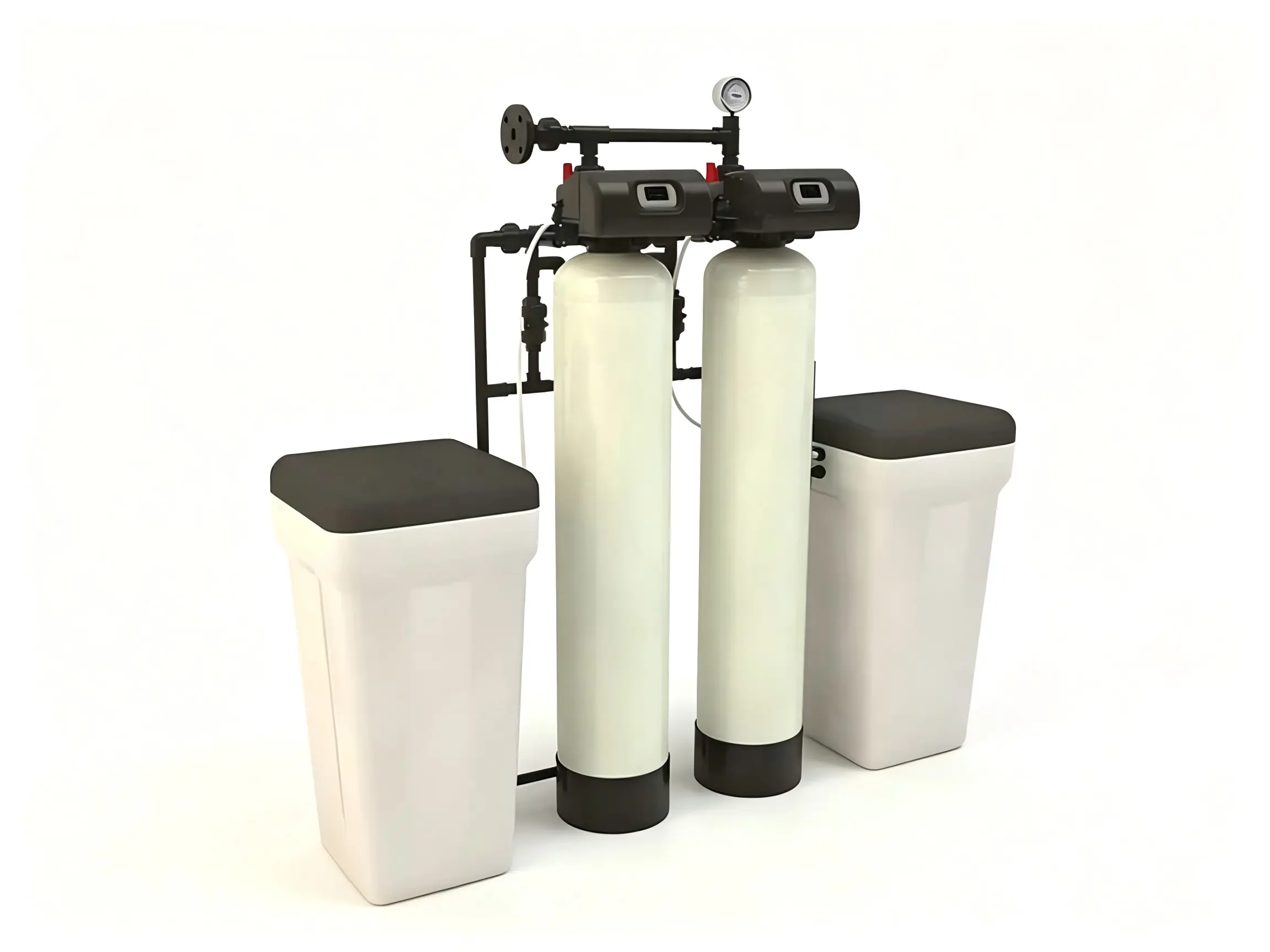
2 m³/h
2m³/h Water Softener Filter Equipment
Softener for small commercial and light industrial applications, including cafes, small hotels and boutique laundries. Reduces hardness in boiler feedwater and hot water systems, protecting heating elements and heat exchangers from scale.
Capacity
2 m³/h (2 T/H)
Technology
Ion exchange resin
Application
Cafes, small hotels, laundries, small boiler feedwater
03
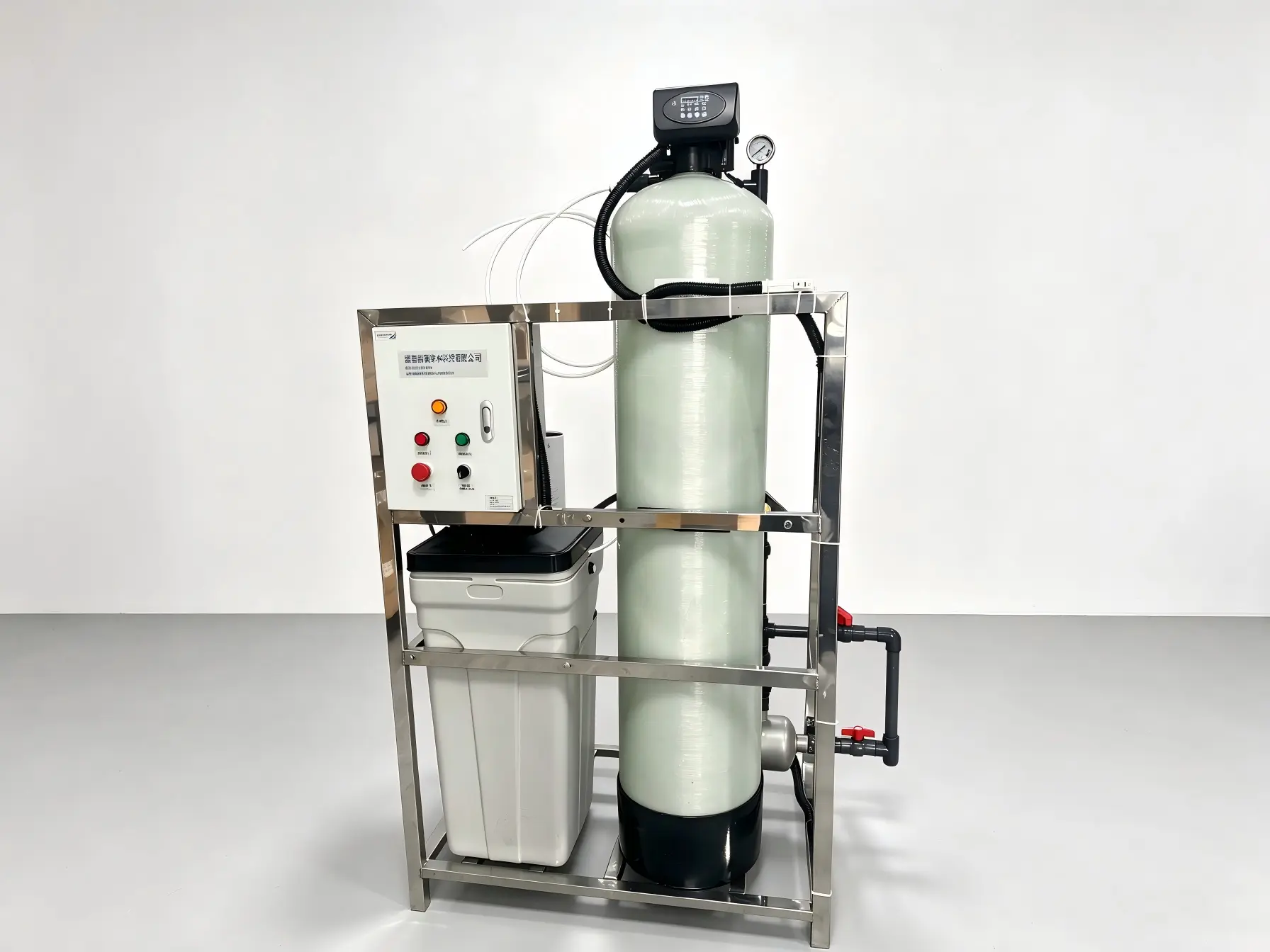
3 m³/h
3m³/h Water Softener Filter Equipment
Mid-capacity softener for restaurants, hospitals and small factory boiler rooms. Reduces calcium and magnesium before the boiler and in domestic hot water loops, lowering scale risk on heat transfer surfaces and extending maintenance intervals.
Capacity
3 m³/h (3 T/H)
Technology
Ion exchange resin
Application
Restaurants, hospitals, small factories, boiler feedwater
04
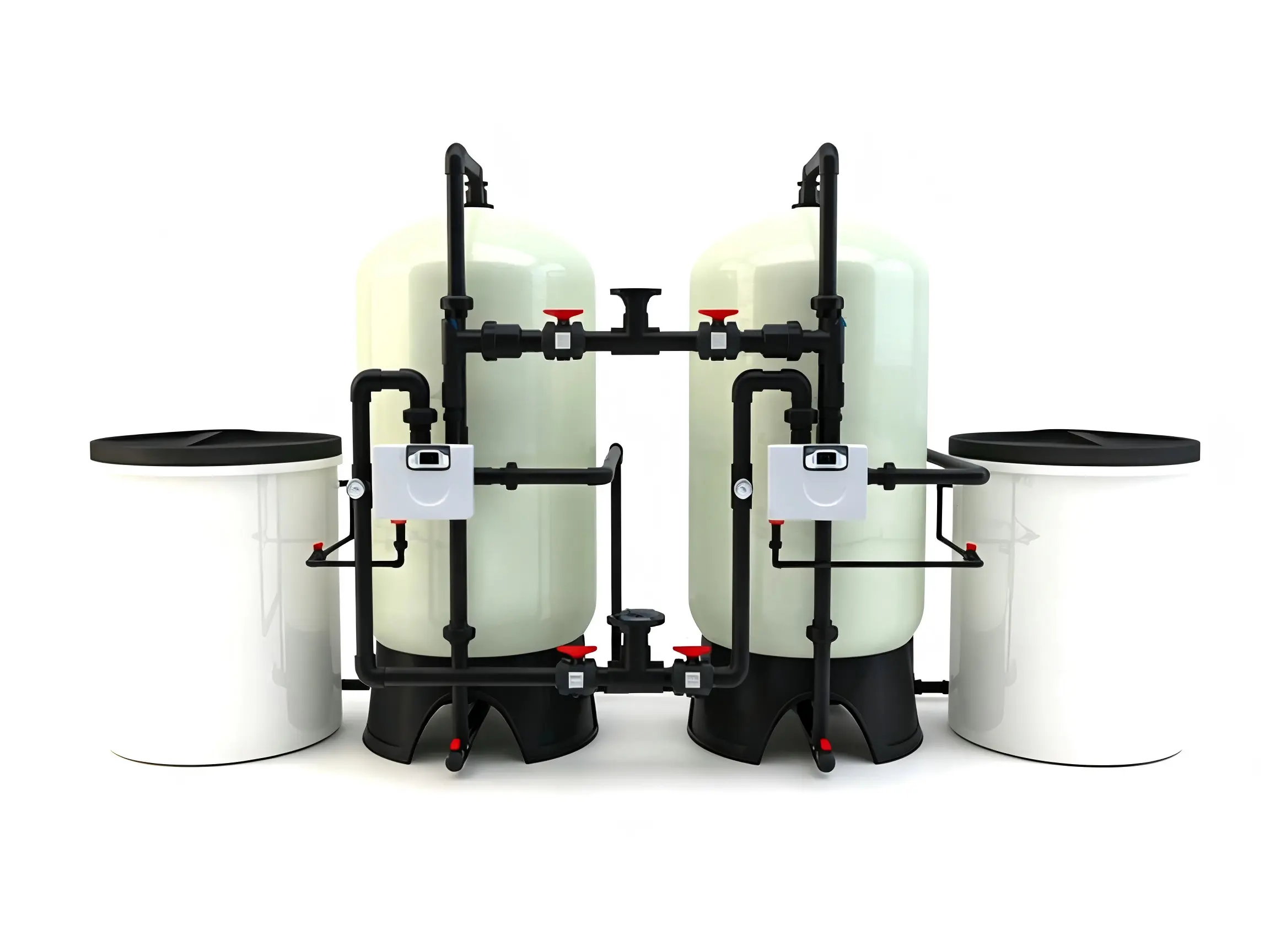
5 m³/h
5m³/h Water Softener Filter Equipment
Softener for medium hotels, industrial boilers and HVAC cooling water systems. Can be configured as a single tank or as a duty and standby pair for continuous operation. Suitable as RO pre-treatment where hardness control is required before membrane systems.
Capacity
5 m³/h (5 T/H)
Configuration
Single tank or duty and standby dual tank
Application
Medium hotels, industrial boilers, HVAC cooling water, RO pre-treatment
05
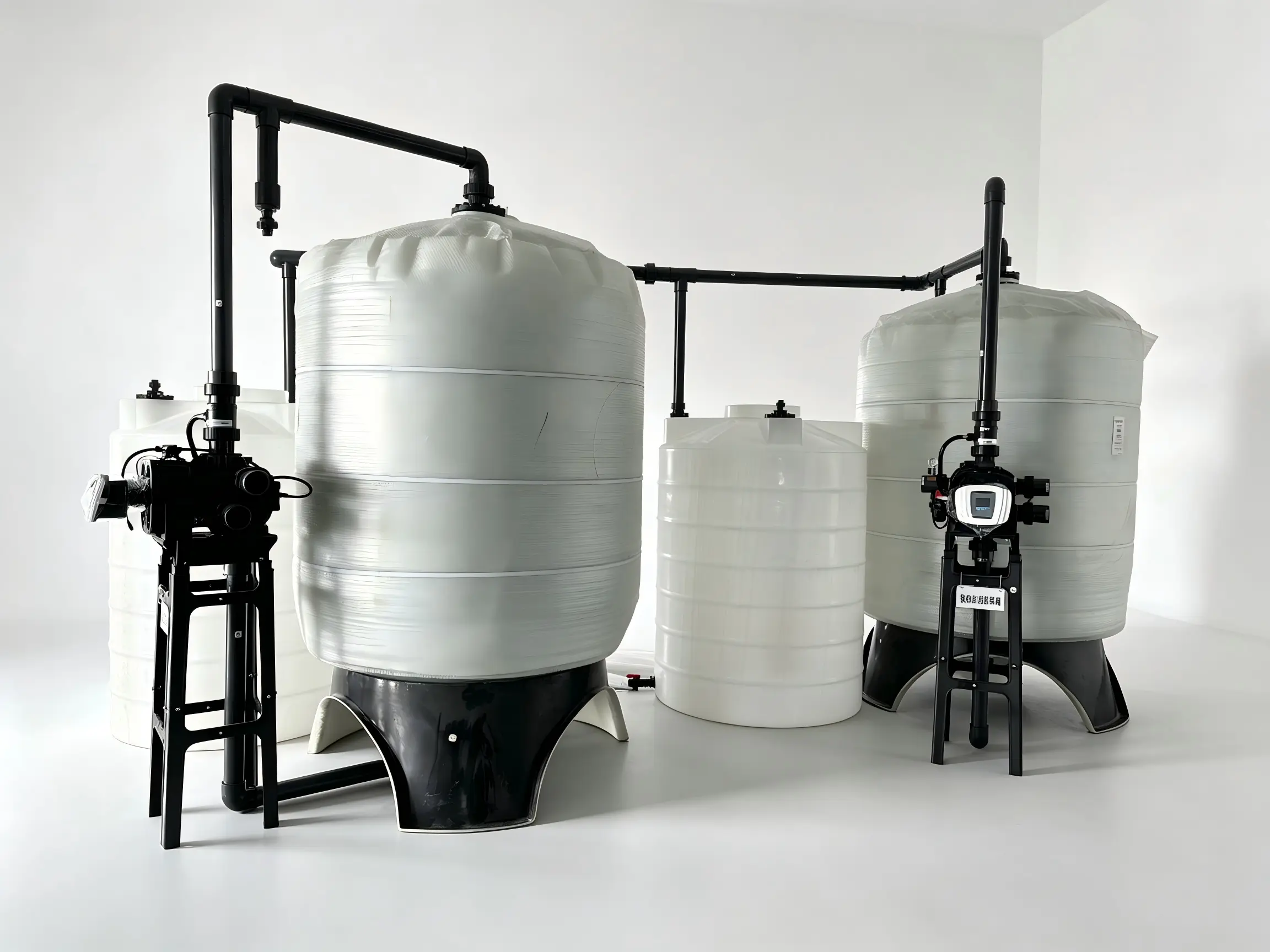
30 m³/h
30m³/h Industrial Water Softener
Large-capacity industrial softener for large hotels, factories and power plant boiler feedwater. Dual-tank alternating configurations maintain continuous softened water supply while one tank regenerates. Designed for large circulating cooling water systems and high-pressure boiler feedwater.
Capacity
30 m³/h (30 T/H)
Configuration
Dual-tank alternating, continuous supply
Application
Large hotels, factories, power plants, large cooling water systems
06
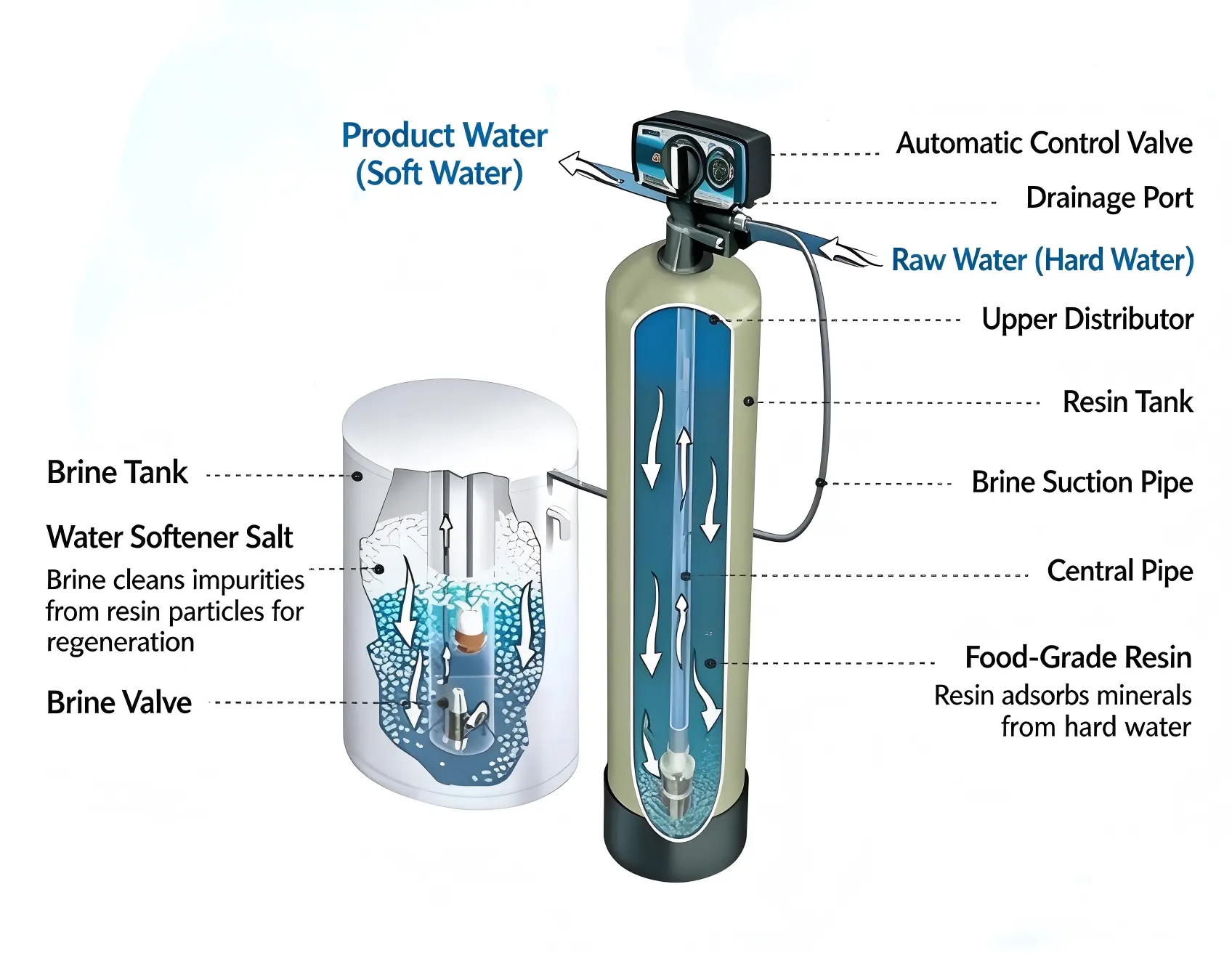
Custom Configuration
Custom Industrial Water Softening System
For projects that fall outside the standard 1 to 30 m³/h range, or that need specific tank materials, resin volume, regeneration control or PLC integration. Tank dimensions, resin loading, simplex/duplex/triplex arrangement and control system can be specified around your hardness, peak flow and site constraints.
Capacity
Beyond 30 m³/h, on request
Customization
Tank material, resin volume, duplex or triplex, PLC or SCADA integration
Application
Large boiler houses, district heating, industrial cooling water, RO pre-treatment
Core Components
Control Valves, Precision Filters and Supporting Equipment
In addition to complete softening systems, we supply the control valves, filtration and downstream treatment equipment that complete a boiler and HVAC water treatment solution.
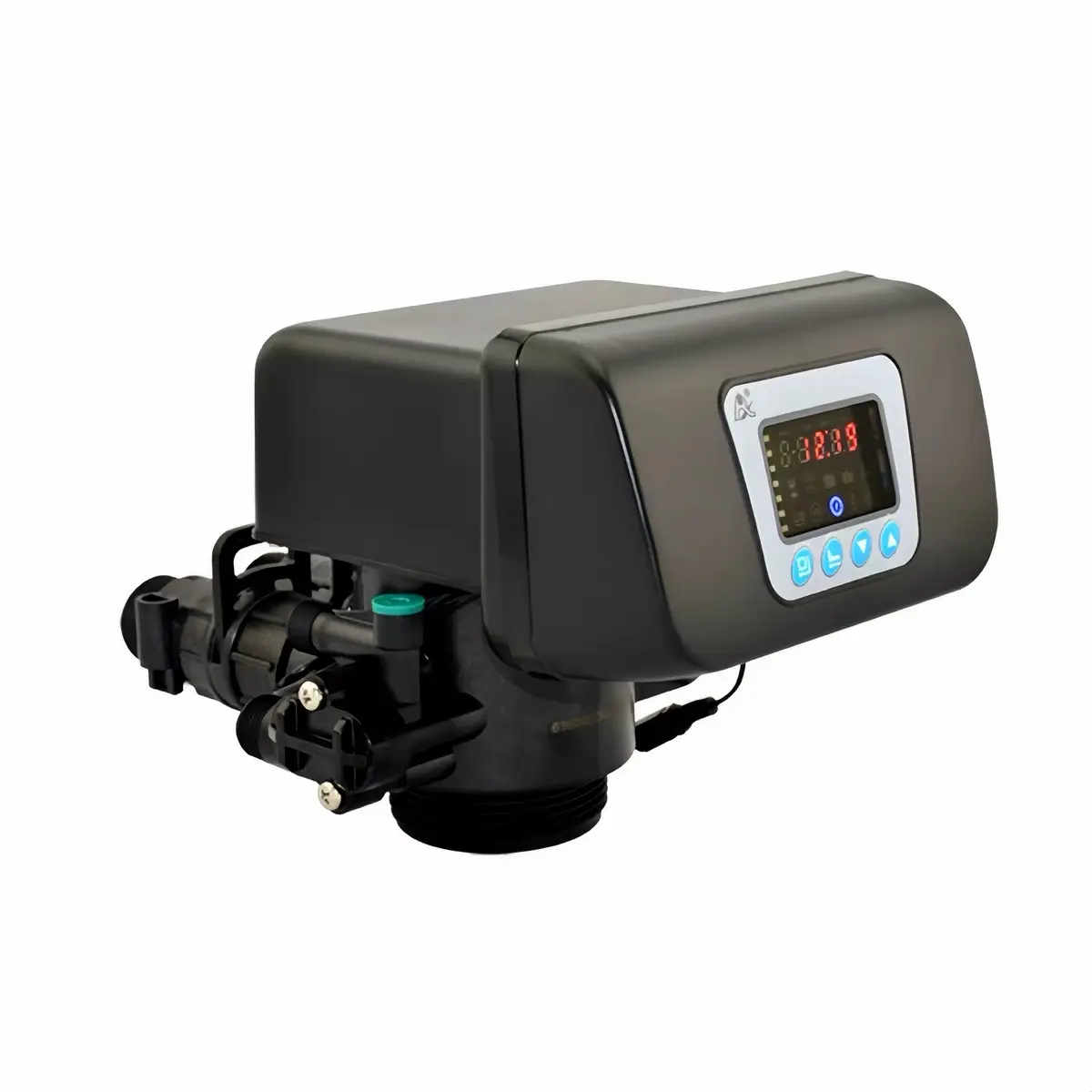
Softener Control Valve
Automatic control valve for water softening systems. Manages service, brine draw, regeneration and rinse cycles to remove calcium and magnesium ions and prevent scaling. View control valve range.
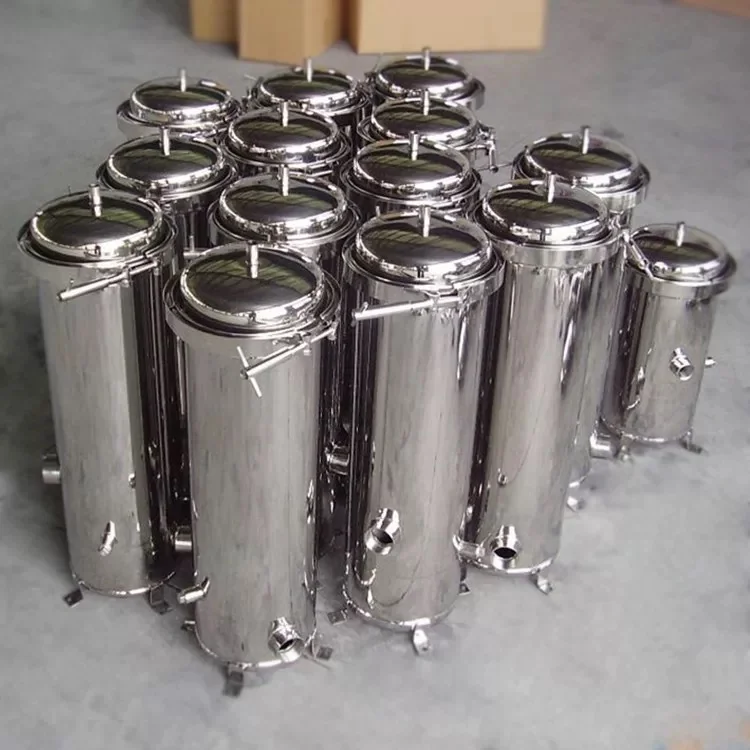
Precision Filter / Security Filter
Stainless steel housing with pleated or PP melt-blown cartridges for 5 μm / 1 μm / 0.2 μm protection. Installed after softening to trap resin fines and particles before the boiler or heat exchanger. View filter range.
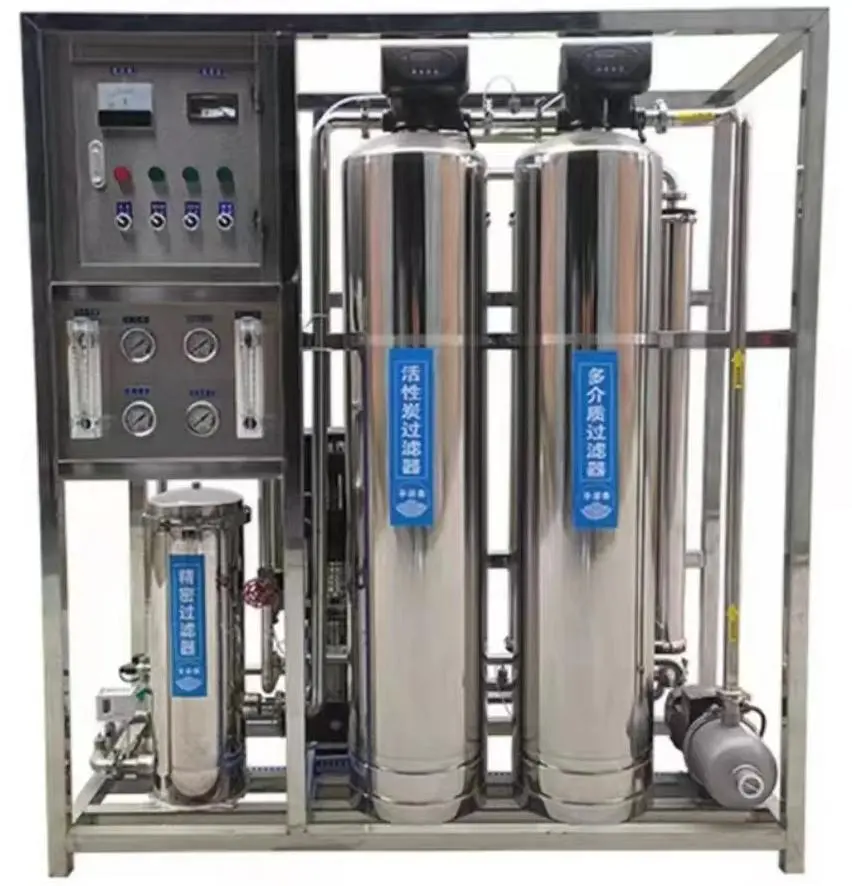
Reverse Osmosis Pure Water Equipment
For boilers that need demineralized feedwater beyond softening. RO removes dissolved salts after the softener and before the boiler, reducing blowdown and protecting high-pressure tubes. View RO systems.
Industrial Water Softening System
Complete softening systems from 1 m³/h to 30 m³/h and beyond, with ion exchange resin, automatic regeneration and optional duplex or triplex configuration for continuous boiler feedwater supply. View softening systems.
Process
Dual-Tank Softening Process
A dual-tank softening system combines automatic valve control, ion exchange resin and alternating tank operation into one continuous, controlled flow. One tank supplies softened water while the other regenerates, so the boiler or HVAC loop is never interrupted.
01
Hard Water Input
Raw water with dissolved calcium and magnesium enters the system.
03
Tank A: Softening
Ion exchange resin removes Ca²⁺ and Mg²⁺, producing soft water for the boiler or HVAC loop.
04
Tank B: Regeneration
Brine regeneration and rinse restore resin capacity while Tank A remains in service.
05
Automatic Alternation
Tanks alternate automatically to maintain continuous soft water supply.
06
Continuous Soft Water
24/7 soft water supply with no interruption to boiler or HVAC operation.
The final configuration is selected according to feedwater hardness, required flow rate and operating hours. Single-tank systems are suitable for intermittent demand, while dual-tank systems are recommended for boilers and HVAC loops that cannot accept regeneration downtime.
How do I choose a water softener for my boiler?
Sizing depends on peak flow rate, operating hours, feedwater hardness and daily hardness load. A 1 m³/h to 3 m³/h softener is typically enough for small boiler rooms, while 5 m³/h to 30 m³/h systems suit medium hotels, factories and power plants. For boilers that run continuously, a dual-tank duty and standby configuration is recommended so regeneration does not interrupt feedwater supply.
Why does a water softener need salt?
Salt (sodium chloride) is used to regenerate the softening resin. When resin becomes saturated with calcium and magnesium, it loses its ability to soften water. Brine flushes the hardness ions off the resin and recharges it with sodium ions, restoring its softening capacity. Salt consumption depends on resin volume, water hardness and regeneration frequency, and a suitable salt supply plan can be arranged based on your project.
Will softened water taste salty?
No. Although sodium replaces calcium and magnesium, the sodium level in softened water is generally low. Softened water is widely used for industrial, commercial and domestic applications. For low-sodium drinking water, a point-of-use reverse osmosis system can be installed at the drinking tap while the rest of the facility uses softened water.
Can a softener remove iron and manganese?
Standard softening resin is mainly designed for calcium and magnesium removal. For water with iron and manganese, a manganese sand filter or specialized iron removal media can be installed upstream for oxidation and filtration. Where iron and manganese are present together with hardness, a combined filtration and softening train is usually the practical solution.
What happens if the brine tank runs out of salt?
If the brine tank runs out of salt, the next regeneration will fail. The resin remains saturated with calcium and magnesium and hard water passes through untreated, allowing scale to begin forming in boilers and heat exchangers. Prevention includes monitoring salt level regularly, setting low-salt alarms where available, arranging salt delivery and keeping a minimum supply on site. Recovery includes refilling the brine tank, allowing salt to dissolve, initiating manual regeneration and testing soft water hardness to confirm.
Can softened water be used for RO pre-treatment?
Yes. Softening before RO removes calcium and magnesium that would otherwise precipitate on the membrane surface, reducing scaling risk and cleaning frequency. For high-hardness feedwater, a softener followed by a precision filter is a common pre-treatment arrangement before the RO stage.
Have a Boiler or HVAC Water Project?
Tell us your water source, feedwater hardness, required flow rate and application. Our engineering team will recommend a softening configuration and provide a detailed proposal within 24–48 hours.