


Pharmaceutical & Biotechnology Water Treatment Solutions
Complete water treatment solutions for drug manufacturing, biotechnology production and GMP-regulated facilities. Core process based on two-pass RO + EDI, supported by softening pretreatment, ultrafiltration, precision filtration and UV sterilization, configured to meet USP, EP and ChP purified water (PW) standards with DQ/IQ/OQ/PQ validation documentation support.
Pharmaceutical PW
Biotechnology
Two-Pass RO + EDI
Pre-treatment · Softening · Two-pass RO · EDI · UF · Precision filtration · UV · Validation support
The Challenge
Pharmaceutical Purified Water Quality Requirements
Pharmaceutical drug manufacturing, biotechnology fermentation, medical device cleaning and laboratory analysis require water with strictly controlled ionic content, organic compounds, particles and microbiological contamination. Purified Water (PW) must meet pharmacopeial limits for conductivity (≤1.3 μS/cm at 25°C), TOC (≤500 ppb) and bioburden, while Water for Injection (WFI) adds an endotoxin limit of ≤0.25 EU/mL. System design, material selection and validation documentation directly affect product efficacy, stability, safety and GMP compliance.
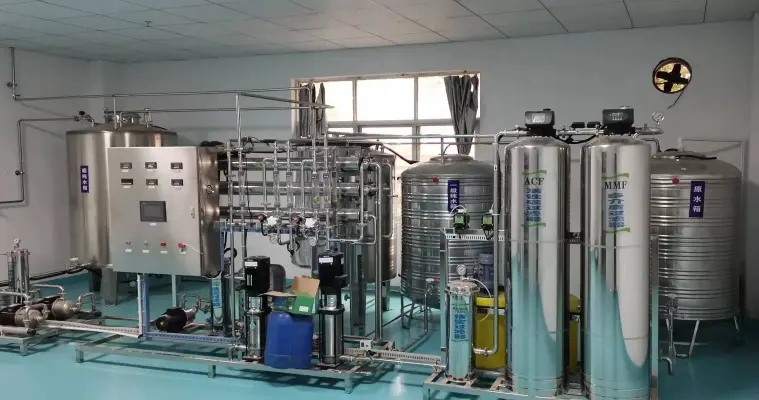
Ionic Contamination and Conductivity
Dissolved ions interfere with API synthesis, formulation stability and analytical accuracy. RO + EDI pharmaceutical water systems continuously remove ionic contaminants to achieve the ≤1.3 μS/cm conductivity limit required for USP Purified Water, without chemical regeneration.
Organic Carbon and Particles
Organic compounds and particulate matter cause TOC excursions and membrane fouling. Multi-stage filtration, activated carbon adsorption and RO membranes (4040 / 8040) reduce TOC below the 500 ppb pharmacopeial threshold for pharmaceutical purified water.
Microbial and Endotoxin Control
Bacterial endotoxins and biofilm formation compromise product safety and trigger regulatory non-compliance. UV sterilization at 254 nm and 0.2-micron final filters control microbial contamination in pharmaceutical water distribution loops. Membrane-based WFI trains combine RO + EDI + ultrafiltration for endotoxin control.
Why High-Purity Water
From Tap Water to USP Purified Water
Pharmaceutical purified water production follows a validated multi-barrier approach. The established process train combines pre-treatment (multimedia filtration, softening, cartridge filtration), two-pass reverse osmosis, electrodeionization (EDI), and optional UV and ultrafiltration polishing. This sequence removes dissolved solids, organic carbon, particles, bacteria and endotoxins in stages, producing water that meets pharmacopeial limits under defined operating conditions.
Raw Water
Untreated feedwater
- Tap water or well water feedwater
- Contains dissolved solids, hardness, chlorine and microorganisms
- Conductivity and TOC far above pharmacopeial limits
- Unsuitable for pharmaceutical manufacturing
Treatment
Two-pass RO + EDI purification train
- Multimedia, activated carbon and softening pre-treatment
- Two-pass reverse osmosis (RO) for bulk ion removal
- EDI polishing without chemical regeneration
- Optional UV oxidation and ultrafiltration polishing
Purified Water
USP / EP / ChP Purified Water
- Conductivity ≤1.3 μS/cm at 25°C
- Total Organic Carbon (TOC) ≤500 ppb
- Bioburden controlled; endotoxin limit for WFI ≤0.25 EU/mL
- Meets USP, EP and ChP pharmacopeial standards under validated operating conditions
Solution Equipment
RO + EDI Systems and Supporting Equipment
From the core two-pass RO + EDI purified water system to softening pretreatment, ultrafiltration, precision filtration, UV sterilization and validated components, configured as a complete pharmaceutical water treatment solution.
01
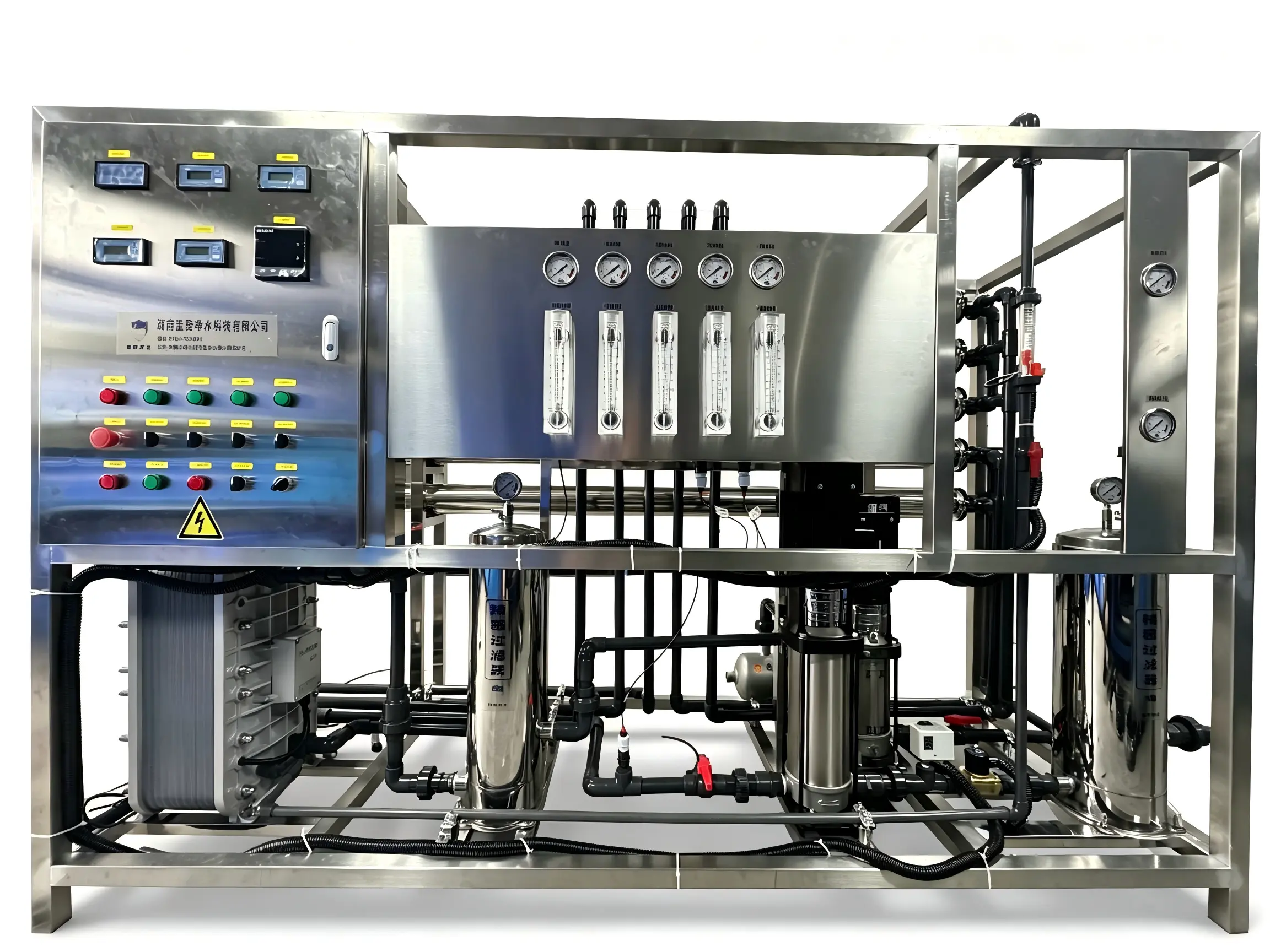
Core System
Two-Pass RO + EDI Purified Water System
Engineered for pharmaceutical purified water (PW) and biotechnology process water. Two-pass reverse osmosis followed by electrodeionization (EDI) continuously removes dissolved ions without chemical regeneration, achieving stable conductivity for pharmacopeial PW production. Available in 1 T/H configuration, with customization based on capacity, feedwater analysis and target water grade.
Process
Two-pass RO + EDI polishing
Reference Capacity
1 T/H (1 m³/h), customizable
Application
Pharmaceutical purified water, biotechnology process water, laboratory high-purity water
Validation Support
DQ / IQ / OQ / PQ documentation support available
02
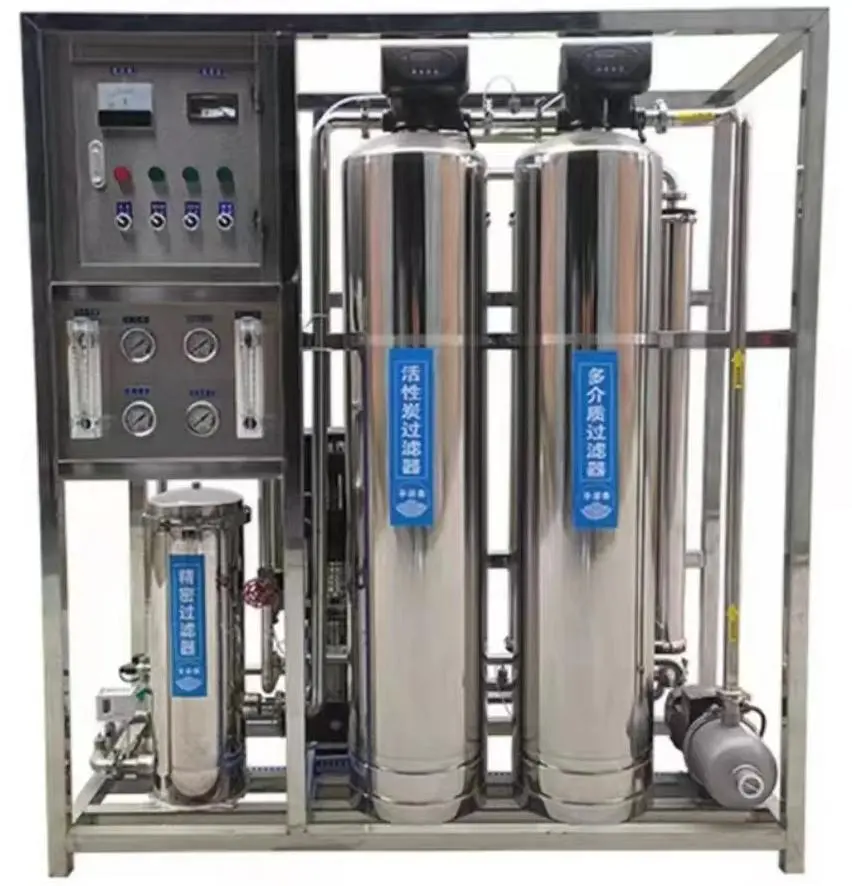
RO / Pre-Treatment
Reverse Osmosis Pure Water Equipment
RO pure water equipment removes suspended solids, colloids, heavy metals, inorganic salts, bacteria and organics. Available in stainless steel/FRP high-pressure version (1000L/H, 2000L/H) and stainless steel fully enclosed cabinet model (250L/H, 500L/H). Used as a standalone RO stage or as the first-pass RO within a two-pass pharmaceutical water train.
Models
1000L/H · 2000L/H (industrial) · 250L/H · 500L/H (cabinet)
Construction
Stainless steel / FRP high-pressure; 304 stainless steel cabinet option
Application
Pharmaceutical process water, first-pass RO, pre-treatment for RO + EDI
03
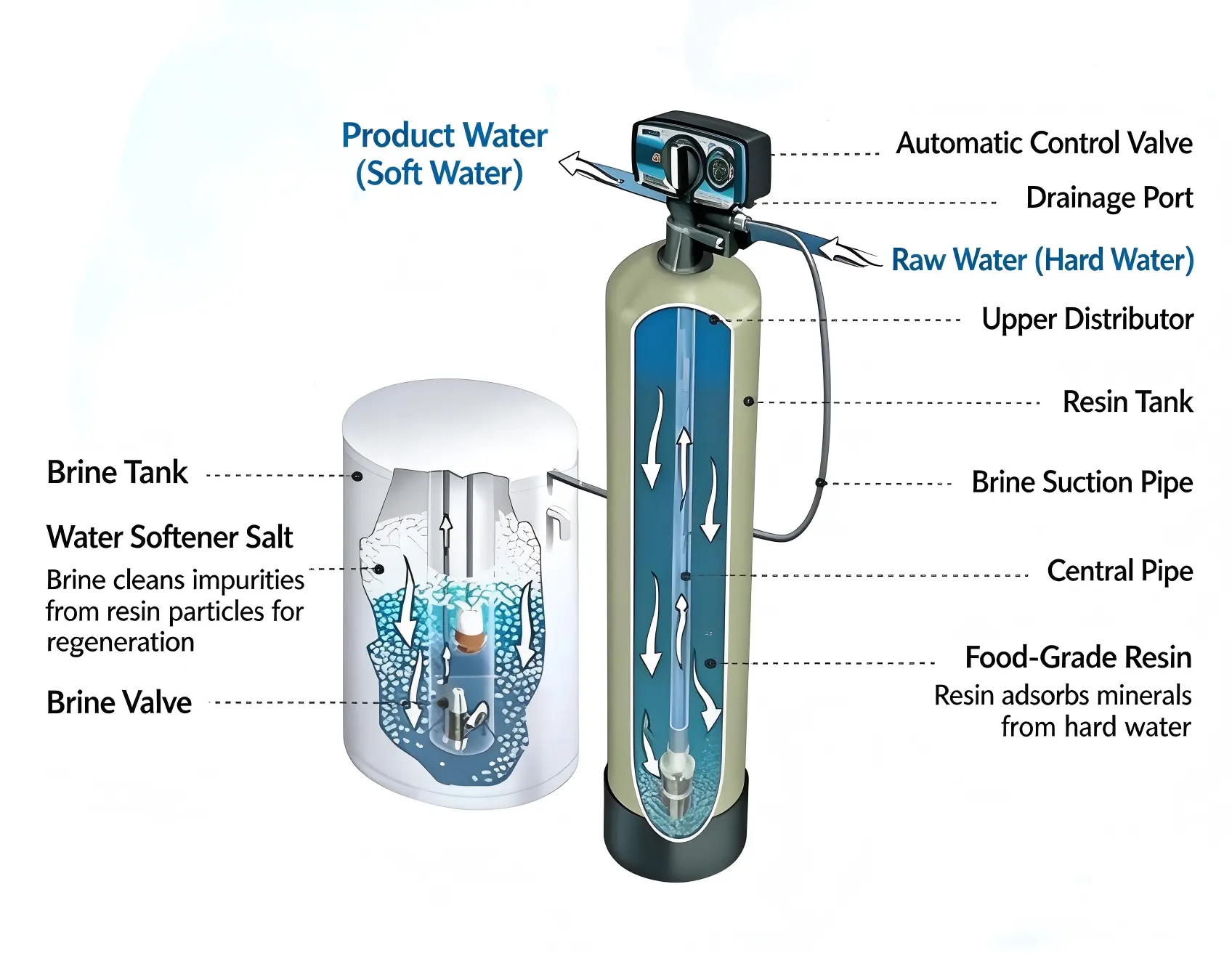
Pre-Treatment
Industrial Softening Water Treatment System
Removes calcium and magnesium hardness before RO to prevent membrane scaling. Designed for 24/7 continuous operation with automatic regeneration. Reference capacities from 1 m³/h to 30 m³/h, with simplex, duplex or triplex configurations for pharmaceutical projects requiring uninterrupted softened water supply.
Capacity Range
1–30 m³/h, customizable
Configuration
Simplex / duplex / triplex; automatic regeneration
Application
RO pre-treatment, pharmaceutical water system hardness protection
04
Pre-Treatment / Polishing
Ultrafiltration Filter (UF Membrane)
0.01 μm PVDF hollow fiber ultrafiltration for removal of bacteria, colloids, suspended solids and turbidity. Used as RO pre-treatment to protect membranes, and as a polishing step in membrane-based WFI trains for endotoxin and particle control. Models YT110-90 (3000L/H) and YT140-110 (5000L/H).
Models
YT110-90 (3000L/H) · YT140-110 (5000L/H)
Precision
0.01 μm (10 nanometers)
Application
RO pre-treatment, colloid and bacteria removal, membrane WFI polishing
05
Precision Filtration
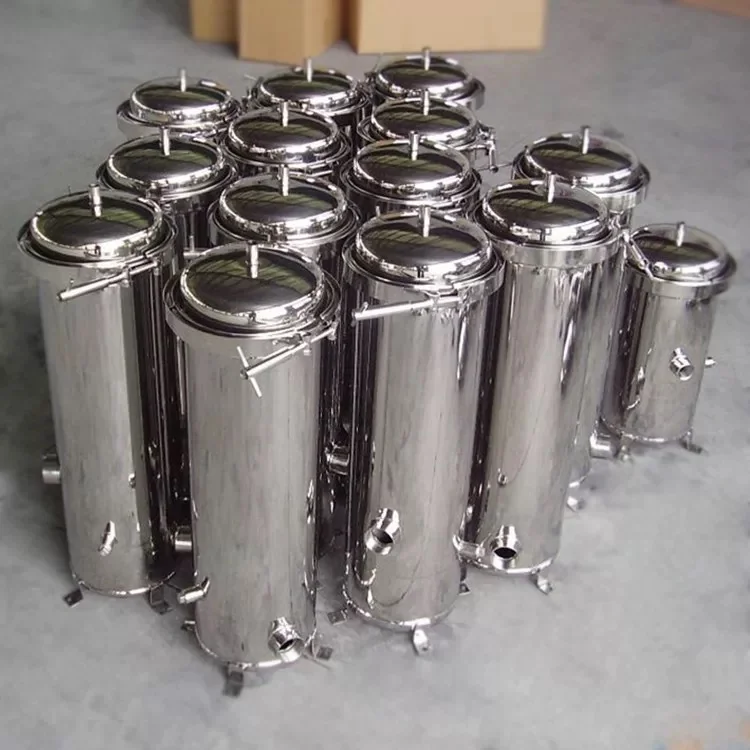
Precision Filter / Security Filter
Stainless steel housing with pleated or PP melt-blown cartridges for 5 μm / 1 μm / 0.2 μm protection. Serves as the cartridge filtration step before RO membranes and as a point-of-use final filter in pharmaceutical water distribution. High sealing integrity and stable differential pressure performance.
Housing
Stainless steel
Cartridge Options
Pleated · PP melt-blown · 0.2–20 μm
Application
RO security filtration, point-of-use filtration, pharmaceutical water pre-treatment
06
Disinfection
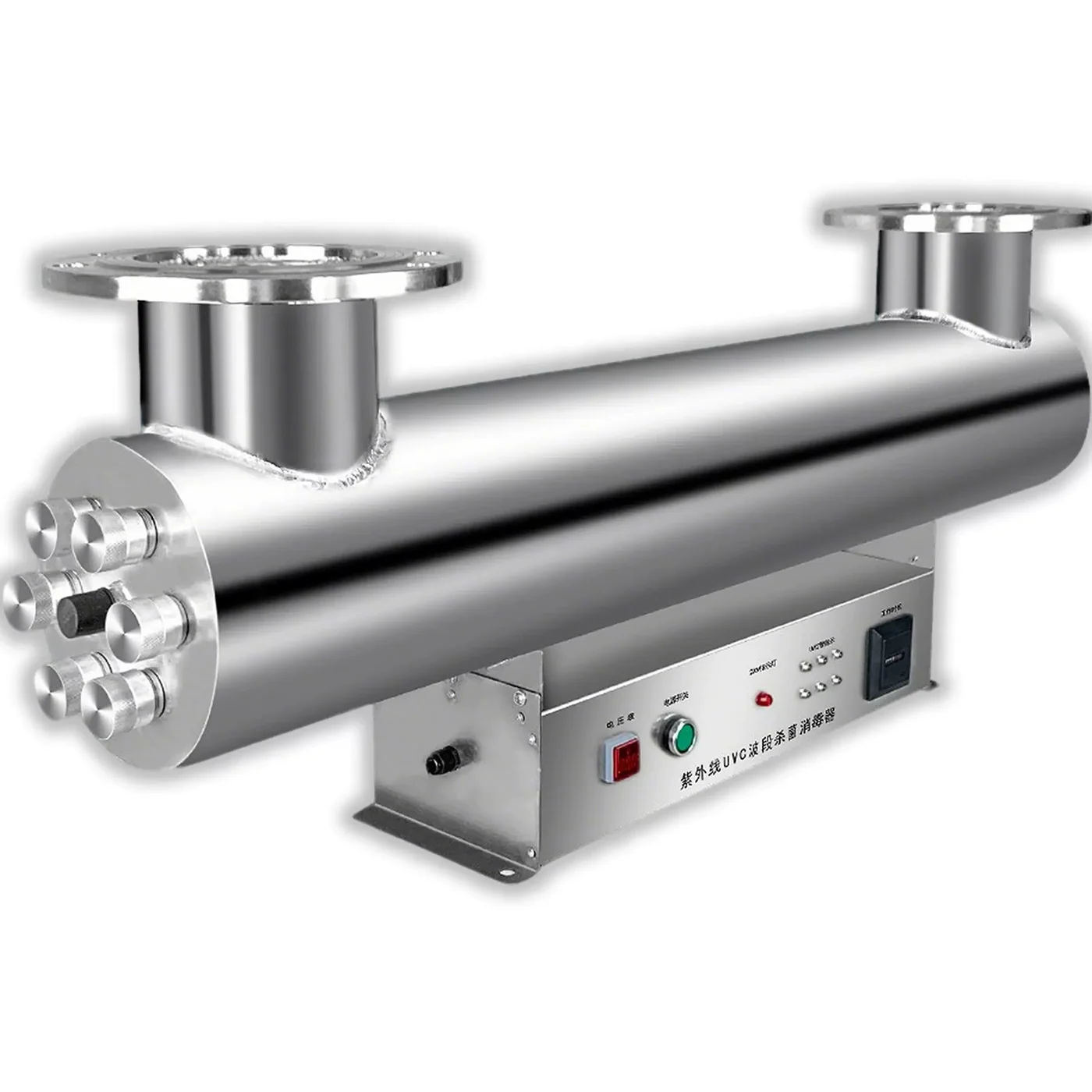
UV Sterilizer
Pure physical disinfection with no chemical residue or odor. 254 nm UV inactivates microorganisms in the water loop without altering water chemistry. Suitable for pharmaceutical purified water, laboratory water and point-of-use protection. Instant on/off operation with straightforward lamp maintenance.
Method
Physical UV disinfection (254 nm)
Residue
No chemical residue, no odor
Application
Pharmaceutical water loop, pure water, laboratory water
07
Laboratory / QC
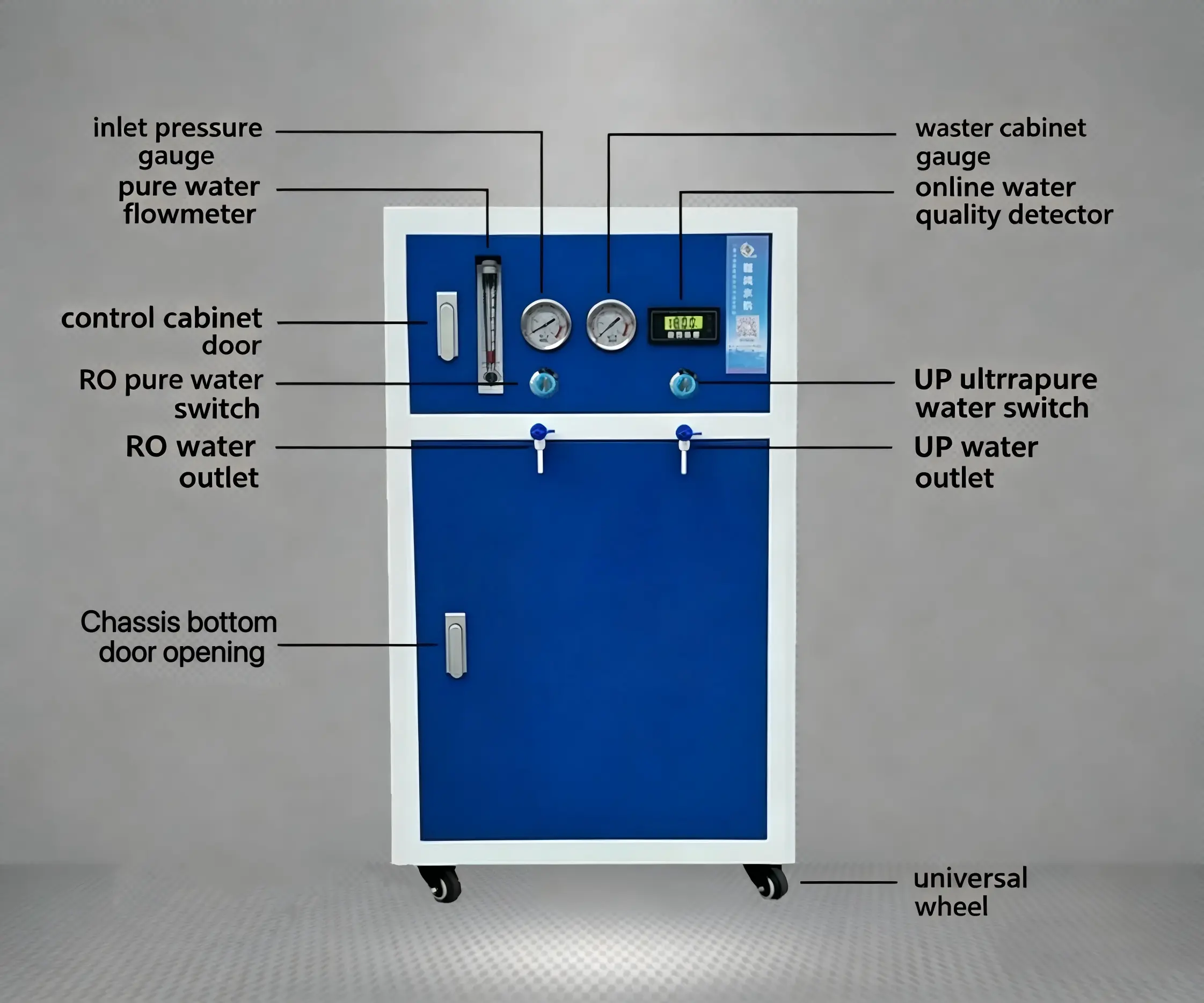
Laboratory Ultrapure Water Generator
For pharmaceutical QC laboratories, R&D and analytical applications. Produces Grade I ultrapure water with resistivity up to 18.2 MΩ·cm (25°C) and TOC ≤5 ppb. Multi-stage purification including RO, EDI, UV and ultrafiltration. Suitable for HPLC, LC-MS, ICP-MS, PCR and cell culture.
Resistivity
Up to 18.2 MΩ·cm (25°C)
TOC
≤5 ppb
Application
Pharmaceutical QC, analytical chemistry, molecular biology, cell culture
Core Components
Membrane Housings, RO Membranes and Filter Cartridges
In addition to complete systems, we supply core components and replacement consumables for pharmaceutical and biotechnology water treatment solutions, with the hygiene and material options required for GMP environments.
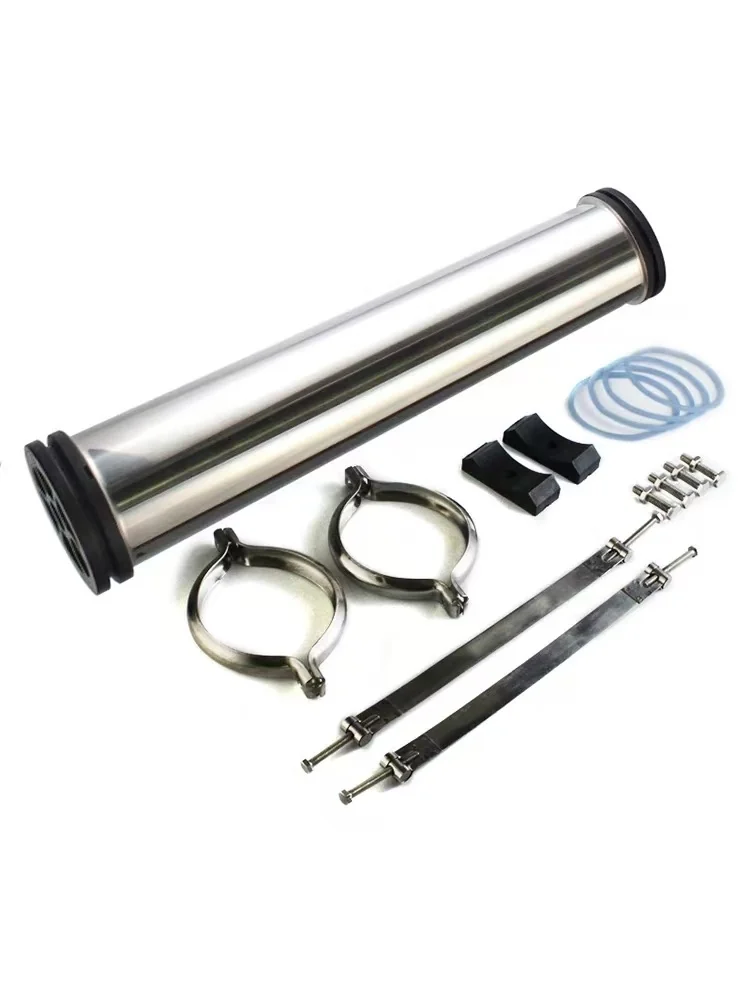
Stainless Steel Membrane Housing
304/316L stainless steel housing for pharmaceutical RO and purified water systems. Hygienic design, higher pressure resistance and stronger corrosion resistance. Compatible with 4040 and 8040 RO membranes, available in side-entry and end-entry configurations. View membrane housing range.
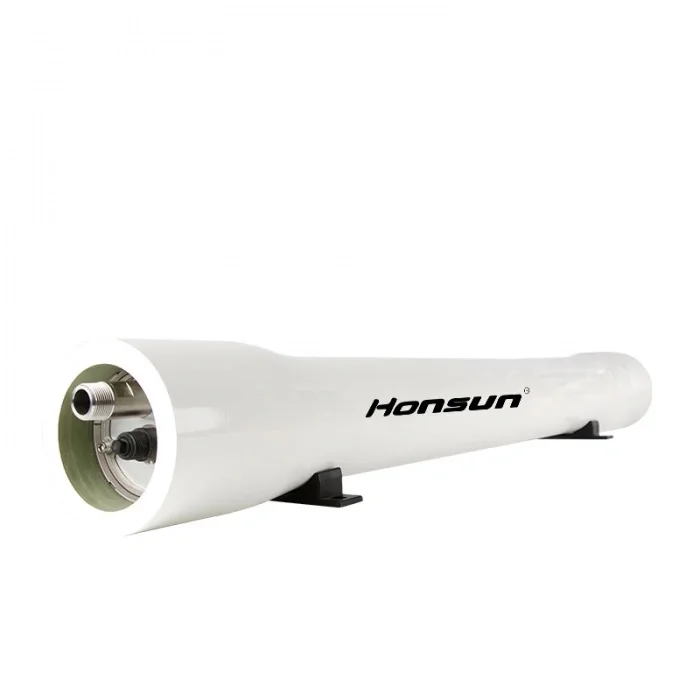
FRP Membrane Housing
High-strength FRP housing for pharmaceutical water treatment systems where hygienic requirements allow. Lightweight, corrosion-resistant and cost-effective. Compatible with 4040 and 8040 membranes, rated 300/450/800 PSI. Compare housing materials.
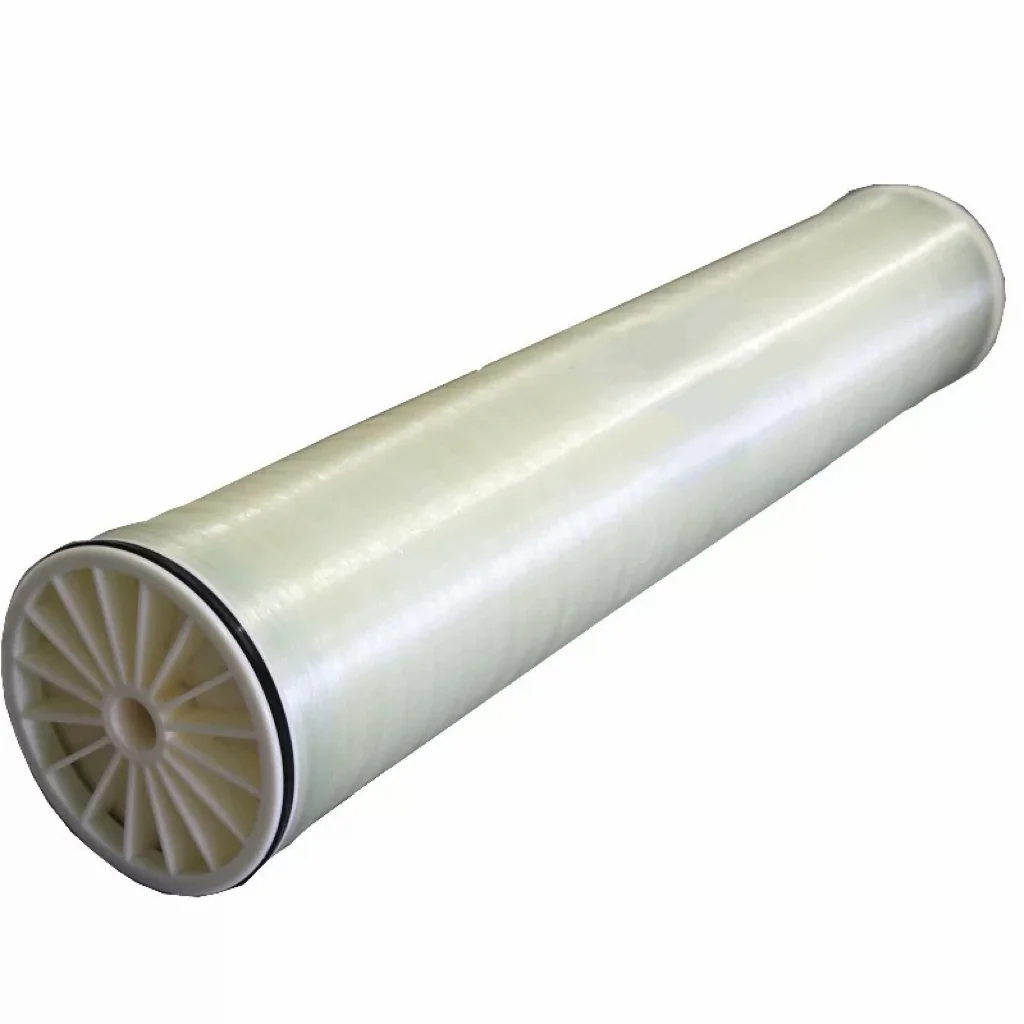
RO Membrane 4040 & 8040
Industrial RO membranes for pharmaceutical purified water production. 4040 (0.5–5 T/H) for small-to-medium systems, 8040 (10–50+ T/H) for large-scale two-pass RO trains. Removes heavy metals, bacteria, viruses, salts and impurities, reducing conductivity, TDS and hardness. View RO membrane details.
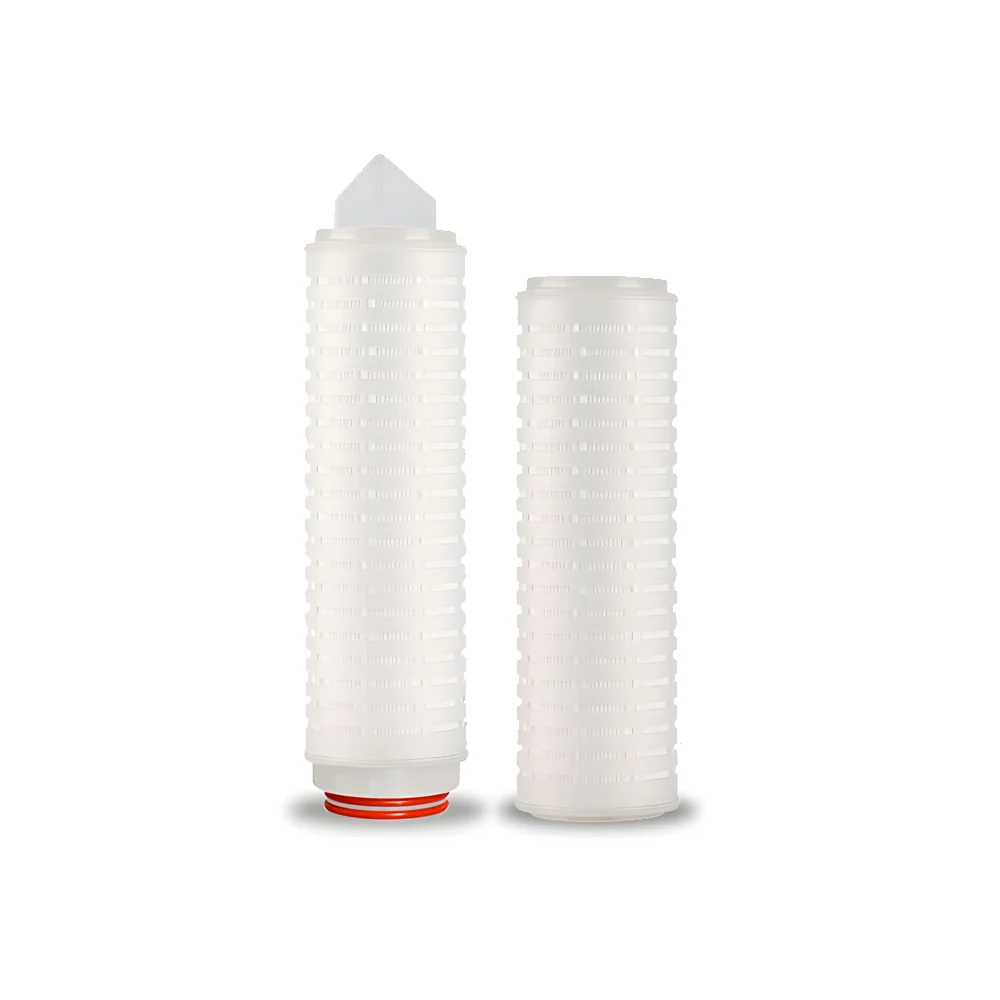
Filter Cartridge Family
PP melt-blown, wound, pleated and filter bag cartridges for pharmaceutical water treatment. Pleated cartridges are commonly used for RO security filtration and point-of-use 0.2 μm protection. Available in 10", 20", 30" and 40" sizes. View all filter cartridges.
Process
Two-Pass RO + EDI Purified Water Process
Pharmaceutical purified water production follows a staged, validated process. Pre-treatment removes suspended solids, chlorine and hardness. Two-pass reverse osmosis removes the bulk of dissolved salts and organic contaminants. EDI continuously polishes residual ions without chemical regeneration. Optional UV and ultrafiltration provide microbial and endotoxin control, and 0.2 μm final filtration protects the distribution loop and point-of-use.
01
Pre-treatment
Multimedia filtration, activated carbon and water softening remove turbidity, chlorine and hardness to protect downstream two-pass RO membranes.
02
Two-Pass RO
First-pass and second-pass RO remove the majority of dissolved solids, organics and microorganisms, bringing conductivity down before EDI polishing.
03
EDI
Electrodeionization (EDI) continuously removes residual ions without chemical regeneration, achieving stable conductivity for pharmacopeial purified water.
04
UV and Ultrafiltration
UV sterilization controls microbial activity; ultrafiltration removes particles and supports endotoxin control in membrane-based purified water and WFI trains.
05
Final Filtration
0.2 μm final filters at point-of-use retain particles and bacteria, protecting the pharmaceutical water distribution loop and dispensing points.
System configuration depends on the required water grade (Purified Water, Highly Purified Water, or Water for Injection), production capacity and feedwater characteristics. All pharmaceutical water systems must be validated according to USP, EP or ChP requirements. We provide DQ/IQ/OQ/PQ validation documentation support and can coordinate third-party water testing to support regulatory submission.
What equipment is needed for a pharmaceutical purified water system?
A standard pharmaceutical purified water (PW) system follows a multi-stage train: pre-treatment (multimedia filtration, activated carbon, softening and cartridge filtration), two-pass RO, EDI polishing, and optional UV sterilization and ultrafiltration. Final 0.2 μm filtration and a validated distribution loop complete the system. For WFI, membrane-based trains (RO + EDI + UF) are accepted under current pharmacopeial revisions; distillation remains an alternative.
Why is two-pass RO + EDI preferred over single-pass RO for pharmaceutical water?
Single-pass RO removes the bulk of dissolved solids but does not consistently reach the ionic purity required for pharmacopeial purified water. Two-pass RO + EDI adds a second RO stage and continuous electrodeionization, removing residual ions without chemical regeneration and stabilizing conductivity. This combination is the established process route for PW production and is also used in membrane-based WFI trains when paired with ultrafiltration.
Can the system be expanded later as production grows?
Yes. Modular design allows adding parallel RO membrane elements, additional EDI modules or a second RO pass as demand increases. When planning for expansion, oversize pre-treatment and distribution piping by a reasonable margin during initial installation. Any modification that affects water quality must be followed by re-qualification (IQ/OQ/PQ) of the affected sections to maintain regulatory compliance.
What maintenance does a pharmaceutical purified water system require?
Critical maintenance includes periodic RO membrane performance trending (normalized flow, salt rejection, differential pressure), cartridge filter replacement based on differential pressure, UV lamp replacement at end of effective life, softening resin and salt replenishment, and sanitization of the distribution loop by hot water or chemical method according to the validated procedure. Online conductivity and TOC monitoring should be trended continuously, and all maintenance activities documented for audit readiness.
Do you provide validation documentation and components for GMP compliance?
Yes. We support DQ/IQ/OQ/PQ documentation for system qualification and can supply hygienic stainless steel membrane housings, 4040 and 8040 RO membranes, 0.2–20 μm filter cartridges, UV sterilizers and ultrafiltration membranes for pharmaceutical water projects. Component material and sanitary options can be selected to align with GMP requirements; final compliance is confirmed through site-specific validation.
Have a Pharmaceutical Water Project?
Tell us your required water grade (PW / HPW / WFI), production capacity, feedwater analysis and site conditions. Our engineering team will recommend a two-pass RO + EDI configuration and provide a detailed proposal with validation documentation scope within 24–48 hours.