


New Energy & Battery Water Treatment Solutions
RO + EDI ultrapure water systems and supporting treatment equipment for lithium-ion battery, solar PV and fuel cell manufacturing. Configured around your water analysis, required resistivity and production capacity, with pretreatment, membrane separation, UV sterilization and precision filtration integrated into one solution.
Lithium Battery
Solar PV
Fuel Cell
RO + EDI · Softening · Ultrafiltration · Precision filtration · UV · Components
The Challenge
Why Battery Manufacturing Needs Ultrapure Water
Lithium-ion battery, solar PV and hydrogen fuel cell production all depend on high-purity water at critical process steps. Electrode rinsing, separator washing, wafer cleaning and membrane electrode preparation are sensitive to trace ions, organics and particles. Water quality directly affects yield, cell consistency, efficiency and long-term reliability.
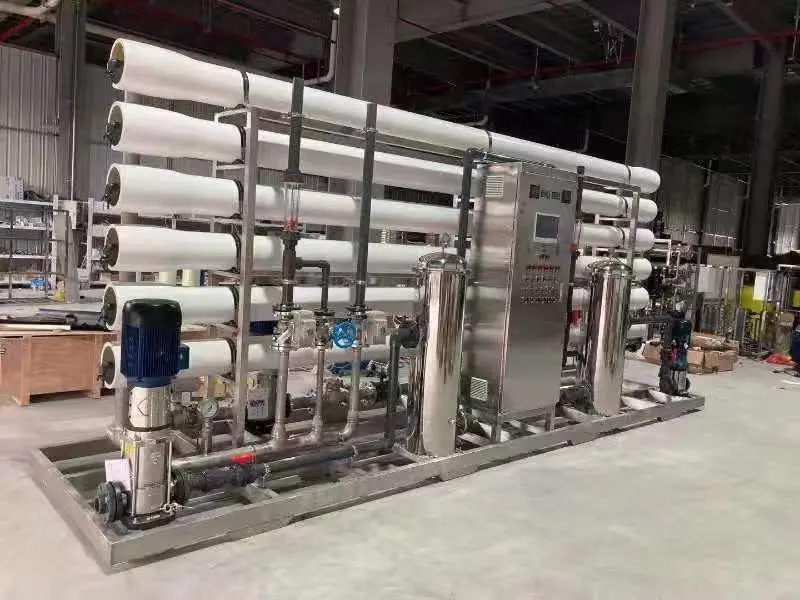
Performance Loss from Ionic Contamination
Ions in rinse water can contaminate battery electrodes and affect capacity and cycle life. Particles and metals on solar wafers reduce photovoltaic efficiency. Contaminants also degrade fuel cell catalysts and membranes. RO + EDI ultrapure water systems remove dissolved ions to a controlled resistivity level before the water reaches the process.
Yield and Cost Impact
Water quality issues cause yield loss, reduced product reliability, warranty claims and equipment downtime. Consistent high-purity water from a custom industrial pure water system helps protect product quality and stabilize production output.
Operational Stability
Reliable pretreatment, softening and ultrafiltration reduce scaling and membrane fouling, supporting long-term stable operation of battery, solar and fuel cell production lines.
Why Ultrapure Water
From Tap Water to Battery-Grade Ultrapure Water
New energy manufacturing demands water with reduced ions, organics and particles. A combined pretreatment, RO, EDI, UV and final filtration train delivers consistent high-purity water for lithium battery, solar cell and fuel cell production, with water quality selected according to the specific process step.
Raw Water
Untreated feedwater
- Contains dissolved minerals and salts
- May contain hardness, silica and organics
- May contain chlorine and dissolved ions
- Not suitable for critical manufacturing
Treatment
Pretreatment + RO + EDI + UV
- Multimedia, carbon and softening pretreatment
- Single-stage or two-pass reverse osmosis
- EDI for continuous ion removal without chemical regeneration
- UV sterilization and precision filtration
Ultrapure Water
On-site ultrapure water supply
- Reduced dissolved ions and salts
- Reduced particles and organics
- Stable water quality for critical processes
- Suitable for battery, solar and fuel cell manufacturing
Solution Equipment
Ultrapure Water Systems and Supporting Equipment
From the core RO + EDI ultrapure water system to custom industrial pure water systems, pretreatment, precision filtration, UV sterilization, laboratory water and validated components, configured for lithium-ion battery, solar cell and fuel cell production.
01
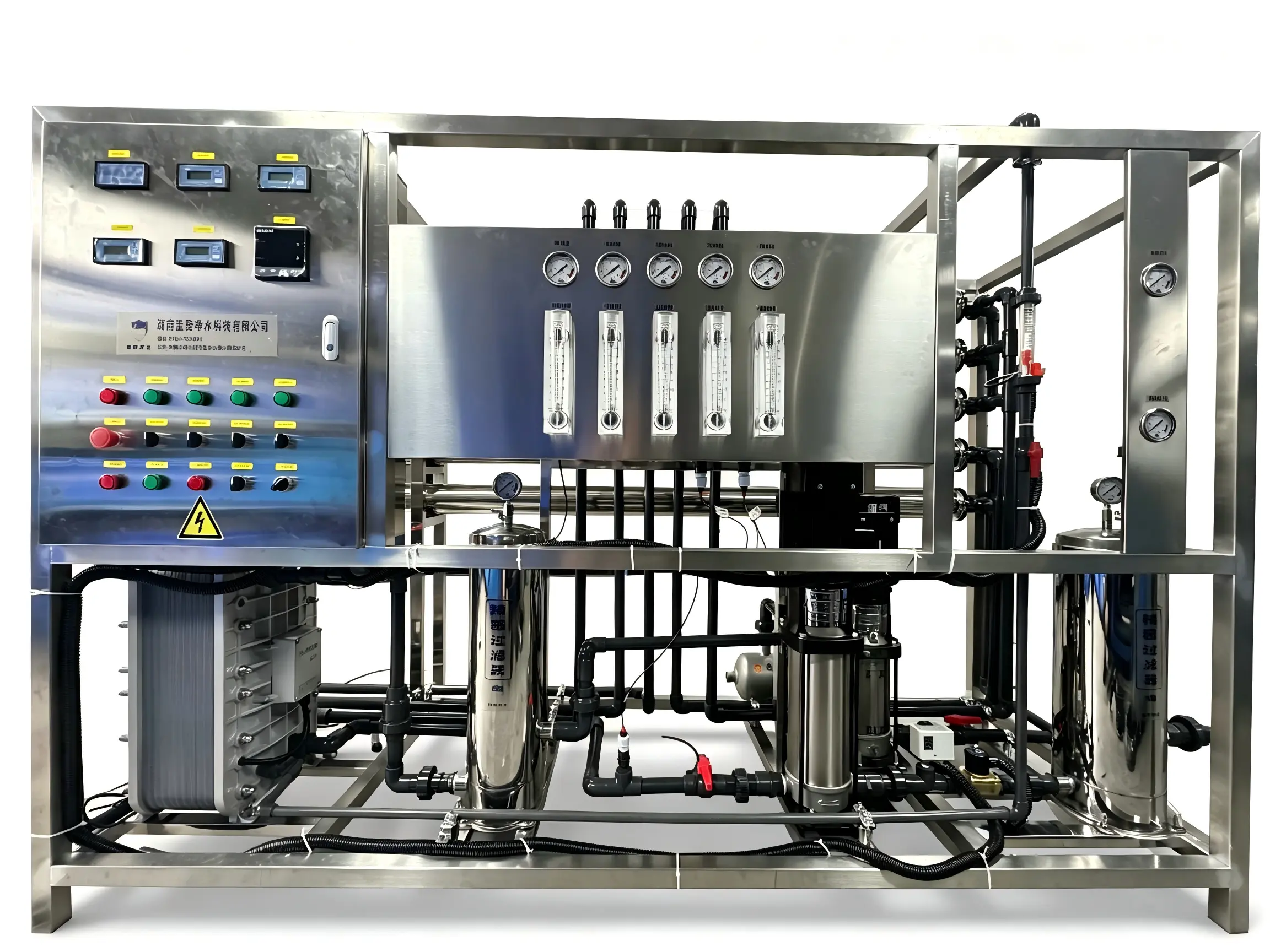
Core System
Two-Pass RO + EDI Ultrapure Water System
Engineered for battery-grade and solar-grade ultrapure water. Two-pass reverse osmosis followed by electrodeionization (EDI) continuously removes dissolved ions without chemical regeneration. Available in 1 T/H configuration, customizable by capacity, feedwater analysis and required resistivity.
Process
Two-pass RO + EDI polishing
Reference Capacity
1 T/H (1 m³/h), customizable
Application
Lithium battery electrode rinsing, solar wafer cleaning, fuel cell membrane preparation
Configuration Options
RO + EDI, two-stage RO + EDI, RO two-pass
02
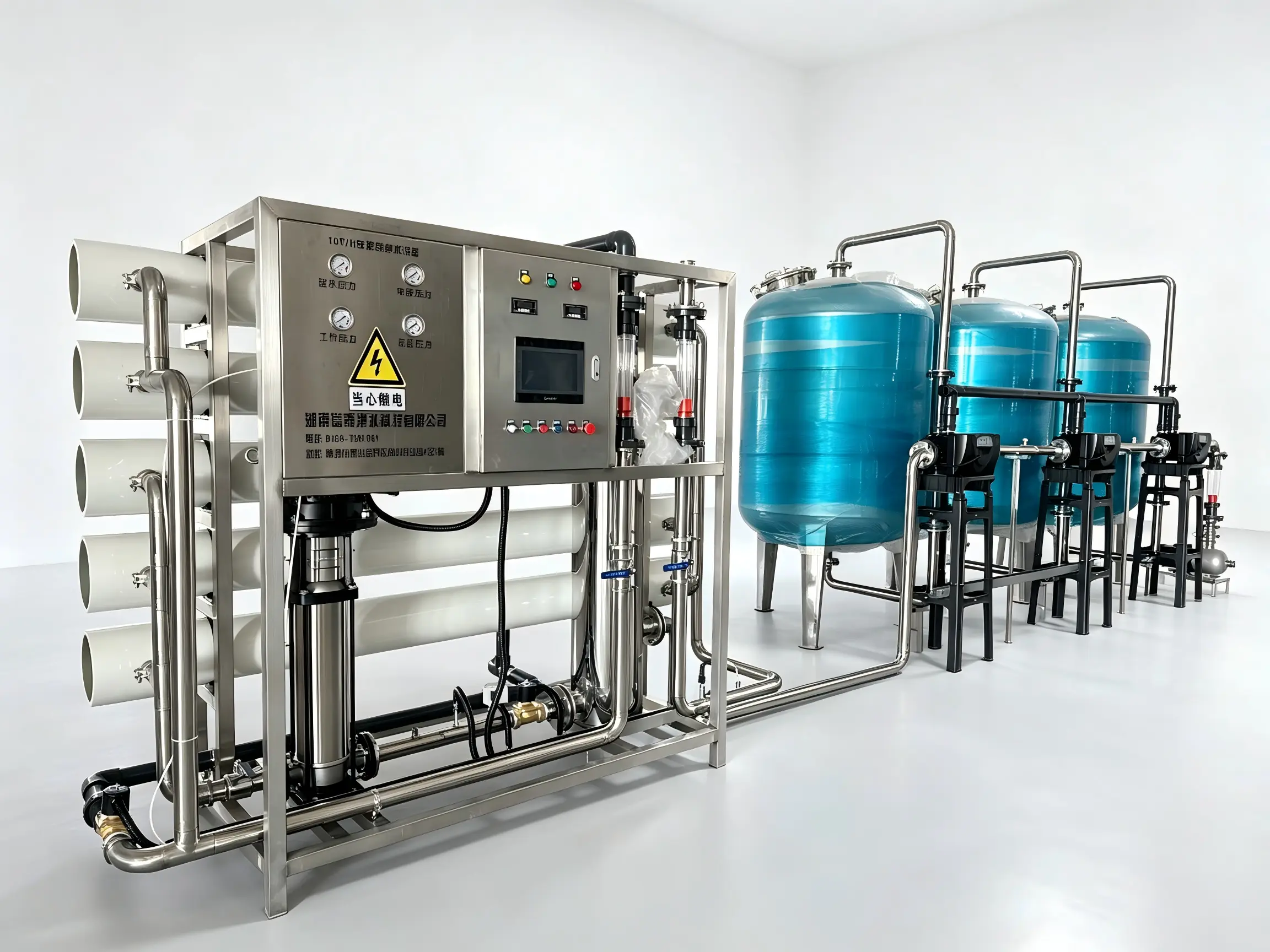
High Capacity
Custom Industrial Pure Water System
Custom-engineered RO pure water systems for larger battery and PV plants. Available in 1 T/H, 3 T/H, 10 T/H and 60 T/H reference configurations, with skid layout, controls and pretreatment adapted to site conditions. Frequently used as the first-pass RO stage in a battery ultrapure water train.
Capacity Options
1 T/H · 3 T/H · 10 T/H · 60 T/H, customizable
Process
RO, with optional two-pass RO and EDI integration
Application
Battery plant process water, PV cell cleaning water, first-pass RO for ultrapure water
03
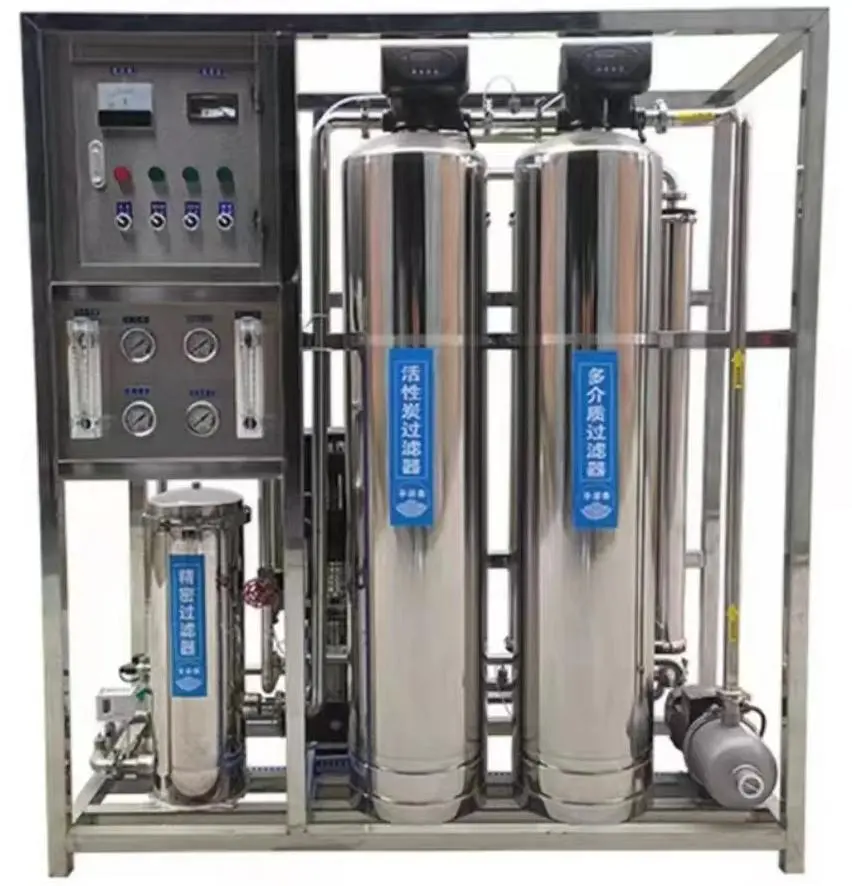
Pure Water
Reverse Osmosis Pure Water Equipment
RO pure water equipment removes suspended solids, colloids, heavy metals, inorganic salts, bacteria and organics. Available in stainless steel/FRP high-pressure version (1000L/H, 2000L/H) and stainless steel fully enclosed cabinet model (250L/H, 500L/H). Used as a standalone RO stage or as the first-pass RO in a two-pass ultrapure water train.
Models
1000L/H · 2000L/H (industrial) · 250L/H · 500L/H (cabinet)
Construction
Stainless steel / FRP high-pressure; 304 stainless steel cabinet option
Application
Battery process water, first-pass RO, pre-treatment for RO + EDI
04
Pre-Treatment
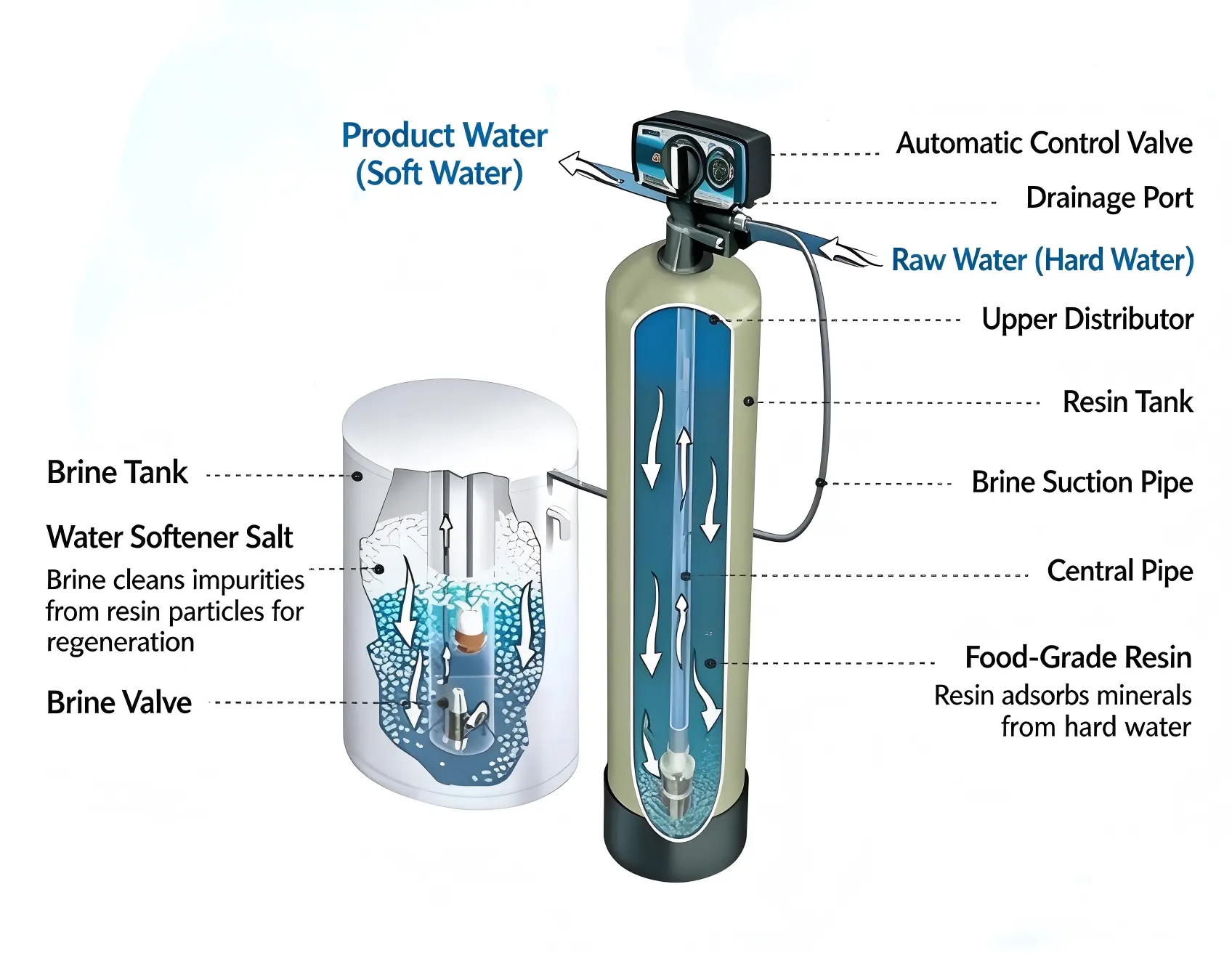
Industrial Softening Water Treatment System
Removes calcium and magnesium hardness before RO to prevent membrane scaling. Designed for 24/7 continuous operation with automatic regeneration. Reference capacities from 1 m³/h to 30 m³/h, with simplex, duplex or triplex configurations for production lines that cannot accept softener downtime.
Capacity Range
1–30 m³/h, customizable
Configuration
Simplex / duplex / triplex; automatic regeneration
Application
RO pre-treatment, boiler feedwater, battery plant utility water
05
Pre-Treatment
Ultrafiltration Filter (UF Membrane)
0.01 μm PVDF hollow fiber ultrafiltration for removal of bacteria, colloids, suspended solids and turbidity. Used as RO pre-treatment to protect membranes and reduce cleaning frequency, especially where feedwater comes from surface sources or has variable turbidity. Models YT110-90 (3000L/H) and YT140-110 (5000L/H).
Models
YT110-90 (3000L/H) · YT140-110 (5000L/H)
Precision
0.01 μm (10 nanometers)
Application
RO pre-treatment, colloid and bacteria removal, surface water feed
06
Precision Filtration
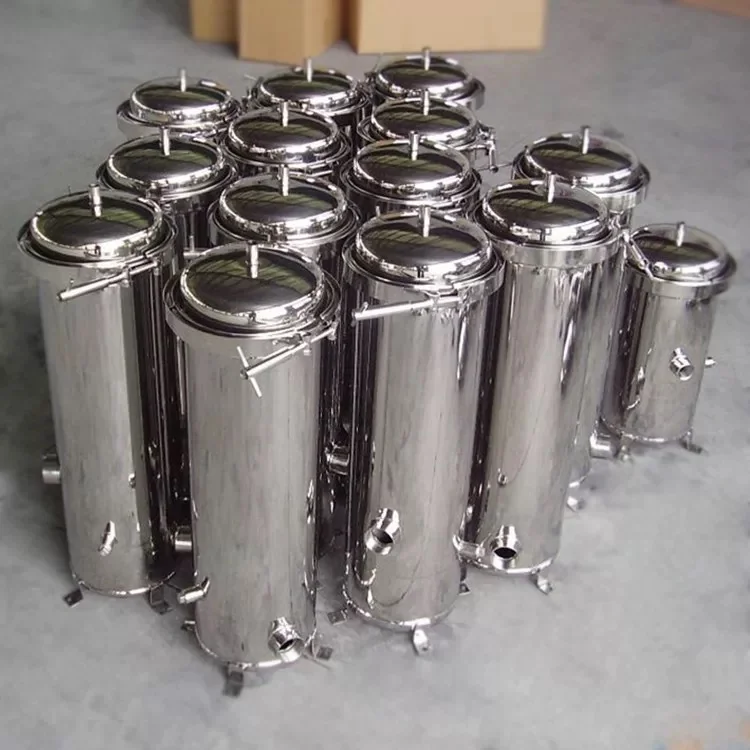
Precision Filter / Security Filter
Stainless steel housing with pleated or PP melt-blown cartridges for 5 μm / 1 μm / 0.2 μm protection. Serves as the cartridge filtration step before RO membranes and as a point-of-use final filter in battery and PV ultrapure water distribution. High sealing integrity and stable differential pressure performance.
Housing
Stainless steel
Cartridge Options
Pleated · PP melt-blown · 0.2–20 μm
Application
RO security filtration, point-of-use filtration, battery process water
07
Disinfection
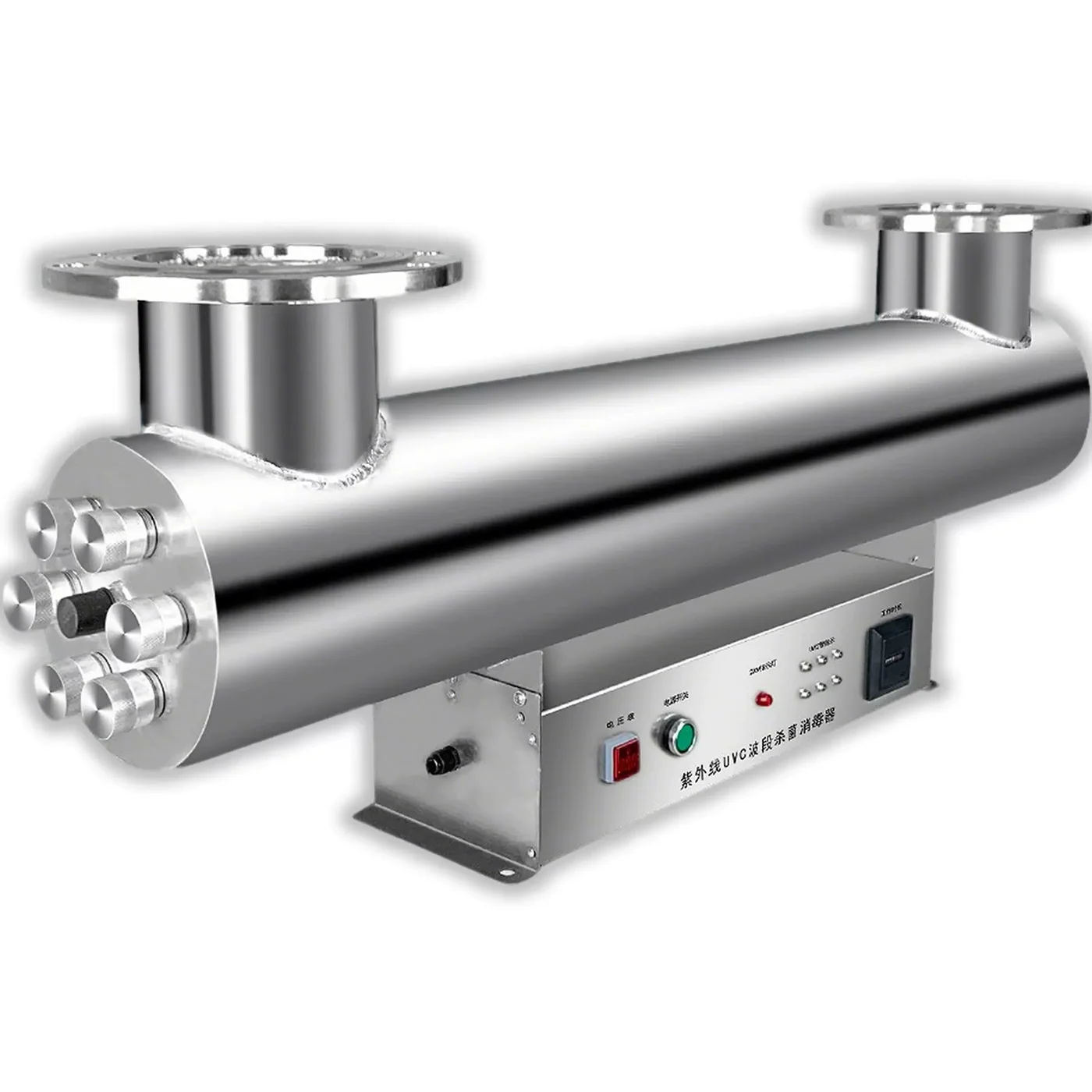
UV Sterilizer
Pure physical disinfection with no chemical residue or odor. 254 nm UV inactivates microorganisms in the water loop without altering water chemistry, making it suitable for ultrapure water distribution where residual chemicals are not acceptable. Instant on/off operation with straightforward lamp maintenance.
Method
Physical UV disinfection (254 nm)
Residue
No chemical residue, no odor
Application
Ultrapure water loop, pure water, industrial water
08
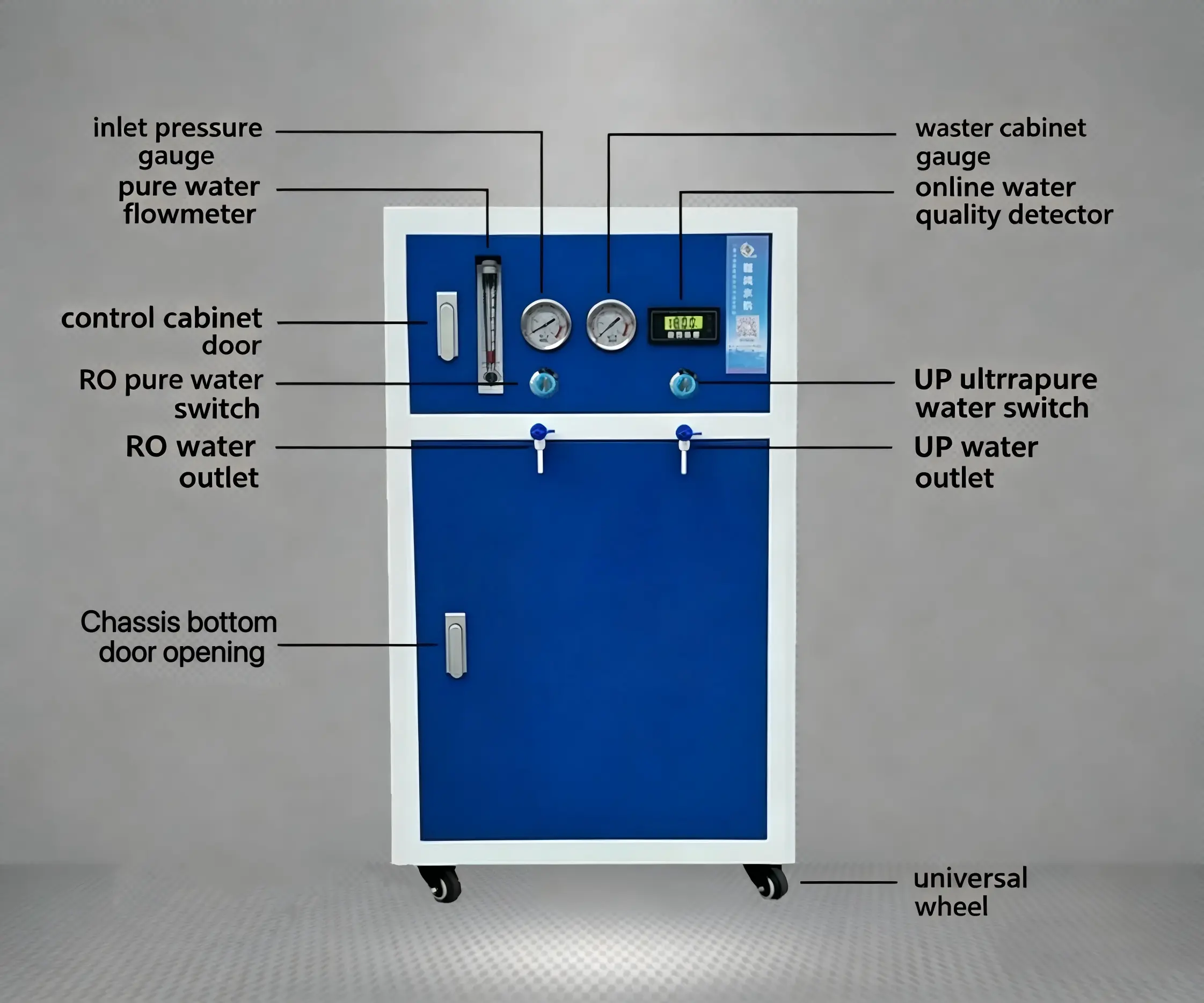
Laboratory / R&D
Laboratory Ultrapure Water Generator
For battery materials R&D, cell testing laboratories and analytical QC. Produces Grade I ultrapure water with resistivity up to 18.2 MΩ·cm (25°C) and TOC ≤5 ppb. Multi-stage purification including RO, EDI, UV and ultrafiltration. Suitable for ICP-MS trace metal analysis, HPLC, cell testing and materials characterization.
Resistivity
Up to 18.2 MΩ·cm (25°C)
TOC
≤5 ppb
Application
Battery R&D, ICP-MS trace analysis, cell testing laboratory, materials characterization
Core Components
Membrane Housings, RO Membranes and Filter Cartridges
In addition to complete systems, we supply core components and replacement consumables for new energy water treatment projects, with the pressure ratings and material options required for battery and PV manufacturing environments.
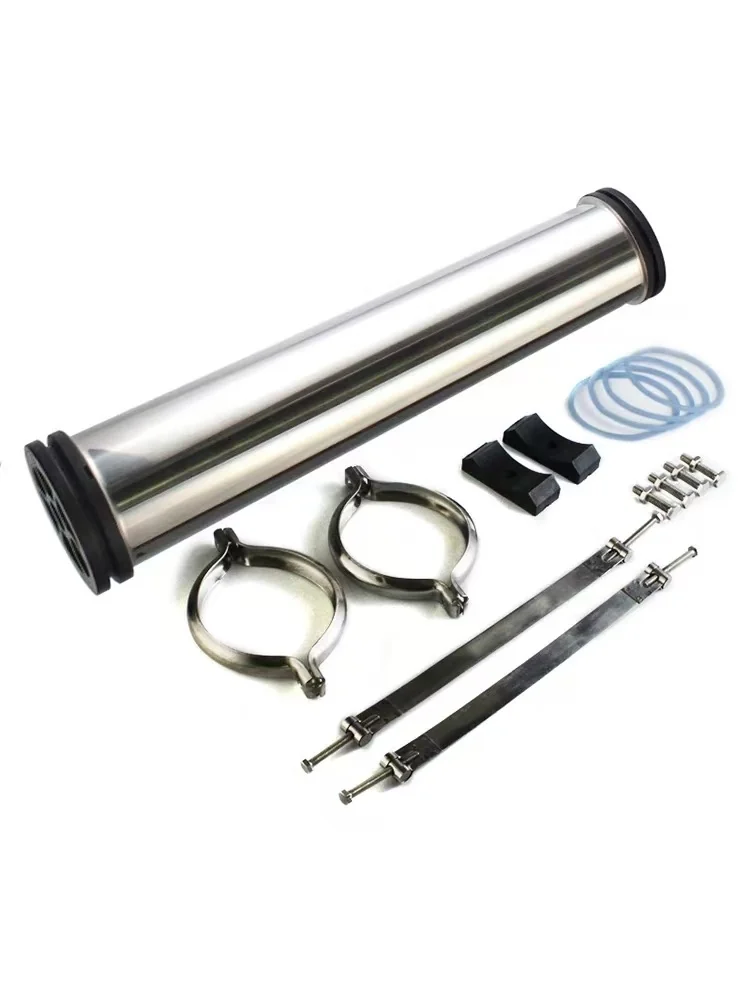
Stainless Steel Membrane Housing
304/316L stainless steel housing for battery and PV RO and ultrapure water systems. Higher pressure resistance, corrosion resistance and durable construction. Compatible with 4040 and 8040 RO membranes, available in side-entry and end-entry configurations. View membrane housing range.
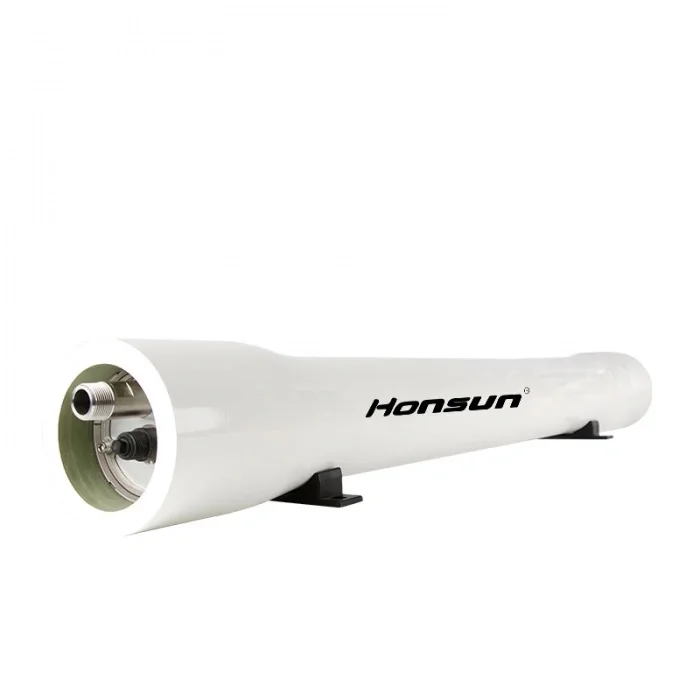
FRP Membrane Housing
High-strength FRP housing for new energy water treatment systems where hygienic requirements allow. Lightweight, corrosion resistant and cost-effective. Compatible with 4040 and 8040 membranes, rated 300/450/800 PSI. Compare housing materials.
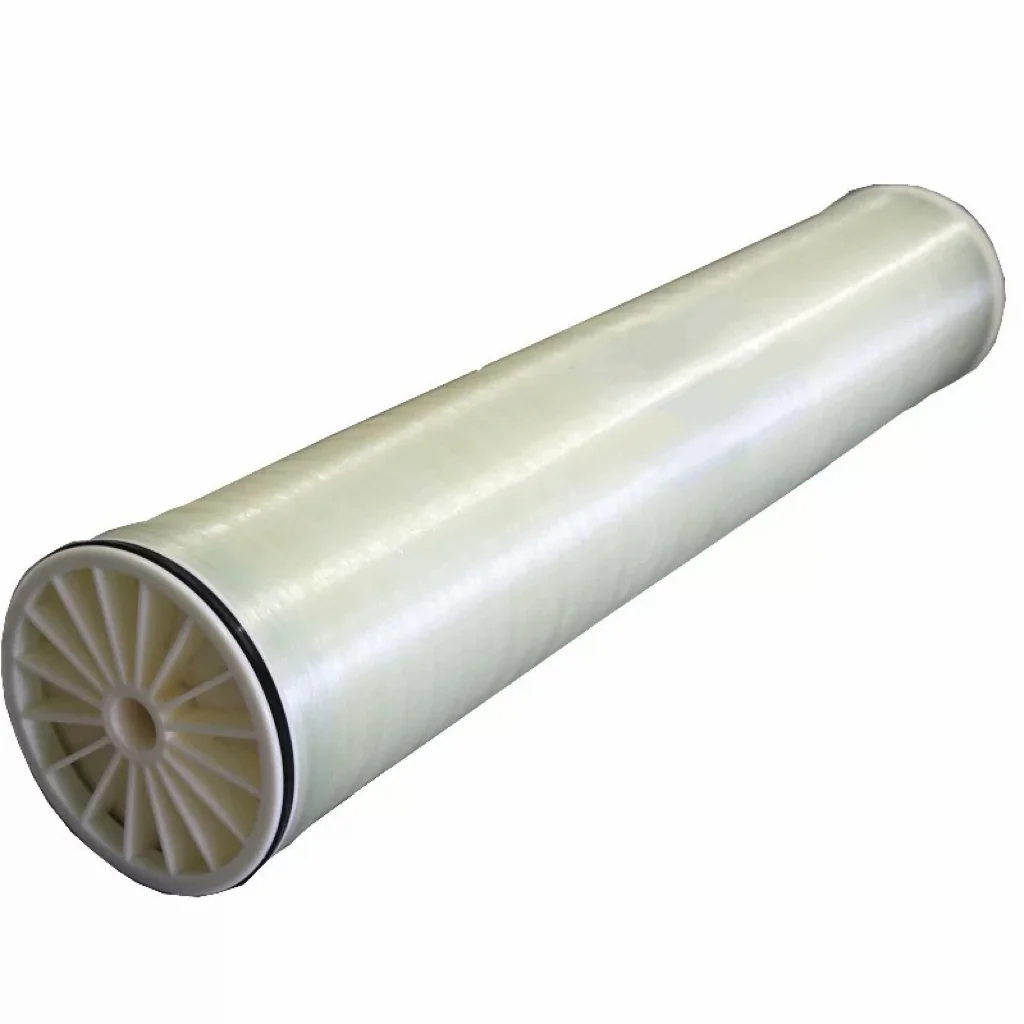
RO Membrane 4040 & 8040
Industrial RO membranes for new energy pure water and ultrapure water production. 4040 (0.5–5 T/H) for small-to-medium systems, 8040 (10–50+ T/H) for large-scale battery and PV plants. Removes heavy metals, bacteria, viruses, salts and impurities, reducing conductivity, TDS and hardness. View RO membrane details.
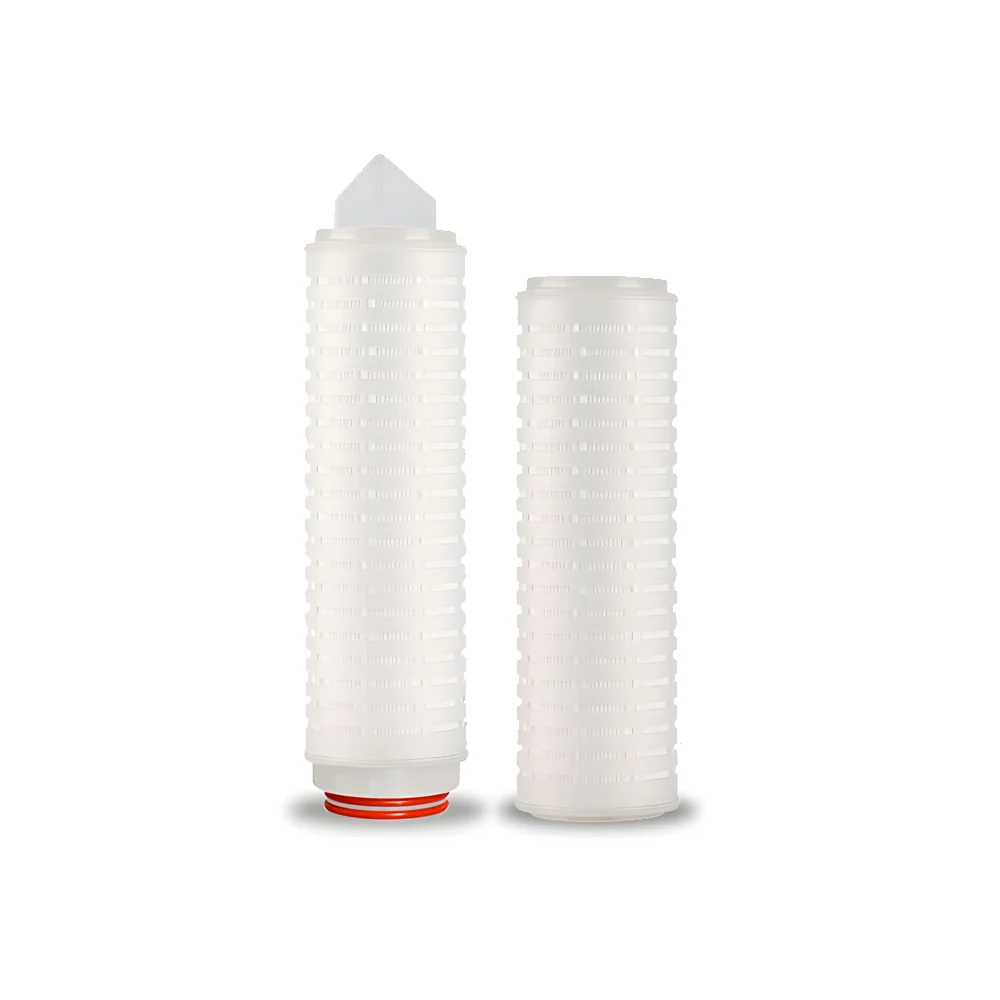
Filter Cartridge Family
PP melt-blown, wound, pleated and filter bag cartridges for new energy water treatment. Pleated cartridges are commonly used for RO security filtration and point-of-use 0.2 μm protection. Available in 10", 20", 30" and 40" sizes. View all filter cartridges.
Process
RO + EDI Ultrapure Water Process
A complete ultrapure water train combines pretreatment, reverse osmosis, EDI, UV sterilization and final filtration into one continuous, controlled flow. The final configuration is selected according to the process step, feedwater quality and required resistivity.
01
Pre-treatment
Multimedia, carbon and softening remove turbidity, chlorine and hardness. Ultrafiltration is added where surface water or variable turbidity is present.
02
RO
Single-stage or two-pass reverse osmosis removes dissolved solids, organics and microorganisms, bringing conductivity down before EDI polishing.
03
EDI
Electrodeionization (EDI) continuously removes residual ions without chemical regeneration, delivering stable resistivity for battery and PV processes.
04
UV Sterilization
UV sterilization inactivates microorganisms and supports TOC control in the ultrapure water loop without leaving chemical residue.
05
Final Filtration
Precision filtration at point-of-use retains particles and protects critical battery, solar and fuel cell processes.
System configuration depends on the specific process step, feedwater analysis and required water quality. Not every project uses an identical train. Share your water analysis and purity target so the process can be selected according to actual operating conditions.
What water treatment equipment does a lithium-ion battery plant need?
A typical battery plant ultrapure water system includes pretreatment (multimedia, carbon and softening), RO pure water equipment, an RO + EDI ultrapure water system, UV sterilization and precision filtration. Where feedwater comes from surface sources, ultrafiltration is added before RO. The exact configuration depends on feedwater analysis, required resistivity and hourly demand.
Why is RO + EDI preferred over single-stage RO for battery manufacturing?
Single-stage RO removes the bulk of dissolved solids but does not consistently reach the low ionic level required for electrode and separator rinsing. Two-pass RO + EDI adds a second RO stage and continuous electrodeionization, removing residual ions without chemical regeneration and stabilizing resistivity. This combination is widely used in battery, solar and fuel cell ultrapure water systems where water quality directly affects yield.
Can the system be expanded as production capacity grows?
Yes. Modular design allows adding parallel RO membrane elements, additional EDI modules or a second RO + EDI train as demand increases. When planning for expansion, oversize pretreatment and distribution piping by a reasonable margin during initial installation. We recommend discussing future expansion plans during the initial design stage so the skid layout and controls can accommodate later additions.
How does water quality affect battery performance and solar cell efficiency?
In lithium-ion battery manufacturing, ion contamination can affect electrode materials and cell consistency, organic contamination can affect electrolyte quality and promote side reactions, and particle contamination can cause micro-short circuits and safety issues. In solar PV, metals and particles on wafers reduce conversion efficiency. In fuel cells, contaminants degrade catalysts and membranes. Consistent ultrapure water from a properly sized RO + EDI system helps reduce these risks and support stable production.
Do you provide replacement components for new energy water treatment systems?
Yes. We supply stainless steel and FRP membrane housings, 4040 and 8040 RO membranes, filter cartridges in 10", 20", 30" and 40" lengths, UV sterilizers and ultrafiltration membranes for new energy water treatment projects. Component pressure ratings and material options can be selected according to the specific system design.
Have a New Energy Water Project?
Tell us your application (battery, solar or fuel cell), required water quality and daily consumption. Our engineering team will recommend an RO + EDI configuration and provide a detailed proposal within 24–48 hours.