


Food & Beverage Water Treatment Solutions
Water treatment systems for bottled water, beverage manufacturing, brewing, dairy and food processing, configured around your source water analysis and production capacity. Core process based on reverse osmosis, supported by softening pretreatment, ultrafiltration, UV or ozone disinfection and precision filtration, delivered as a complete food-grade solution.
Bottled Water
Beverages & Brewing
Food Processing
RO pure water · Softening · Ultrafiltration · UV / Ozone · Precision filtration
The Challenge
Why Water Quality Matters in Food & Beverage
Water is the primary ingredient in most beverages and a critical component in food processing. Poor water quality directly affects taste, clarity, shelf life and food safety compliance. Chlorine, hardness, dissolved minerals and microbial contamination all need to be controlled to a consistent, documented level.
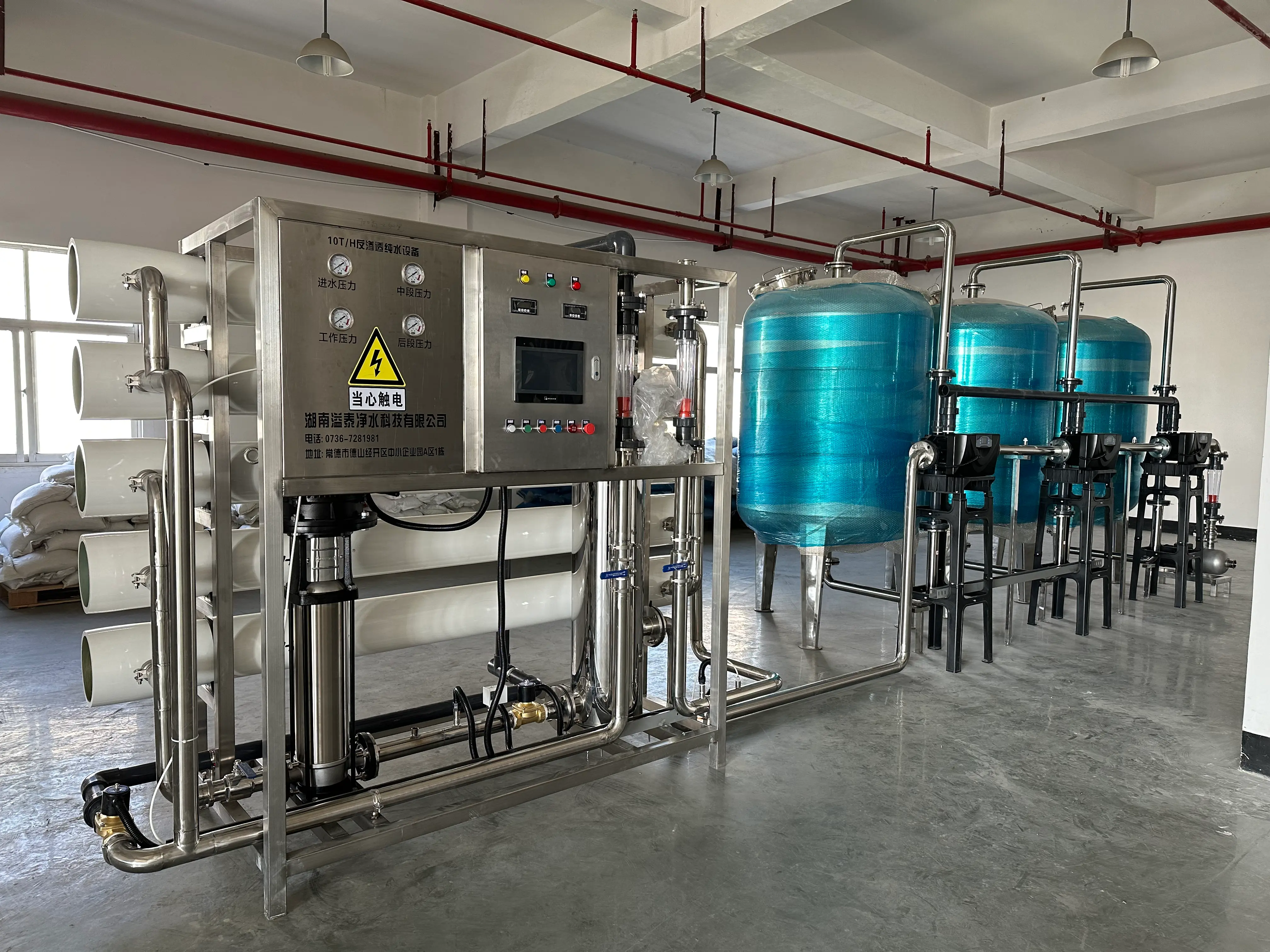
Taste, Clarity and Batch Consistency
Chlorine, minerals and organics affect flavor profiles in beverages. Turbidity and color compromise product clarity, and mineral variations cause batch-to-batch inconsistencies. RO pure water systems deliver a consistent water base for carbonated drinks, juices, bottled water and brewing.
Safety and Compliance
Microbial contamination poses health risks and can trigger product recalls. Chemical contaminants must stay below regulatory limits, and food safety standards require documented water quality control. UV and ozone disinfection provide microbial control without leaving chemical residue in the final product.
Equipment Protection and Operations
Hard water causes scale in boilers, heat exchangers, pasteurizers and filling lines, reducing efficiency and increasing maintenance. Water softening before the RO and utility loops protects heat transfer surfaces and stabilizes production.
Why Treatment
From Source Water to Safe Process Water
Food and beverage production demands water that is consistent, safe and compliant. A properly designed treatment train removes chlorine, organics, hardness and microbial contaminants, protecting both product quality and production equipment.
Source Water
Untreated feedwater
- Variable TDS and mineral content
- Chlorine and organic taste or odor
- Hardness causing scale in equipment
- Microbial risk and batch inconsistency
Treatment
Filtration + RO + disinfection
- Multi-media and activated carbon filtration
- Water softening for hardness control
- Reverse osmosis for dissolved solids removal
- UV or ozone disinfection for microbial control
- Precision filtration before filling
Process Water
Consistent, food-safe supply
- Reduced chlorine and organics
- Controlled dissolved solids
- Consistent mineral profile batch to batch
- Microbiologically controlled
- Suitable for food and beverage production
Solution Equipment
Water Treatment Equipment for Food & Beverage
From large-capacity custom pure water systems to 250 to 2000 L/H RO units, softening pretreatment, ultrafiltration, precision filtration, UV and ozone disinfection, and laboratory ultrapure water for QC. Each element is selected according to source water analysis, production capacity and target product quality.
01
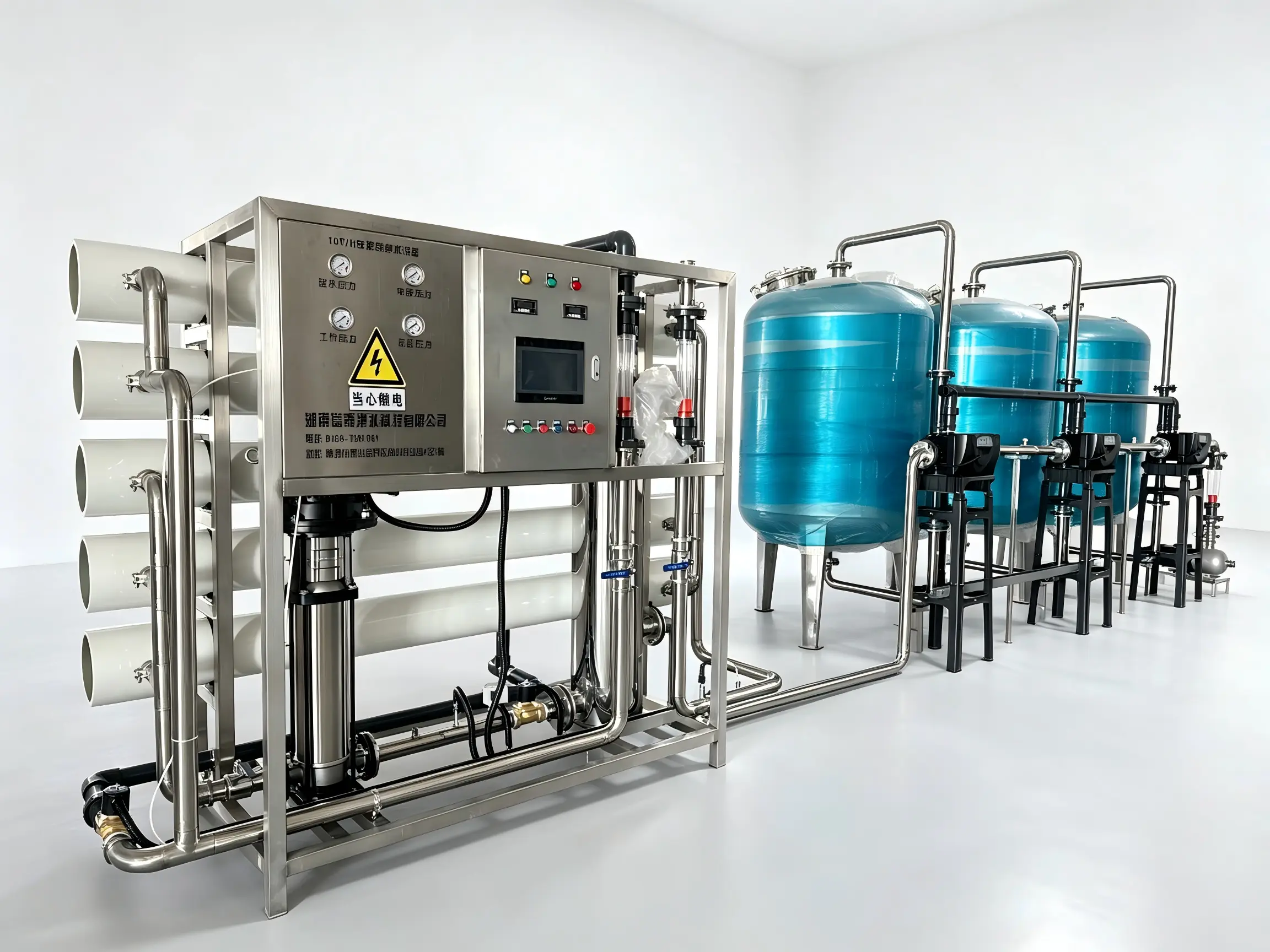
High Capacity
Custom Industrial Pure Water System
Custom-engineered RO pure water systems for large bottled water, beverage and food processing plants. Available in 1 T/H, 3 T/H, 10 T/H and 60 T/H reference configurations, with skid layout, pretreatment selection and controls adapted to your site and production schedule. Frequently used as the main water treatment train for filling lines.
Capacity Options
1 T/H · 3 T/H · 10 T/H · 60 T/H, customizable
Process
Pretreatment + RO, with optional two-pass RO and polishing
Application
Bottled water production, beverage manufacturing, dairy and food processing
02
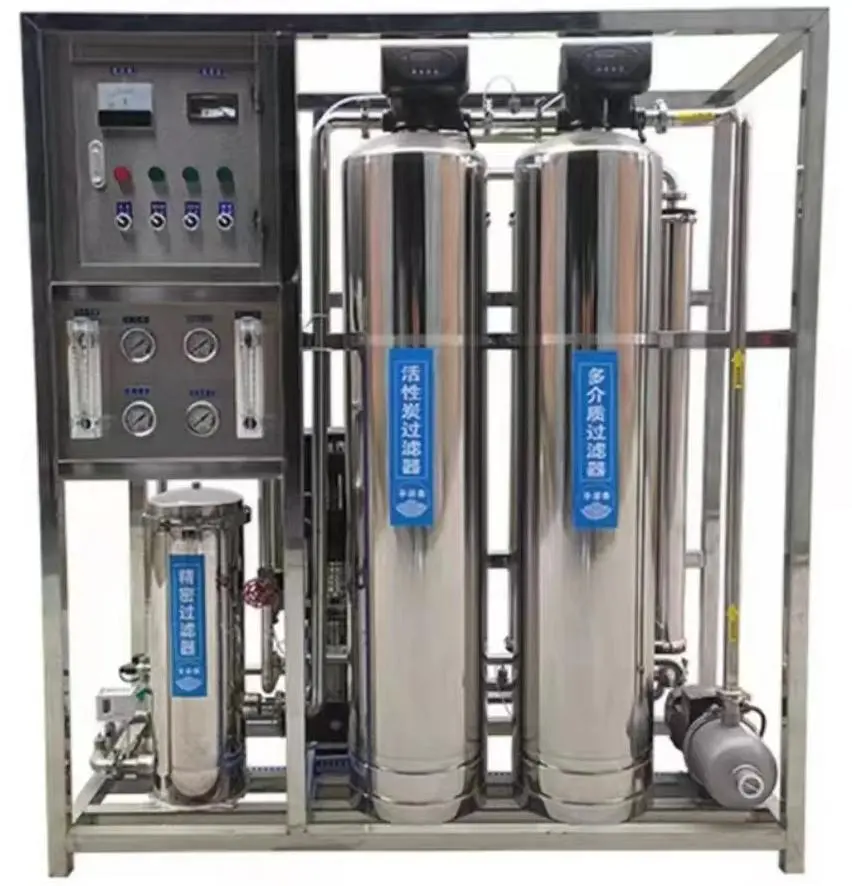
Pure Water
Reverse Osmosis Pure Water Equipment
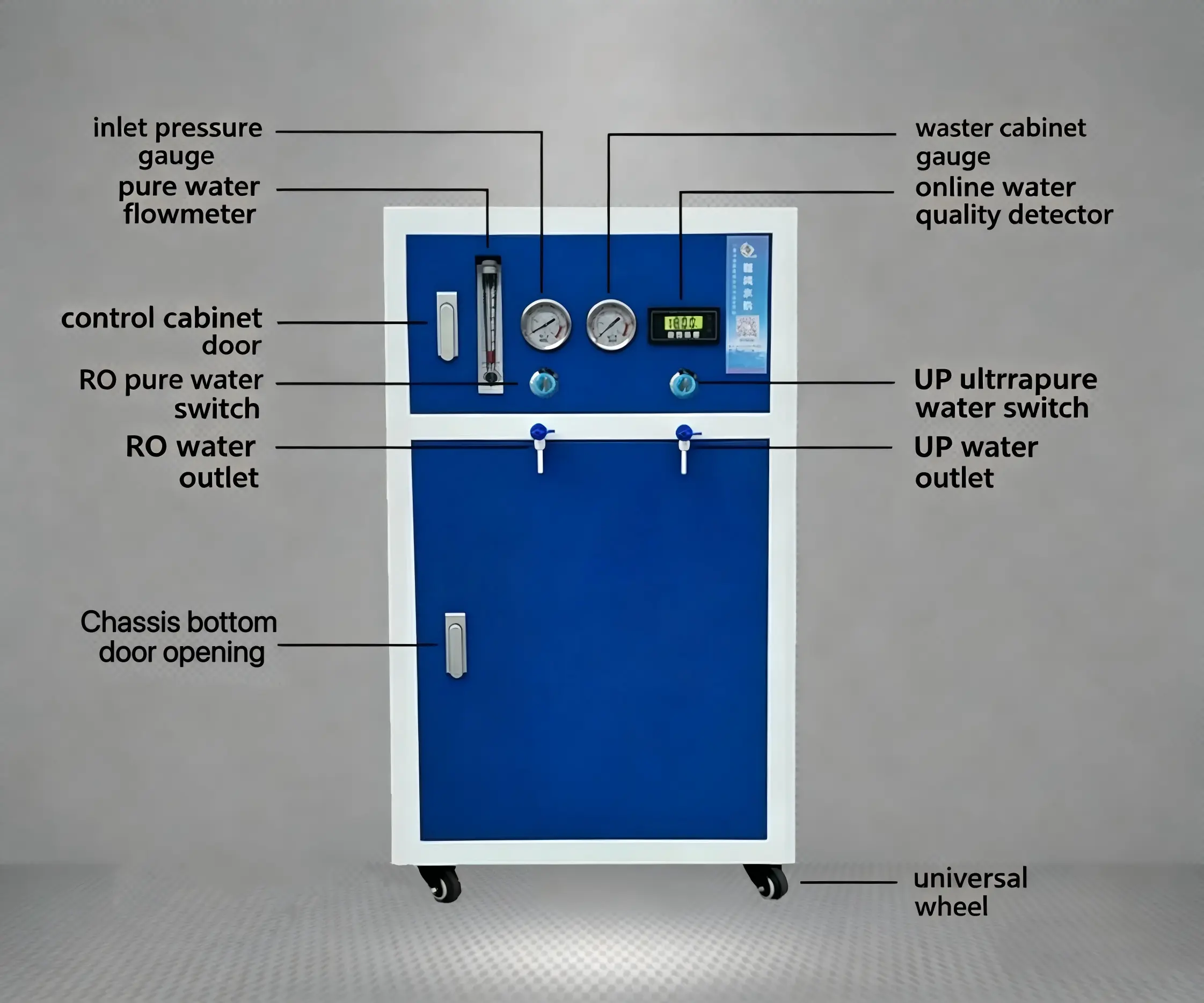
RO pure water equipment removes suspended solids, colloids, heavy metals, inorganic salts, bacteria and organics. Available in stainless steel/FRP high-pressure version (1000L/H, 2000L/H) and stainless steel fully enclosed cabinet model (250L/H, 500L/H). Used for beverage preparation, ingredient water and bottled water production at small to medium capacity.
Models
1000L/H · 2000L/H (industrial) · 250L/H · 500L/H (cabinet)
Construction
Stainless steel / FRP high-pressure; 304 stainless steel cabinet option
Application
Beverage preparation, bottled water, ingredient water, small food processing
03
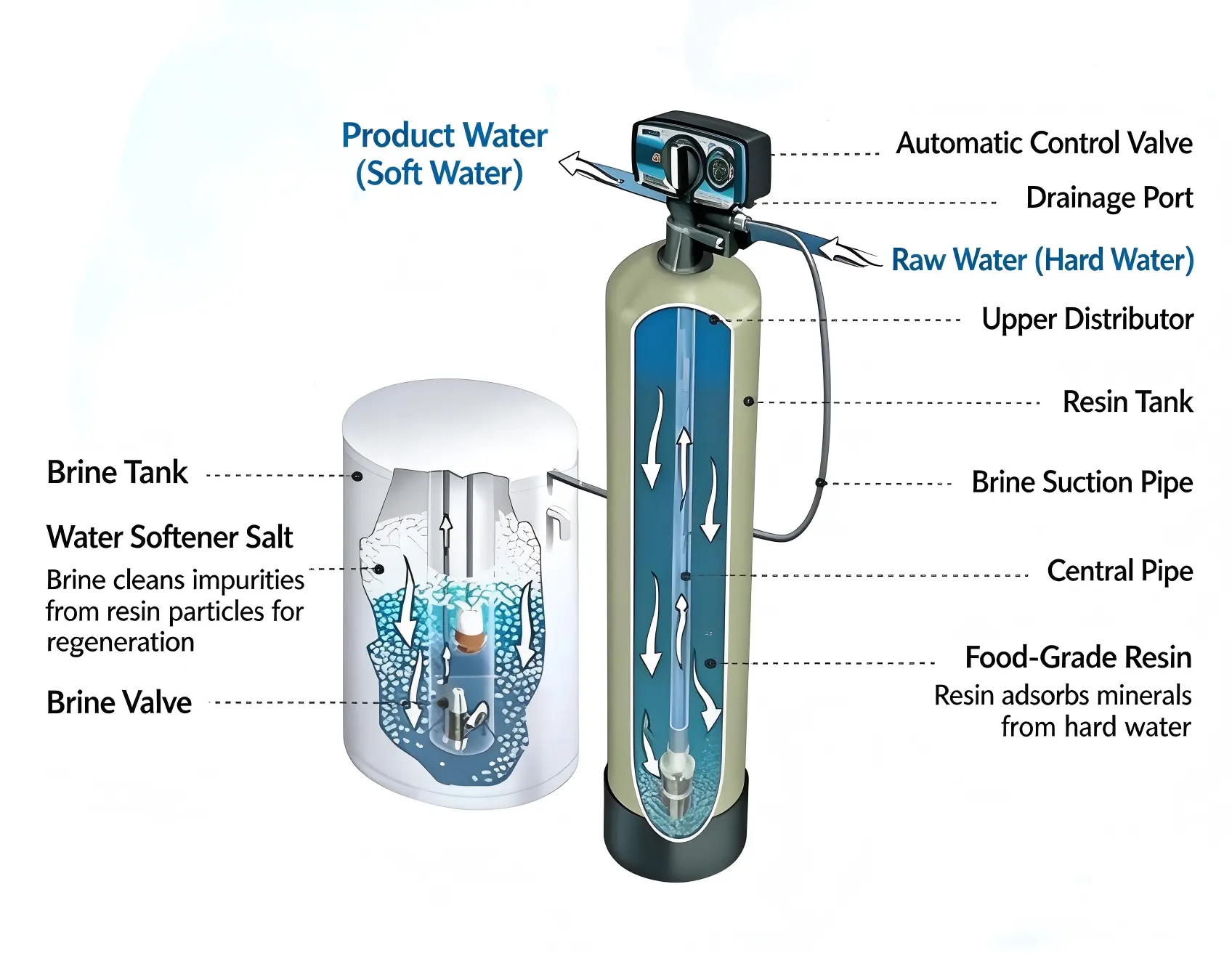
Pre-Treatment
Industrial Softening Water Treatment System
Removes calcium and magnesium hardness before RO to prevent membrane scaling, and protects boilers, pasteurizers and heat exchangers in the plant. Reference capacities from 1 m³/h to 30 m³/h, with simplex, duplex or triplex configurations for plants that need continuous softened water supply.
Capacity Range
1–30 m³/h, customizable
Configuration
Simplex / duplex / triplex; automatic regeneration
Application
RO pre-treatment, boiler feedwater, CIP and utility water
04
Pre-Treatment
Ultrafiltration Filter (UF Membrane)
0.01 μm PVDF hollow fiber ultrafiltration for removal of bacteria, colloids, suspended solids and turbidity. Used as RO pre-treatment to protect membranes and as a microbial barrier before UV or ozone. Models YT110-90 (3000L/H) and YT140-110 (5000L/H).
Models
YT110-90 (3000L/H) · YT140-110 (5000L/H)
Precision
0.01 μm (10 nanometers)
Application
RO pre-treatment, bacteria and colloid removal, surface water feed
05
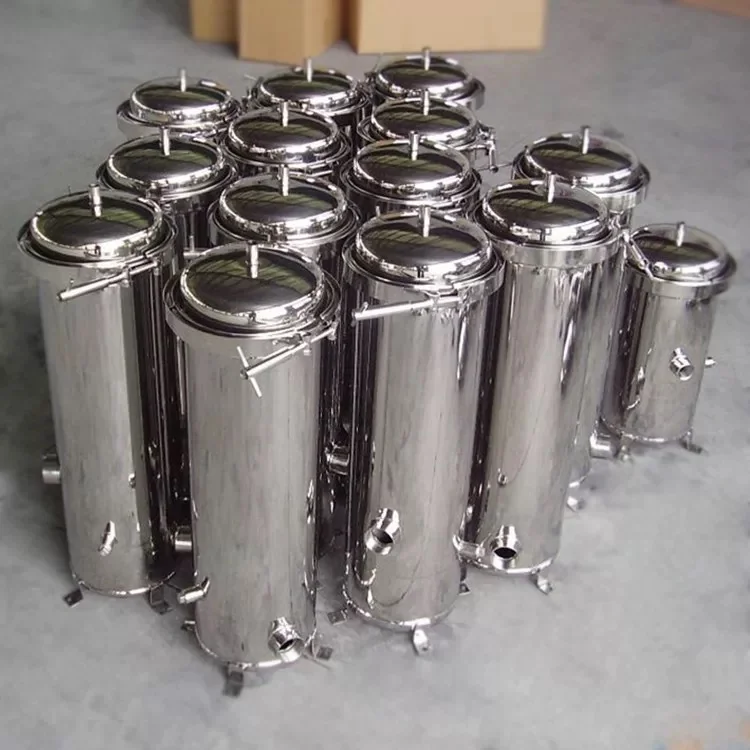
Precision Filtration
Precision Filter / Security Filter
Stainless steel housing with pleated or PP melt-blown cartridges for 5 μm / 1 μm / 0.2 μm protection. Serves as the cartridge filtration step before RO membranes and as a point-of-use final filter before filling lines. High sealing integrity and stable differential pressure performance.
Housing
Stainless steel
Cartridge Options
Pleated · PP melt-blown · 0.2–20 μm
Application
RO security filtration, filling line final filter, beverage process water
06
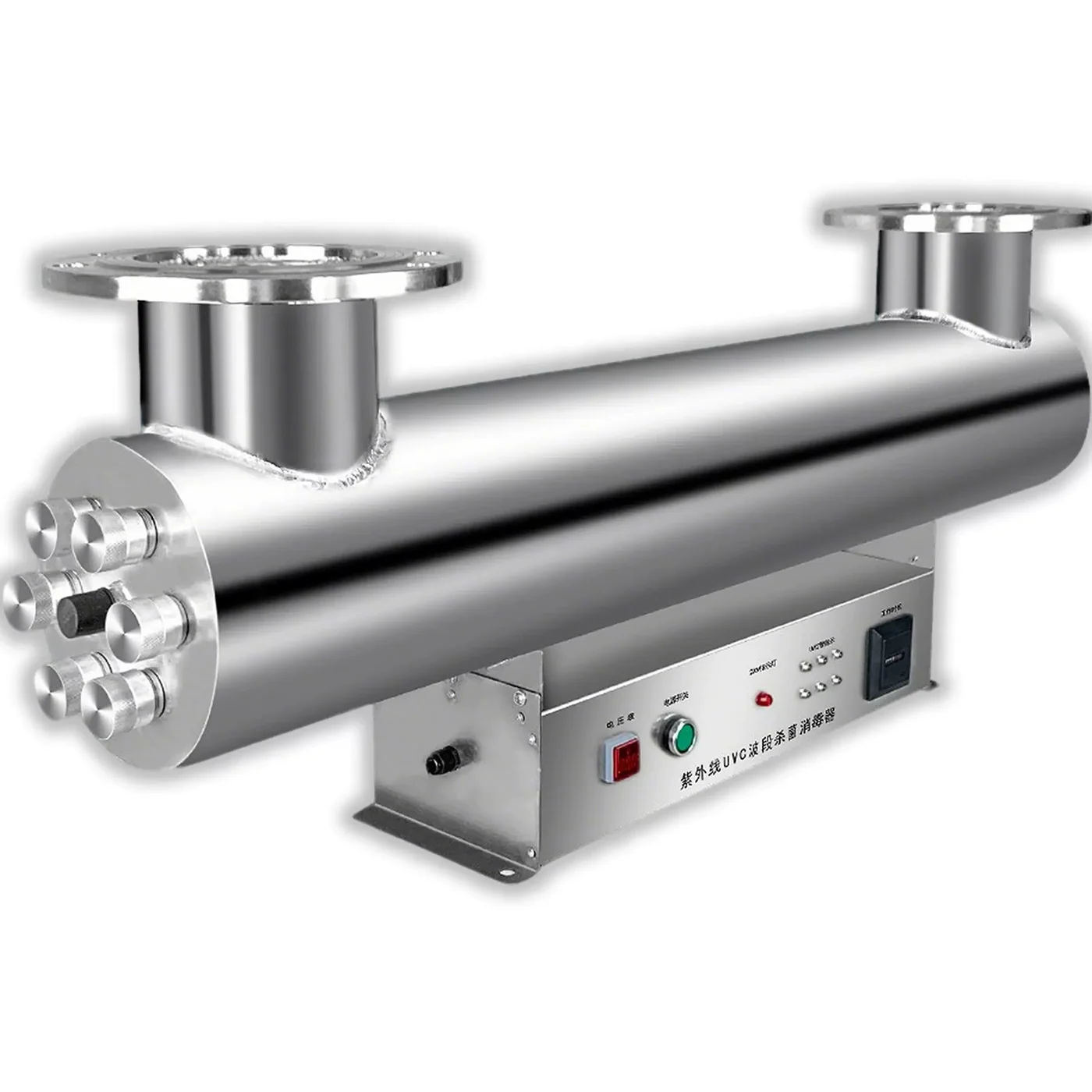
Disinfection
UV Sterilizer
Pure physical disinfection with no chemical residue or odor. 254 nm UV inactivates microorganisms in the water line without altering taste or chemistry, making it suitable for bottled water, beverage and drinking water applications. Instant on/off operation with straightforward lamp maintenance.
Method
Physical UV disinfection (254 nm)
Residue
No chemical residue, no odor, no taste impact
Application
Bottled water, beverage line, drinking water, ingredient water
07
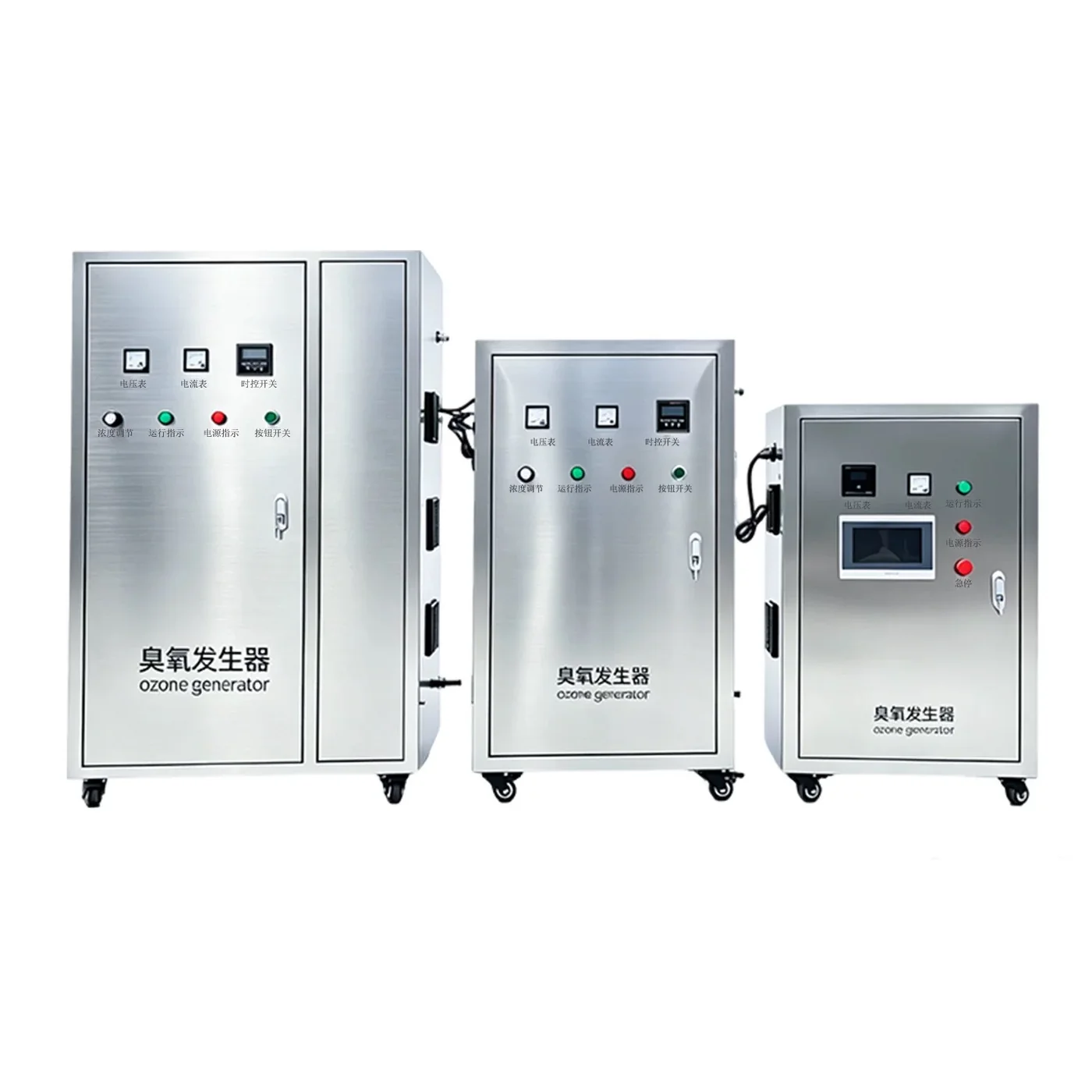
Oxidation / Disinfection
Ozone Sterilizer
Powerful oxidation disinfection using ozone gas. Stronger and more thorough than UV alone, with the ability to oxidize organic impurities, decolorize and deodorize. Frequently used in bottled water production, beverage plants, CIP circuits and pipeline or tank disinfection. Ozone degrades back to oxygen, leaving minimal residue.
Method
Ozone oxidation disinfection
Function
Oxidation, decolorization, deodorization, pipeline and tank disinfection
Application
Bottled water, beverage plants, CIP circuits, storage tanks
08
Laboratory / QC
Laboratory Ultrapure Water Generator
For food and beverage QC laboratories, R&D and analytical testing. Produces Grade I ultrapure water with resistivity up to 18.2 MΩ·cm (25°C) and TOC ≤5 ppb. Multi-stage purification including RO, EDI, UV and ultrafiltration. Suitable for HPLC, LC-MS, ICP-MS, microbiological analysis and sensory panel preparation.
Resistivity
Up to 18.2 MΩ·cm (25°C)
TOC
≤5 ppb
Application
Food and beverage QC, HPLC, LC-MS, ICP-MS, microbiological analysis
Core Components
Membrane Housings, RO Membranes and Filter Cartridges
In addition to complete systems, we supply core components and replacement consumables for food and beverage water treatment projects, with the hygiene and material options required for food-grade production environments.
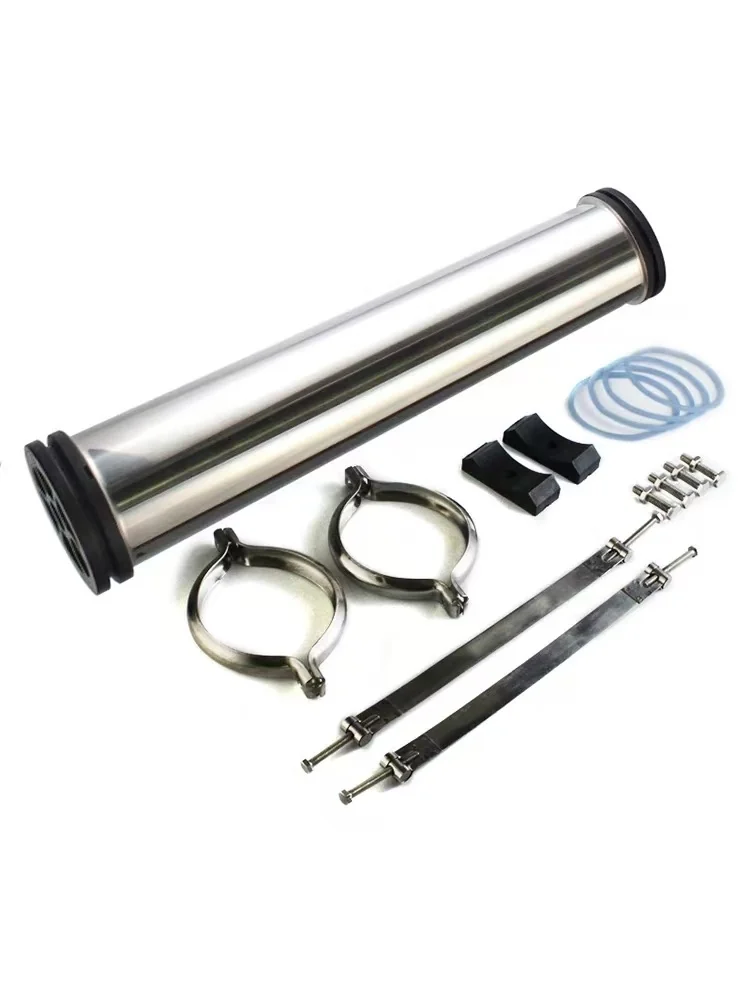
Stainless Steel Membrane Housing
304/316L stainless steel housing for food and beverage RO systems. Hygienic design, higher pressure resistance and stronger corrosion resistance. Compatible with 4040 and 8040 RO membranes, available in side-entry and end-entry configurations. View membrane housing range.
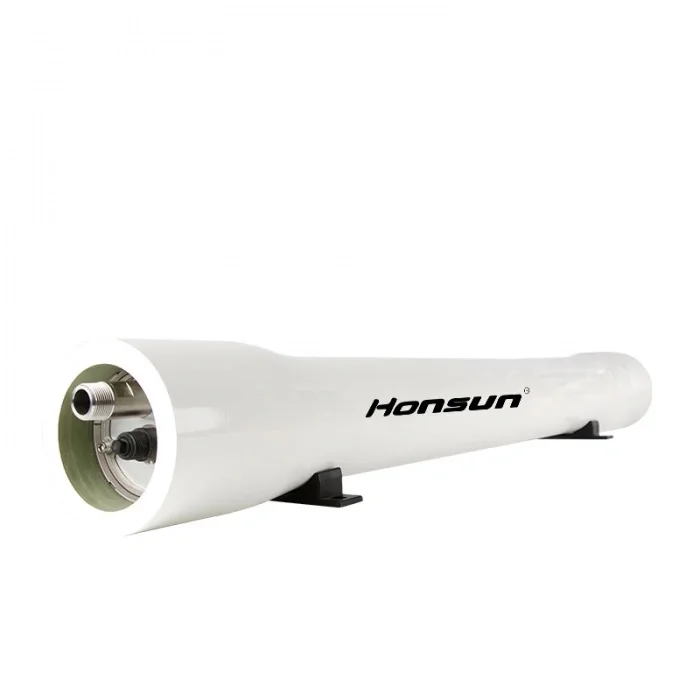
FRP Membrane Housing
High-strength FRP housing for food and beverage water treatment systems where hygienic requirements allow. Lightweight, corrosion resistant and cost-effective. Compatible with 4040 and 8040 membranes, rated 300/450/800 PSI. Compare housing materials.
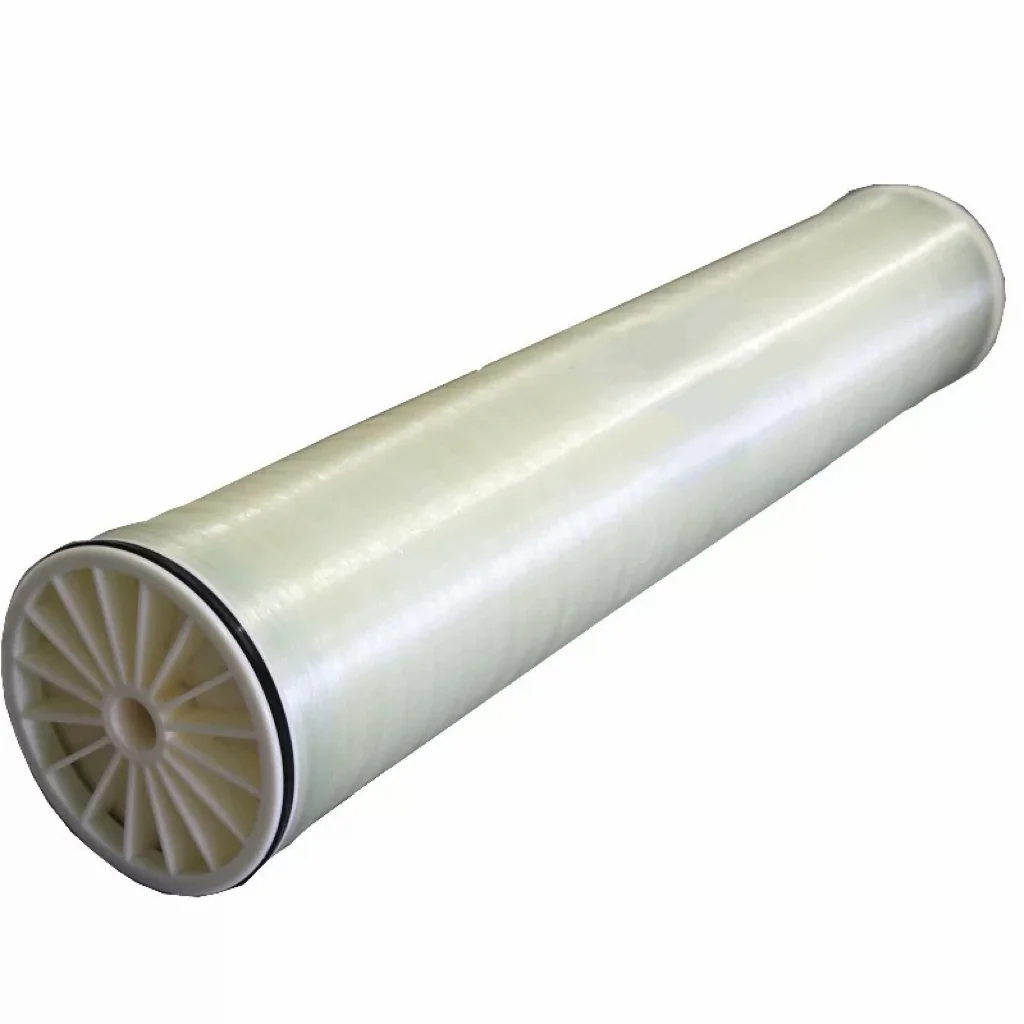
RO Membrane 4040 & 8040
Industrial RO membranes for food and beverage pure water systems. 4040 (0.5–5 T/H) for small-to-medium systems, 8040 (10–50+ T/H) for large-scale bottled water and beverage plants. Reduces salts, TDS, hardness and dissolved impurities. View RO membrane details.
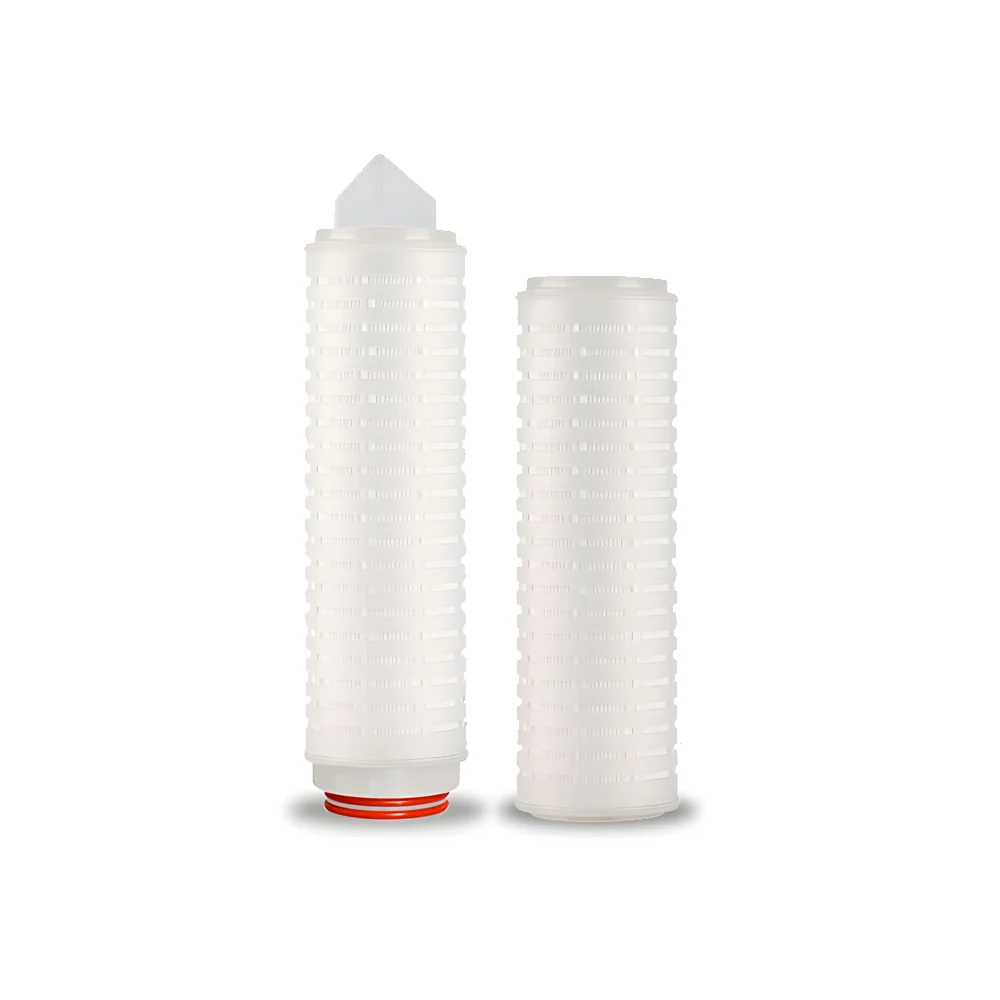
Filter Cartridge Family
PP melt-blown, wound, pleated and filter bag cartridges for food and beverage water treatment. Pleated cartridges are commonly used for RO security filtration and 0.2 μm final filtration before filling. Available in 10", 20", 30" and 40" sizes. View all filter cartridges.
Process
Typical Food & Beverage Water Process
A food and beverage water treatment train combines pre-treatment, reverse osmosis, disinfection and final filtration into one continuous, controlled flow. The final configuration is selected according to source water quality, product type and target specifications.
01
Source Water
Municipal or well water intake, with quality assessment against the target product specification.
02
Multi-Media Filtration
Removes sediment, turbidity and suspended solids. Ultrafiltration is added where feedwater has variable turbidity.
03
Activated Carbon & Softening
Activated carbon removes chlorine, organics and taste or odor. Softening controls hardness before the RO stage.
04
Reverse Osmosis
RO removes dissolved solids for consistent water quality in beverages and food processing.
05
UV and Ozone
UV sterilization provides instant microbial control. Ozone adds oxidation for color, odor and pipeline or tank disinfection.
06
Final Filtration
Precision filtration before filling lines or food processing use retains particles and protects product clarity.
Not every project uses an identical train. Bottled water, carbonated beverages, brewing, dairy and food processing each have different water quality requirements. Share your source water analysis and product specification so the treatment process can be selected according to actual conditions.
What water treatment equipment do I need for a bottled water plant?
A typical bottled water plant uses a treatment train of multimedia filtration, activated carbon, softening (if hardness is high), RO pure water system, UV or ozone disinfection and precision filtration before the filling line. For large plants, a custom industrial pure water system from 10 to 60 T/H is often more practical than a standard RO cabinet.
Do I need RO for beverage production?
RO is commonly used for bottled water, carbonated beverages, juices and brewing. It delivers consistent water quality, removes chlorine, organics and excess minerals, improves taste and clarity, and reduces scaling in equipment. If source water is already low in TDS and only chlorine removal is needed, activated carbon filtration may be sufficient. Contact our engineering team with your water analysis for a suitable recommendation.
What is the difference between food-grade and industrial water treatment equipment?
Food-grade equipment typically uses stainless steel and sanitary design to prevent bacterial adhesion, with smooth surfaces and sanitary connections. Industrial equipment may use different materials and connection types depending on the application. We can supply stainless steel membrane housings, hygienic precision filters and sanitary piping options for food and beverage projects; the final selection depends on your product and regulatory requirements.
How do I prevent microbial growth in beverage storage tanks?
Design strategies include eliminating dead legs, sloping piping for drainage, using smooth surfaces and sizing tanks appropriately. Operational strategies include continuous recirculation to prevent stagnation, UV in the return line for continuous disinfection, periodic ozone or chemical sanitization with validated procedures, and regular microbial monitoring against your product specification.
What water quality do I need for commercial ice production?
Ice in direct contact with food must be made from potable water. Typical treatment includes activated carbon for chlorine removal, RO or softening for clarity and scale control, and UV sterilization for microbial control. Most commercial ice machines also require or recommend filtration to extend machine life and improve ice clarity.
Can food processing water be reused?
Water reuse is possible with proper treatment. The required treatment depends on the water quality after use and the intended reuse application. Regulatory approval may be required, along with risk assessment, monitoring and documentation. For CIP rinse water, cooling water and utility water reuse, a custom treatment system can be configured to meet the required reuse standard.
Have a Food & Beverage Water Project?
Tell us your product type, daily water consumption and source water quality. Our technical team will recommend a treatment train and provide a detailed proposal within 24–48 hours.