Industrial RO System Selection Guide
Selecting the right industrial reverse osmosis (RO) system requires careful evaluation of your water treatment needs, raw water characteristics, and operational requirements. This comprehensive guide helps you make an informed decision.
1. Assess Your Water Quality Requirements
Output Water Quality Standards
Different industries demand different purity levels:
- Pharmaceutical manufacturing: <0.5 μS/cm conductivity, meets USP standards
- Electronics & semiconductors: <1 μS/cm, may require ultrapure water (18.2 MΩ·cm)
- Food & beverage: Meets drinking water standards, taste and odor removal
- Power plants: <10 μS/cm for boiler feed water
- Chemical industry: Varies by process, typically 5-20 μS/cm
Production Capacity
Calculate your daily water demand including:
- Peak production periods
- Cleaning and maintenance water
- Safety margin (typically 20-30% above average demand)
- Future expansion plans
2. Raw Water Quality Analysis
Key Parameters to Test
Before system design, comprehensive raw water testing is essential:
Physical Parameters:
- Turbidity (NTU)
- Temperature (°C)
- Color
Chemical Parameters:
- TDS (Total Dissolved Solids)
- pH value
- Hardness (CaCO₃)
- Alkalinity
- Silica (SiO₂)
- Iron and manganese
- Chlorine content
Biological Parameters:
- Total bacteria count
- Coliform bacteria
- Organic matter (COD/BOD)
Raw Water Source Considerations
Different water sources require specific pretreatment:
- Municipal water: Generally requires minimal pretreatment, mainly dechlorination and filtration
- Well water: Often needs iron/manganese removal, softening, and bacteria control
- Surface water: Requires comprehensive pretreatment including coagulation, sedimentation, and multi-stage filtration
- Seawater: Needs special pretreatment and high-pressure pumps
3. System Configuration Options
Single-Stage vs. Two-Stage RO
Single-Stage RO:
- Recovery rate: 50-75%
- Product water TDS: 5-50 ppm (depending on feed water)
- Suitable for: moderate purity requirements, cost-sensitive applications
- Pros: Lower initial investment, simpler operation
- Cons: Lower water quality, lower recovery rate
Two-Stage RO:
- Recovery rate: 70-85%
- Product water TDS: 1-10 ppm
- Suitable for: high purity requirements, high recovery rate needs
- Pros: Superior water quality, higher recovery, better chemical removal
- Cons: Higher initial cost, more complex maintenance
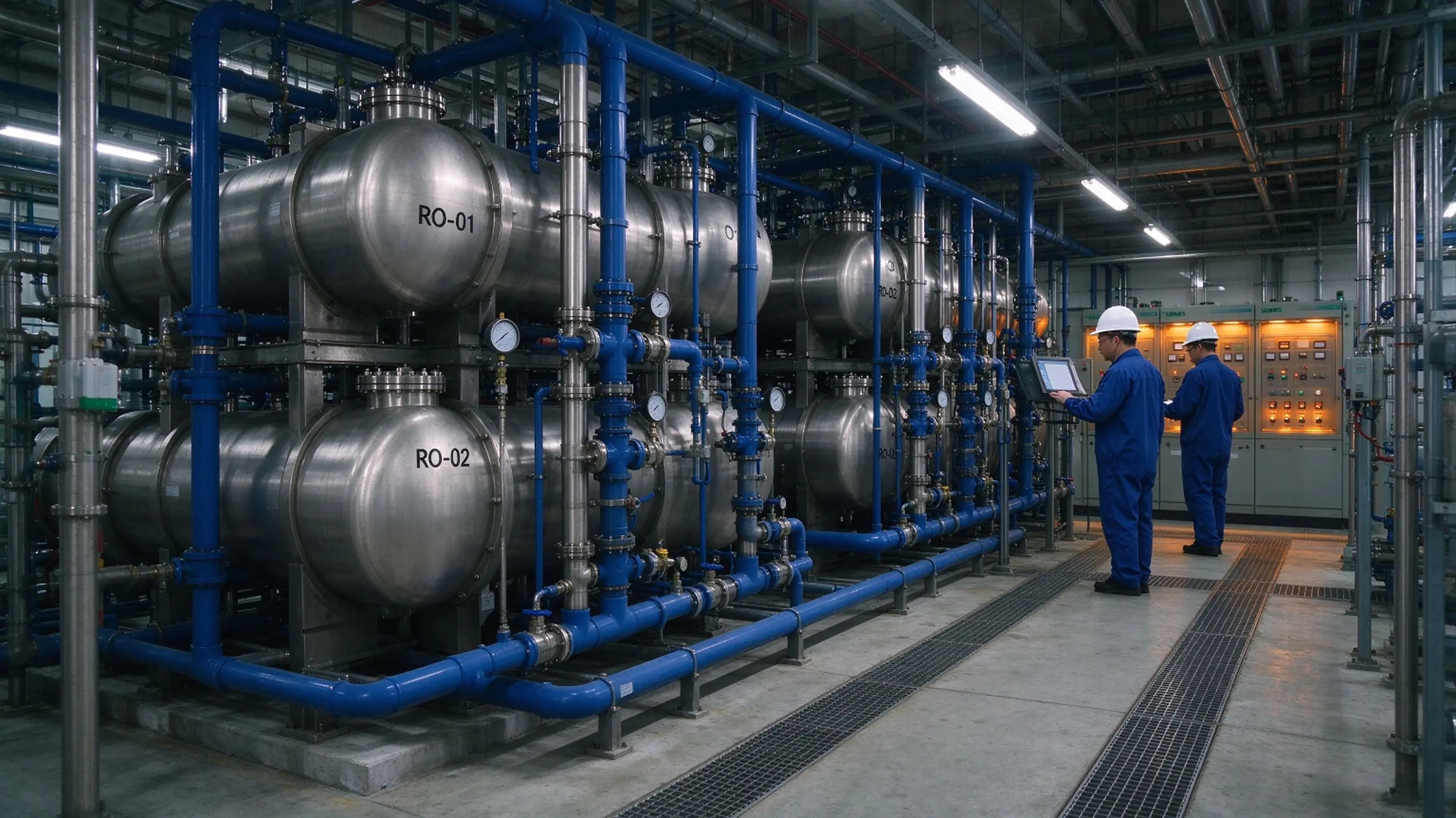
RO + EDI Configuration
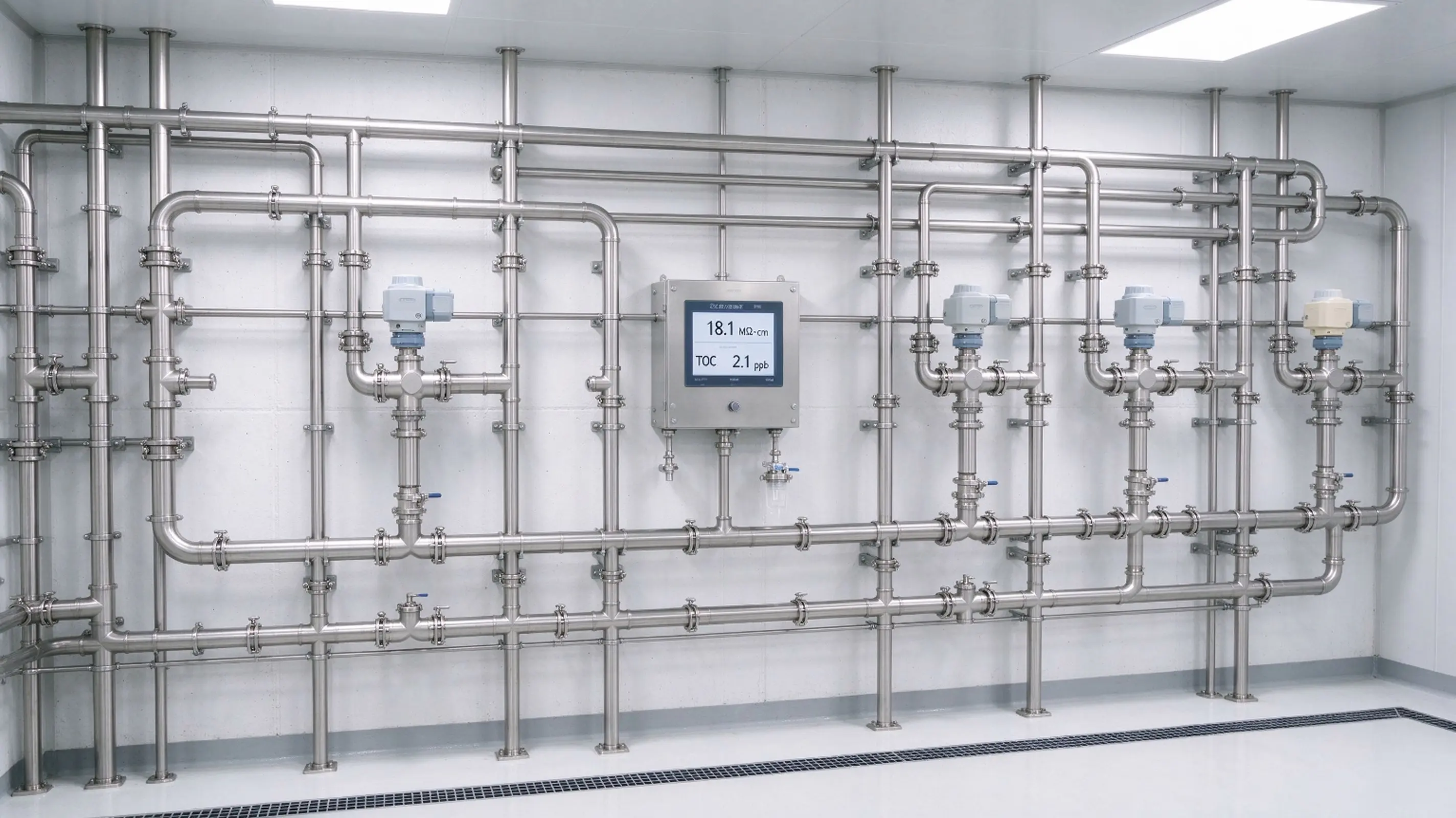
For ultrapure water requirements:
- Product water resistivity: up to 18.2 MΩ·cm
- No chemical regeneration needed
- Continuous stable output
- Ideal for: electronics, pharmaceutical, laboratory applications
4. Membrane Selection
Membrane Types
Low-Pressure Membranes (150-300 psi):
- Energy efficient
- Lower operating costs
- Suitable for: low TDS feedwater (<1000 ppm)
Brackish Water Membranes (300-400 psi):
- Standard industrial applications
- TDS range: 1000-10000 ppm
- Best balance of performance and cost
Seawater Membranes (800-1200 psi):
- High-pressure tolerant
- TDS range: >10000 ppm
- Specialized materials and construction
Leading Membrane Brands
- DuPont (FilmTec): Industry-leading technology, reliable performance
- Hydranautics (Nitto Denko): Cost-effective, good quality
- Toray: Japanese precision manufacturing, stable quality
- LG Chem: Competitive pricing, good for budget-conscious projects
5. Essential System Components
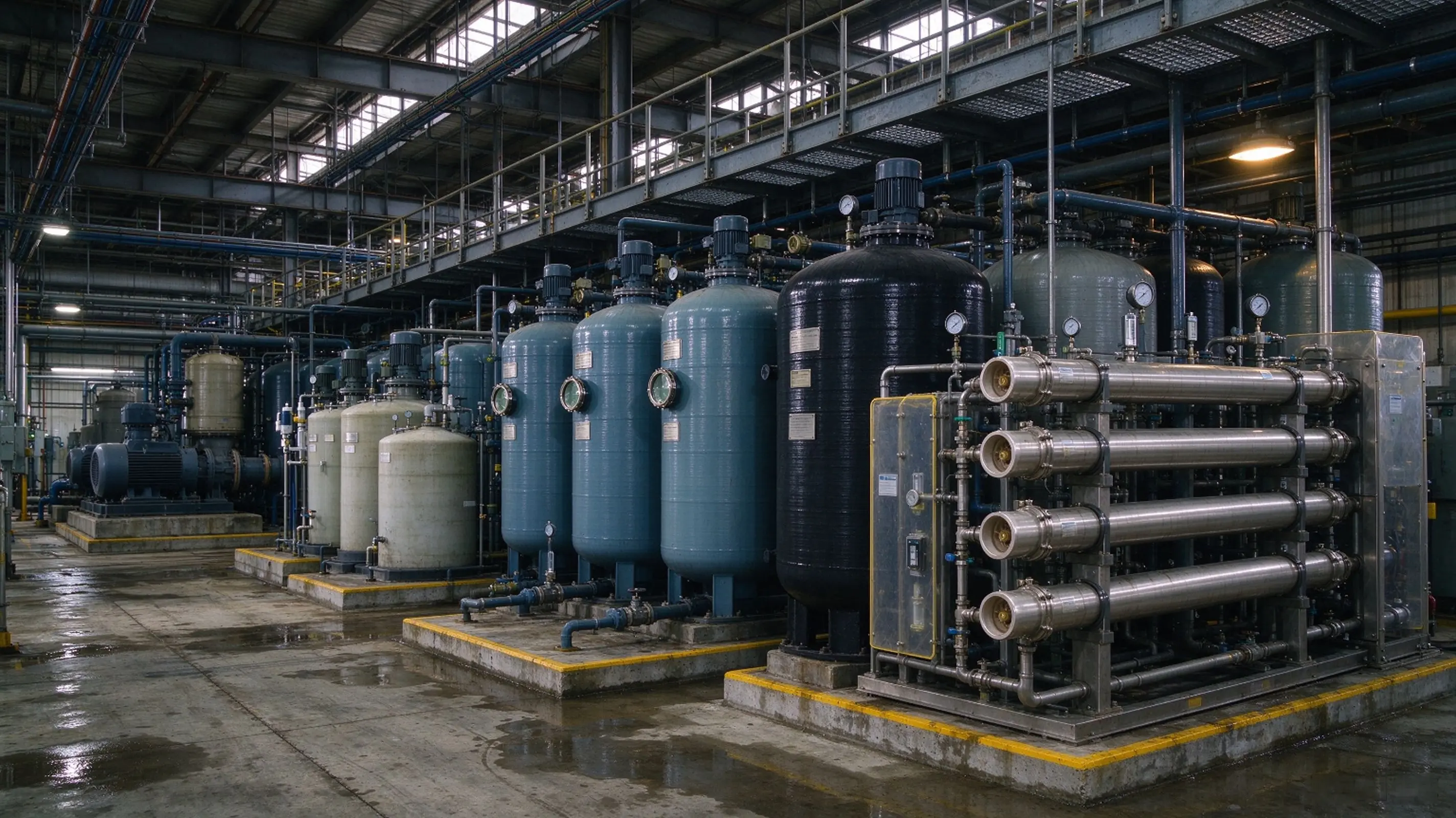
Pretreatment Equipment
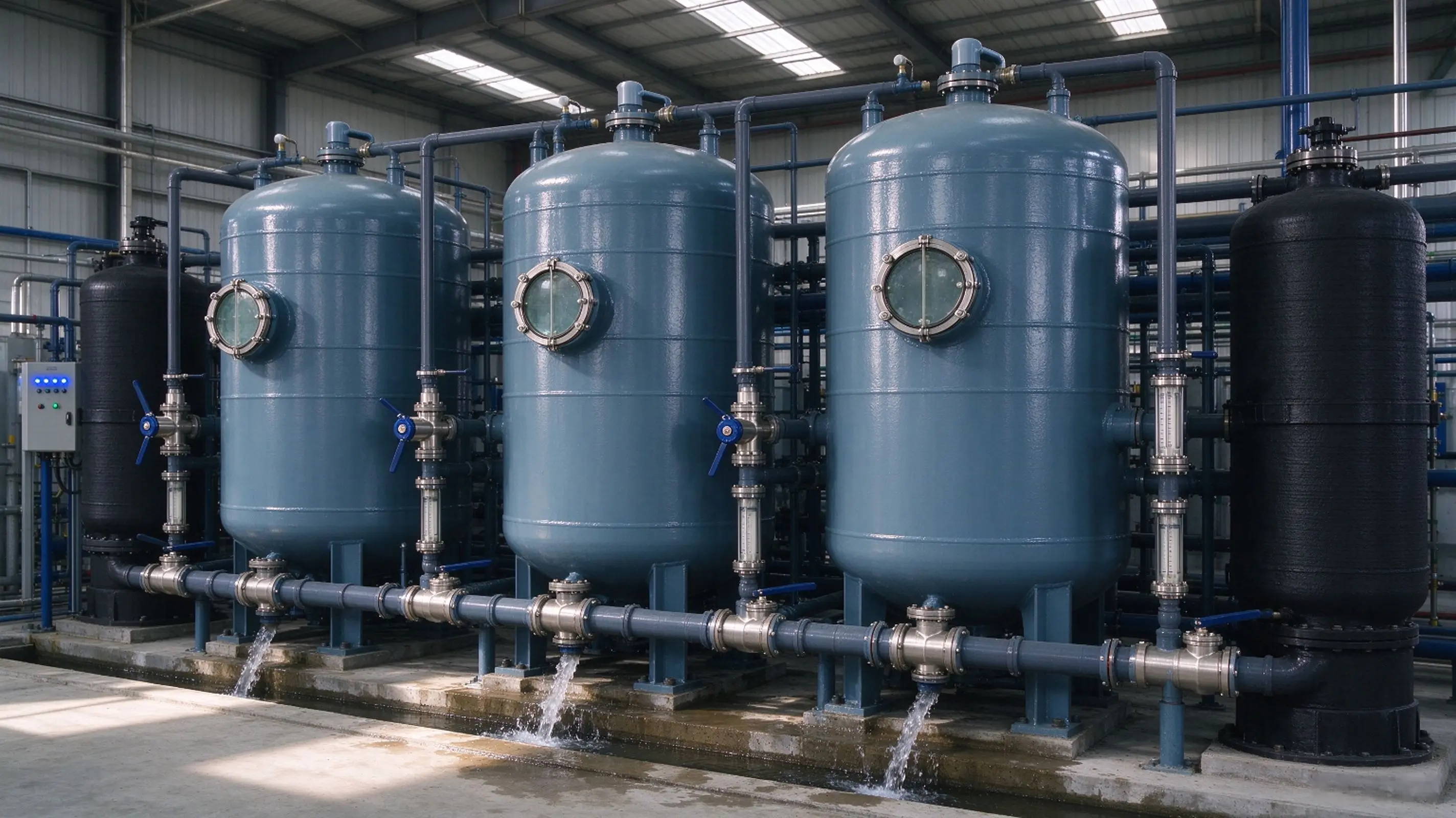
Multimedia Filters:
- Remove suspended solids, turbidity
- Backwash cycle: 24-48 hours
- Media replacement: 2-3 years
Activated Carbon Filters:
- Chlorine removal (protects RO membranes)
- Organic compound reduction
- Taste and odor improvement
- Carbon replacement: 12-18 months
Water Softeners (if needed):
- Hardness removal prevents scaling
- Salt regeneration required
- Alternative: antiscalant dosing
Cartridge Filters:
- Final protection before RO membranes
- Typical rating: 5 micron
- Replacement: based on pressure drop (typically 1-3 months)
High-Pressure Pumps
Select pumps based on:
- Required operating pressure
- Flow rate capacity
- Energy efficiency (variable frequency drive recommended)
- Reliability and maintenance requirements
Chemical Dosing Systems
Antiscalant:
- Prevents membrane scaling
- Dosing rate: 2-5 ppm
- Essential for high-hardness feedwater
pH Adjustment:
- May be needed to optimize membrane performance
- Protects downstream equipment
- Typically acid or alkali dosing
6. Automation and Control
Control System Features
Basic Systems:
- Automatic start/stop
- Low/high pressure protection
- Level control
- Manual parameter adjustment
Advanced Systems:
- PLC + HMI touchscreen
- Remote monitoring and control
- Automated CIP (Clean-in-Place)
- Data logging and reporting
- Predictive maintenance alerts
- IoT connectivity
7. Energy Efficiency Considerations
Energy-Saving Features
Variable Frequency Drives (VFD):
- Adjust pump speed to demand
- Energy savings: 20-40%
- Reduced mechanical wear
Energy Recovery Devices:
- For systems >100 m³/day
- Recaptures pressure from concentrate stream
- Energy savings: 30-60%
- Types: Pelton wheel, pressure exchangers (PX)
High-Efficiency Membranes:
- Lower operating pressure
- Reduced energy consumption
- Longer service life
8. Space and Installation Requirements
Footprint Planning
- Skid-mounted systems: Compact, factory-assembled, quick installation
- Containerized systems: Complete plug-and-play solution, weather-protected
- Custom-built: Optimized layout for existing facilities
Site Requirements
- Adequate drainage for backwash and reject water
- Electrical supply matching pump and control requirements
- Chemical storage area (segregated for acids/bases)
- Maintenance access space
- Climate control (for sensitive applications)
9. Operational Costs Analysis
Major Cost Components
Energy Costs:
- Typically 40-60% of operating costs
- Calculate based on: kWh/m³ produced water
- Influenced by: system design, recovery rate, pretreatment efficiency
Membrane Replacement:
- Typical lifespan: 3-5 years
- Budget: 15-25% of initial membrane cost per year
- Factors: pretreatment quality, chemical cleaning frequency, operating conditions
Chemical Costs:
- Antiscalant: $0.05-0.15/m³
- Cleaning chemicals: $0.02-0.08/m³
- pH adjustment (if needed): $0.03-0.10/m³
Labor and Maintenance:
- Routine inspections
- Filter replacements
- Membrane cleaning
- System optimization
10. Vendor Selection Criteria
Key Evaluation Factors
Technical Capability:
- Experience with similar applications
- Engineering and design quality
- Component quality and sourcing
After-Sales Support:
- Warranty terms (typically 12-24 months)
- Spare parts availability
- Technical support response time
- Preventive maintenance programs
Compliance and Certification:
- ISO 9001 manufacturing quality
- CE, UL, or relevant safety certifications
- NSF/ANSI 61 (for drinking water applications)
- FDA compliance (for pharmaceutical applications)
Total Cost of Ownership:
- Initial equipment cost
- Installation and commissioning
- 5-year operational cost projection
- Expected lifespan and residual value
11. Common Pitfalls to Avoid
- Undersizing the system: Failing to account for peak demand or fouling margins
- Inadequate pretreatment: Leads to rapid membrane fouling and reduced lifespan
- Poor water quality monitoring: Missing early warning signs of problems
- Skipping pilot testing: For complex water sources, pilot studies prevent costly mistakes
- Neglecting energy efficiency: Higher upfront cost for efficiency features pays back quickly
- Insufficient operator training: Results in poor operation and maintenance practices
12. Future-Proofing Your Investment
Expandability
- Modular design allows capacity increase
- Space for additional membrane vessels
- Oversized pumps and piping for future expansion
Technology Upgrades
- Control system compatibility with future upgrades
- Ability to integrate with plant-wide automation
- Flexible configuration for process changes
Sustainability
- Water recovery optimization
- Concentrate minimization or reuse
- Energy monitoring and optimization
- Compliance with evolving environmental regulations
Conclusion
Selecting an industrial RO system is a critical decision that impacts product quality, operational costs, and long-term reliability. By carefully evaluating your specific requirements, raw water characteristics, and operational constraints, you can specify a system that delivers optimal performance and value.
Key Takeaways:
- Conduct thorough water quality analysis before system design
- Balance initial capital cost with long-term operational efficiency
- Choose reliable components from reputable suppliers
- Invest in proper automation and monitoring
- Plan for future capacity and technology needs
- Don't compromise on pretreatment quality
For complex applications or challenging water sources, consult with experienced water treatment engineers and consider pilot testing to validate system design before full-scale implementation.